Product compliance management: Turning regulatory complexity into a competitive advantage

Manufacturers today face a growing challenge. Products are becoming more complex while regulatory requirements continue to expand across industries, regions and supply chains.
Whether you’re developing medical devices, automotive systems, industrial equipment or consumer products, compliance is no longer a final check before release. It has become a continuous process that spans the entire product lifecycle.
Product compliance management is the practice of connecting regulatory requirements, product data, verification activities and quality processes to ensure products meet applicable regulations throughout the lifecycle.
Unfortunately, many organizations still manage compliance through disconnected systems, spreadsheets and manual reviews. Requirements live in one system. Engineering data lives somewhere else. Verification results are stored elsewhere. When an auditor asks for proof, teams scramble to piece together information from across the organization.
This approach is difficult to scale, increases risk and slows innovation. As products become more software-enabled and globally regulated, manufacturers need a more connected approach to product compliance management.
That’s why leading manufacturers are investing in a new approach to product compliance management.
Why product compliance management is becoming more difficult
Modern products must satisfy a growing network of requirements:
- Industry regulations
- Safety standards
- Quality requirements
- Environmental regulations
- Material and substance restrictions
- Customer-specific requirements
- Internal engineering and manufacturing policies
At the same time, products increasingly include mechanical, electrical and software content, all of which must remain synchronized throughout development.
The challenge is not simply understanding regulations.
The challenge is maintaining traceability between requirements, product definitions, changes, verification activities and released products. Without that traceability, compliance becomes reactive rather than proactive. Effective product compliance management depends on maintaining an end-to-end digital thread across these elements.
Moving from compliance documentation to compliance by design
At Siemens, we believe product compliance management should be built directly into product development processes in PLM.
Instead of treating compliance as a separate activity, organizations should connect requirements, engineering data, quality processes, verification activities and product configurations through a digital thread.

This approach allows teams to:
- Establish traceability from requirements through verification
- Understand the impact of design changes
- Manage compliance across product variants
- Automate compliance checks and workflows
- Demonstrate compliance with confidence during audits
- Reduce the risk of non-conformance and product recalls
Most importantly, it helps compliance become an enabler of innovation rather than a bottleneck.
Product compliance management in healthcare: The Siemens Healthineers example
Many industries are faced with more rigorous regulatory requirements than ever before. The healthcare technology industry is one example.

Medical device manufacturers must maintain traceability across requirements, engineering decisions, risk assessments, verification activities and product documentation. At the same time, they must continue innovating to deliver new technologies that improve patient outcomes.
This is where a connected digital thread becomes critical. For regulated industries, product compliance management requires continuous traceability between requirements, risk management, design controls and verification evidence.
Siemens Healthineers uses Teamcenter to connect product information across the lifecycle, creating a PLM digital thread that helps teams maintain visibility, collaboration and traceability throughout product development. By connecting people, processes and product data, they are building a foundation that supports both innovation and compliance in a highly regulated industry.
A digital thread approach to product compliance management
Effective product compliance management requires more than a compliance database.
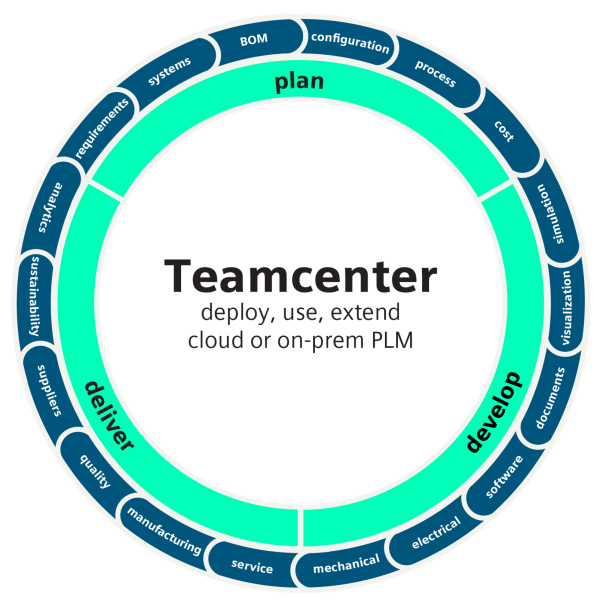
A modern product compliance management strategy connects:
- Requirements management
- Systems engineering
- Product lifecycle management
- Verification and validation
- Quality management
- Manufacturing processes
- Supplier collaboration
The digital thread in Teamcenter is essential to connect information across disciplines and lifecycle phases. Organizations gain a complete view of compliance status and product readiness. Teams can understand what requirements apply, how they are implemented, what evidence exists and whether verification activities have been completed.
With Teamcenter Copilot, organizations can further strengthen product compliance management by using AI to help assess requirement quality, identify potential gaps in verification coverage and recommend testing approaches based on existing product information and engineering best practices. Combined with a connected digital thread, these capabilities help teams shift from periodic compliance reviews to a more proactive and continuous compliance management approach.
Siemens scored the highest in Gartner® evaluation
Siemens scored the highest in the Software-Defined Products Use Case in the 2026 Gartner® Critical Capabilities for PLM Software in Discrete Manufacturing Industries report. Learn more and access complimentary reports.
In our view, this recognition reflects the value of connecting requirements, engineering, quality and lifecycle information through a comprehensive digital thread. In Teamcenter, compliance capabilities are embedded directly into lifecycle data, rather than treated as a separate activity. In addition, industry-specific requirements, including automotive safety and medical device regulations, are incorporated across the product lifecycle.
The same principles that help organizations such as Siemens Healthineers manage product complexity and traceability are helping manufacturers across industries transform compliance from a reactive activity into a strategic capability.
Product compliance management as a business advantage
The most successful manufacturers no longer view compliance as something that happens at the end of development.
They view it as a strategic capability that helps reduce risk, accelerate innovation and build customer trust.
Organizations that modernize product compliance management through a connected digital thread can accelerate innovation, improve audit readiness and reduce regulatory risk across the product lifecycle.
That’s the future of product compliance management, and it’s a future we’re proud to help our customers achieve.
Frequently Asked Questions
What is product compliance management?
Product compliance management is the process of ensuring that products meet applicable regulatory, quality, safety and customer requirements throughout the product lifecycle. It connects requirements, product data, verification activities and compliance evidence.
Why is product compliance management important for manufacturers?
Product compliance management helps manufacturers reduce regulatory risk, improve traceability, streamline audits and ensure products meet industry and customer requirements before release.
How does a digital thread support product compliance management?
A digital thread connects requirements, engineering data, quality processes and verification results across the lifecycle, making it easier to demonstrate compliance and assess the impact of product changes.
How does Teamcenter support product compliance management?
Teamcenter helps organizations connect requirements, product data, verification activities and lifecycle processes, creating traceability that supports audit readiness and regulatory compliance.
What industries benefit most from product compliance management?
Industries with significant regulatory requirements, including healthcare, automotive, aerospace, industrial machinery and consumer products, benefit from structured product compliance management processes.
🧠 Make smarter decisions with AI-powered PLM
🚀 Start fast and grow with Teamcenter X
🚗 Take the Teamcenter X 30-day test drive
🌟 Learn more about Teamcenter solutions
Gartner Disclaimer:
Gartner is trademark of Gartner, Inc. and/or its affiliates.
Gartner does not endorse any company, vendor, product or service depicted in its publications, and does not advise technology users to select only those vendors with the highest ratings or other designation. Gartner publications consist of the opinions of Gartner’s business and technology insights organization and should not be construed as statements of fact. Gartner disclaims all warranties, expressed or implied, with respect to this publication, including any warranties of merchantability or fitness for a particular purpose.
Gartner, Critical Capabilities for PLM Software in Discrete Manufacturing Industries, Marc Halpern, Sudip Pattanayak, Rajan Saini, Brady Barnes, 10 June 2026.