What is product lifecycle management (PLM)?

Product lifecycle management (PLM) is a business strategy that brings together people, processes and information across the entire lifespan of a product. From the first concept to design, manufacturing, service and end-of-life, PLM connects every part of the organization that contributes to product success.
By centralizing data and aligning workflows, PLM helps companies deliver higher-quality products faster at lower cost and with stronger compliance and sustainability performance.
Why PLM matters
Modern markets demand speed, quality and innovation. Manufacturers face increasing complexity from global supply chains, evolving customer expectations and regulatory pressure. Without a unified system, teams often work in silos, data becomes inconsistent and decisions slow down.
PLM solves this by acting as a single source of truth for all product-related information. Engineers, designers, suppliers and service teams can collaborate in real time using shared, accurate data. This structure reduces errors, shortens development cycles and ensures everyone works toward the same goals.
Many manufacturers already use Siemens Teamcenter to unify teams and accelerate development. Agricultural machinery leader Crucianelli and shipbuilder HD Hyundai Mipo both use PLM to connect engineering and manufacturing data, resulting in faster innovation and more consistent product quality.
Learn more about the benefits of PLM software and how organizations are achieving measurable results.
Core characteristics of PLM
A well-implemented PLM system unites people, processes and technology to improve how products are created, managed and supported.
Core capabilities
Cross-functional collaboration
PLM connects engineering, manufacturing, procurement and service so that each team can contribute within a shared environment.
Centralized data management
All product information such as CAD models, documentation and bills of materials is stored and version controlled in one place.
Traceability and compliance
PLM tracks every design decision and change, providing audit trails that help meet quality and regulatory requirements.
Informed decision-making
Real-time data and analytics help teams evaluate progress, performance and risk before decisions are made.
📊 Teamcenter is the world’s most widely used PLM software. Companies of all sizes rely on Teamcenter to connect teams, tools and processes — on-premises or in the cloud — with unmatched depth, breadth and usability. Learn more about PLM workflows and other core capabilities.
How PLM helps modern businesses
In the contemporary competitive landscape, innovation speed, stringent compliance mandates and relentless pressure for cost efficiency are the cornerstones of sustained success. Traditional, fragmented systems characterized by isolated data and processes often present significant obstacles to achieving these critical imperatives.
These siloed environments frequently lead to:
Data inconsistencies — conflicting information across departments breeds errors and inefficiencies.
Redundant efforts — teams unknowingly duplicate tasks due to a lack of shared visibility.
Communication breakdowns — poor collaboration slows decision making and delays progress.
PLM directly confronts these challenges by providing a unified and integrated platform that supports the entire product lifecycle. With PLM, teams spend less time searching for data and more time solving problems. Design and manufacturing processes are streamlined, communication is clear and projects move forward faster.
📊 Studies show that companies using PLM experience up to 30% faster time-to-market and 25% lower development costs (Source: Aberdeen). These improvements are driven by better collaboration, fewer errors and smarter decision-making.
Leading companies demonstrate how PLM translates into real business value:
- Valeo Kapec (transmission systems) — see their case study here
- Acciona Windpower (renewables) — see their case study here
- Grammer (automotive seating) — see their case study here
Key benefits of PLM
PLM adds measurable value across operations from engineering to supply chain management.
- Efficiency – Automating repetitive tasks and managing workflows saves time and reduces errors.
- Cost control – Early visibility into design and production prevents rework and reduces material waste.
- Faster innovation – Connected teams can experiment and iterate quickly in response to market changes.
- Regulatory confidence – PLM enforces consistent processes and maintains full documentation for audits.
- Improved collaboration – Everyone works from the same up-to-date product data both internally and with partners.
Elobau, a manufacturer of industrial sensors, uses Teamcenter to manage product variants and ensure full traceability. Essentra Components relies on automated workflows to coordinate design and production across multiple regions.
Industries with high compliance requirements such as aerospace, automotive and electronics see particularly strong returns from PLM adoption.
Core components of a PLM system
A complete PLM platform integrates several functions that support product development from start to finish.
Centralized data management
Stores and secures product data including CAD files, design requirements and change orders.
Collaboration tools
Enable real-time cooperation between teams, suppliers and partners across different locations.
Design and simulation
Support mechanical, electrical and software engineering through modeling, testing and digital twin technology.
Workflow automation
Manage approvals, change requests and compliance documentation, ensuring consistent quality.
Wirthwein, a plastics manufacturer, uses Teamcenter to connect product data from multiple systems and maintain version control throughout its operations.
These capabilities form the foundation of Siemens Teamcenter, a scalable and modular PLM solution that adapts to each company’s goals and maturity level.
Why PLM is essential for digital transformation
Digital transformation relies on accurate data and connected processes. PLM provides the backbone that links product information with other enterprise systems such as ERP, MES and PIM.
When PLM serves as the source of truth, organizations eliminate duplicate records, reduce manual handoffs and maintain consistency across engineering, production and customer-facing channels.
This integrated environment supports faster decisions, greater agility and better product quality. Festo and Brose Group both use Teamcenter to connect design and manufacturing operations, while Mann+Hummel leverages integration to maintain data accuracy across its filtration business.
Learn more about the benefits of PLM software for digitally connected organizations. ch as model-based systems engineering or product cost management and grow from there.
Best practices for PLM implementation
Implementing PLM is not only a technical project but also an organizational transformation. Success depends on careful planning, stakeholder engagement and effective change management.
Implementation checklist:
- Identify business challenges and define measurable objectives
- Develop a phased rollout plan with clear milestones
- Involve engineering, IT and operations early in the process
- Communicate the benefits of PLM across the organization
- Provide role-based training and support
- Track performance and celebrate early wins to maintain momentum
Groupe SEB and Brabant Engineering successfully implemented Teamcenter using a phased approach, improving collaboration and achieving faster product delivery.
The future of PLM
PLM continues to evolve alongside new technology and market demands. Artificial intelligence now helps teams predict outcomes and automate repetitive tasks. Cloud platforms enable faster deployment and global collaboration. IoT data creates continuous feedback loops between real-world usage and product design.
Sustainability has become a central requirement rather than an optional feature. PLM supports responsible material choices, recycling programs and circular economy goals. Digital twins are transforming how companies test and validate designs, helping them bring products to market faster and with less risk.
Forward-looking companies such as Natilus in aerospace and Rinnai Korea in energy are already using Teamcenter and the Siemens Xcelerator portfolio to leverage cloud collaboration, digital twins and AI-driven insights.
Choosing the right PLM solution
Selecting a PLM platform is a strategic decision that affects long-term efficiency and competitiveness. When evaluating options, consider:
- Scalability and modularity
- Ease of integration with ERP, CAD and MES systems
- Industry-specific functionality
- Cloud and SaaS availability
- Analyst and peer reviews
Before making a decision, explore the latest Siemens insights on how PLM delivers measurable business benefits.
Success should be measured by quantifiable results such as shorter cycle times, reduced costs and higher product quality.
Benefits of Teamcenter
Summary: Teamcenter delivers measurable business outcomes from day one.
Organizations that strategically implement Siemens Teamcenter as their Product Lifecycle Management (PLM) platform realize significant and transformative value across their diverse operations. Teamcenter’s comprehensive capabilities address key product development and lifecycle management challenges, leading to tangible efficiency, quality and innovation improvements.
What companies gain
- Faster time-to-market: Shortens development and approval cycles
- Higher product quality: Enables early issue detection and design validation
- Better decisions: Offers real-time dashboards and analytics
- Stronger compliance: Tracks regulatory and approval history
- Sustainability: Supports eco-friendly design, material tracking and end-of-life planning
Teamcenter gives us a single source of truth and visibility across the organization.
— Siemens customer, Forrester TEI study
A significant advantage of Teamcenter is its adaptability, allowing it to cater to the unique needs and complexities of organizations of all sizes, from agile startups looking to scale efficiently to large global manufacturers with intricate product portfolios and supply chains.
What makes Teamcenter the top choice in PLM?
Trusted by customers and recognized by analysts.
Siemens Teamcenter is more than just popular—it’s an industry leader. Continuously recognized by top analyst firms and review platforms, Teamcenter delivers unmatched breadth, usability and scalability for companies of all sizes.
Whether you’re running on-premises or in the cloud with Teamcenter X, it’s built to connect people, processes and data across the entire product lifecycle.
Here’s why Teamcenter stands out
✅ Most widely used PLM software – adopted by thousands of companies across industries – from automotive and aerospace to electronics and industrial machinery
✅ Top analyst recognition:
- Forrester Wave™ Leader for PLM for Discrete Manufacturers – learn more
- Frost & Sullivan PLM Technology Leader for innovation and customer impact – learn more
✅ Customer-approved on G2 – learn more
- High satisfaction scores across usability, support and return on investment
- Loved by users for enabling real-time collaboration and driving faster decisions
✅ Flexible and scalable – start small and scale fast — on-prem or in the cloud with Teamcenter X
✅ Built for integration – seamlessly connects with ERP, MES, CAD, ALM and more to support end-to-end product development with a connected digital thread.
✅ Real-world results – companies using Teamcenter report:
- Up to 30% faster time-to-market
- Up to 25% lower development costs
- Improved compliance and sustainability outcomes
From fast-growing startups to global enterprises, organizations choose Teamcenter to fuel innovation, streamline operations and confidently bring great products to life.
Your next steps with PLM
PLM is essential for driving innovation, reducing risk and scaling efficiently. Siemens Teamcenter provides the depth, flexibility and deployment options to help you succeed.
Product lifecycle management (PLM) has emerged as a strategic imperative for modern businesses seeking to drive innovation, improve efficiency and gain a competitive edge. By integrating Siemens’ comprehensive PLM solutions, organizations can streamline operations, enhance cross-functional collaboration and accelerate product development from concept to completion.
Throughout our What is PLM? guide, we’ve explored the essential components of PLM, the key stages of the product lifecycle, the numerous benefits of PLM software and best practices for successful implementation. We’ve also delved into the future trends shaping the PLM landscape, such as AI integration, cloud-based solutions and IoT connectivity, demonstrating how Siemens’ PLM offerings continue to evolve to meet the changing needs of businesses.
Choosing a PLM solution is a strategic decision that can have far-reaching implications for an organization’s long-term success. By carefully evaluating their needs, calculating the potential ROI and selecting a flexible, customizable PLM system like Siemens’ Teamcenter, companies can position themselves for sustained growth, innovation and market leadership.
As you embark on your PLM journey, remember that Siemens’ experts are here to guide you every step, ensuring a smooth implementation and realizing PLM’s full benefits. With Siemens’ comprehensive PLM solutions, you can drive innovation from concept to completion and stay ahead in today’s fast-paced, competitive business landscape.
Explore how Teamcenter can help your organization build a connected digital thread from concept to completion.
Frequently asked questions
1. What is PLM – Product Lifecycle Management?
Product Lifecycle Management (PLM) is a system that manages every stage of a product’s lifecycle—from idea to retirement.
It integrates people, processes and data into one platform to improve collaboration, speed up innovation and ensure product quality.
2. What’s the difference between PLM and PDM?
PLM manages the entire product lifecycle across departments, while PDM focuses on engineering data during design.
PDM is typically used by engineers for CAD files and BOMs, while PLM includes cross-functional tools for design, manufacturing, service and more.
3. Why is PLM important for manufacturers?
PLM helps manufacturers reduce costs, accelerate time-to-market and improve product quality.
It eliminates data silos, streamlines workflows and ensures teams work from a single source of truth.
4. How does Siemens Teamcenter support PLM?
Siemens Teamcenter is a leading PLM platform that connects teams, automates processes and ensures accurate product data.
It integrates with ERP, CAD and MES systems, providing a digital thread across the full product lifecycle.
5. Can small businesses use PLM software?
Yes, PLM software like Siemens Teamcenter offers modular solutions that scale with small to mid-sized businesses.
You can start with basic PDM features and expand as your needs grow.
6. What systems does PLM integrate with?
PLM integrates with authoring tools and enterprise systems including ERP, MES, CAD and low-code platforms.
This allows product data to flow between departments, reducing errors and improving operational efficiency.
7. How does PLM improve time-to-market?
PLM reduces time-to-market by streamlining design workflows, automating approvals and improving collaboration.
It enables faster decision-making by giving stakeholders real-time access to product data.
8. What are the benefits of cloud-based PLM?
Cloud-based PLM offers scalability, remote access, faster updates and lower infrastructure costs.
Siemens’ cloud solutions support global collaboration and reduce IT burden for customers.
9. How does PLM support sustainability?
PLM supports sustainability by enabling material tracking, lifecycle planning and end-of-life product strategies.
It helps companies reduce waste, improve resource use and align with circular economy goals.
10. What ROI can companies expect from PLM?
Companies using PLM typically see reduced product costs, fewer design errors, faster development cycles and improved compliance.
ROI often comes from streamlined operations and improved product quality.
Assess your PLM cost of ownership and ROI by reading this Forrester Consulting study commissioned by Siemens: The Total Economic Impact™ of Siemens Teamcenter X: Cost Savings And Business Benefits Enabled By Teamcenter X.
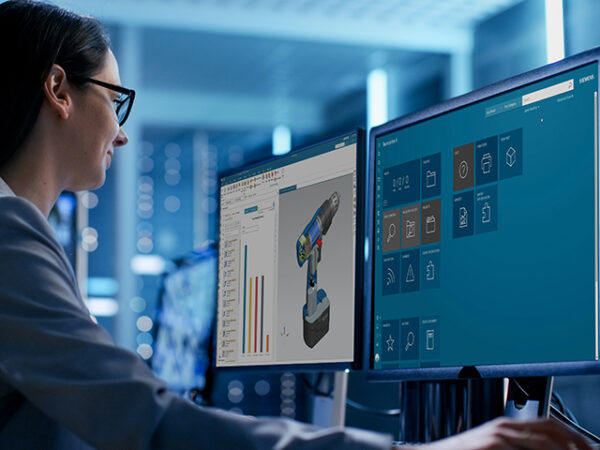
No matter how you choose to deploy Teamcenter,
you get the same proven solutions designed to help you innovate faster.