Laying groundwork for the future by transforming the shop floor with 3D design
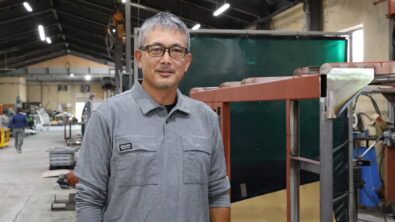
By leveraging Designcenter Solid Edge, Metal Craft Tamura has improved efficiency and accuracy in design and production.
Founded in 2010, Metal Craft Tamura has earned a strong reputation in precision sheet-metal fabrication, producing everything from large railway vehicle components and operator cabins for track-maintenance cars to small, high-precision parts for semiconductor manufacturing. With some assemblies exceeding 2 meters in size, success requires more than advanced technical skill — it demands the ability to adapt quickly and collaborate seamlessly across engineering and production teams.
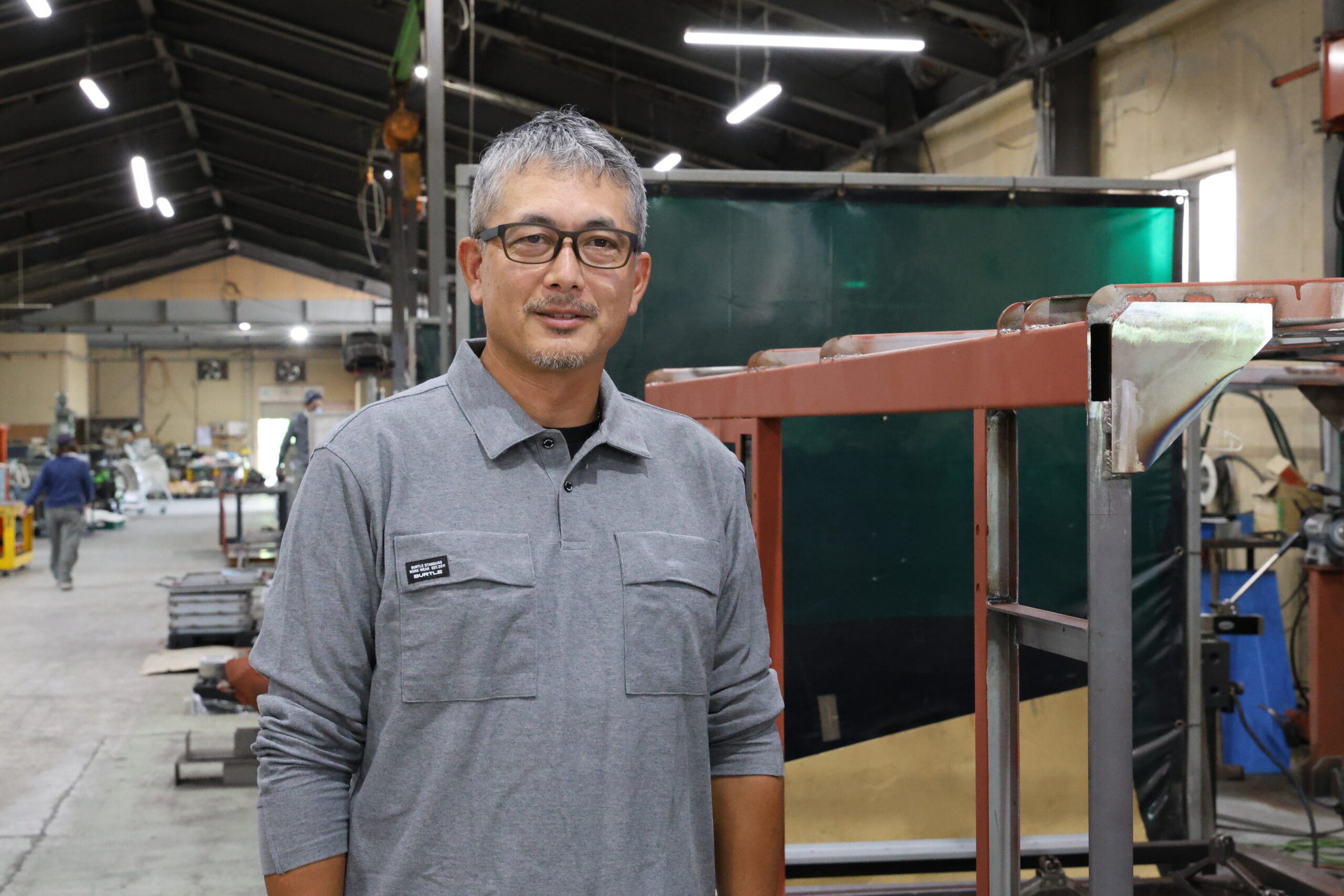
From 2D to 3D: A turning point in manufacturing
In its early years, the Japanese company relied solely on 2D CAD. But with large, complex assemblies — such as railway operator cabins that contain more than 200 individual parts — misinterpreting drawings was a frequent and costly challenge. Visualizing final products from 2D details alone often led to discrepancies between workers and rework on the shop floor.
To overcome these issues, the company adopted Designcenter Solid Edge incorporating 3D assembly models into its workflow. By reconstructing full assemblies in 3D from customer-supplied DXF drawings, the team significantly improved both understanding and accuracy.
“Using Solid Edge’s Create 3D capability, we build 3D models from the 2D DXF files provided by our customers. By converting our designs into 3D, we’re able to get a much clearer understanding of the product’s actual shape,” explains Hideki Kon, Section Manager at Metal Craft Tamura. “In some cases, we’ve even spotted errors in the original drawings that would have gone unnoticed until assembly. Catching these issues early has saved us from costly rework and delays. It’s been a really effective way to improve accuracy and efficiency.”
Cutting work time in half with 3D models
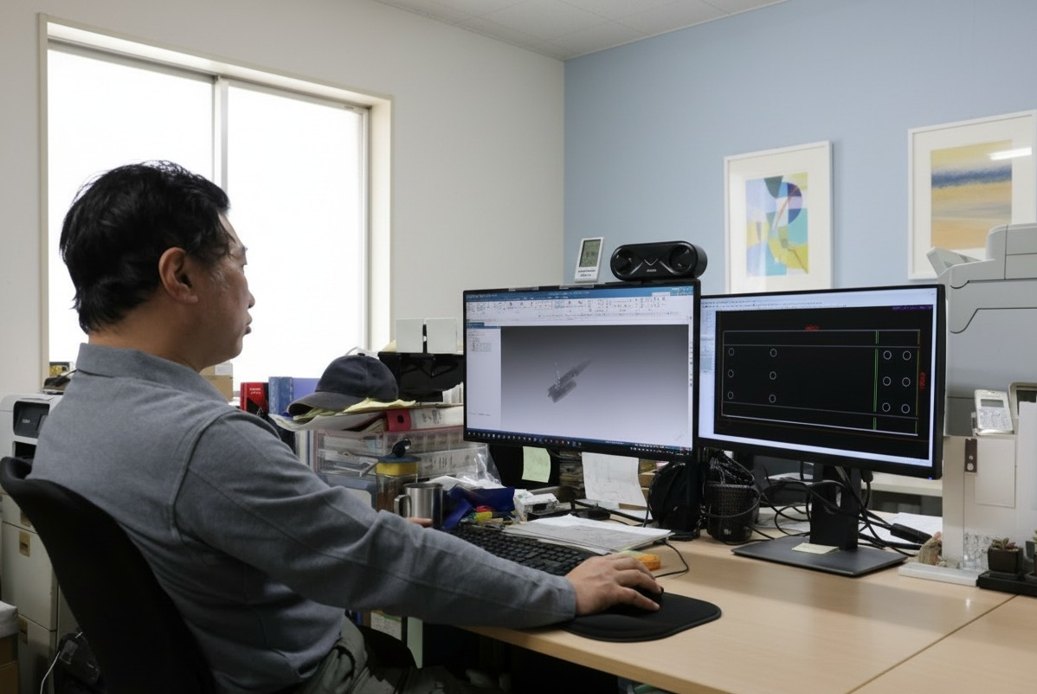
Shifting to 3D modeling has transformed design and production. Weld-marking accuracy has improved dramatically, reducing on-site corrections. Total work time for many projects has been cut by nearly 50%. Fixture design has also advanced — with 3D visualization enabling ergonomic considerations and collaborative reviews with shop-floor teams. Workers can evaluate torch movement and operator workflows before fabrication begins.
“Being able to edit part geometry parametrically has helped us reduce the effort required to produce similar components. I also find it useful that Solid Edge allows us to make changes to multiple parts within an assembly at the same time,” Kon says. “By switching to 3D for our production processes, we’ve been able to cut total man-hours in half compared to 2D.”

Bridging the gap between shop floor and customer
To streamline operations, Metal Craft Tamura installed PCs directly on the shop floor, giving workers immediate access to 3D models. They can rotate, review, and inspect assemblies on demand — without leaving the production area. The result: faster decisions, fewer bottlenecks, and more consistent output.
The company also uses 3D models in customer meetings, whether shared via laptop presentations or 3D PDFs. Clear, detailed visuals make communication more intuitive and strengthen trust.
Embracing 3D scanning for reverse engineering
The latest addition to the workflow is 3D scanning for reverse engineering. When replacing factory pipes or ducts, the team scans the installation site and imports the data directly into Designcenter Solid Edge assemblies. This ensures accurate placement, eliminates interferences, and removes the need for on-site adjustments. The same approach applies to custom automotive parts: scanning the actual vehicle guarantees a precise fit.

Looking ahead: Structural analysis and AI integration
Metal Craft Tamura now plans to take its digital capabilities further. Bringing structural analysis in-house will enable end-to-end design and validation. The company also aims to unify its internal databases — drawings, estimates, and more — into a centralized, AI-powered system to streamline processes and support future growth.
“3D modeling has brought us remarkable efficiency gains,” says Hiroshi Tamura, President of Metal Craft Tamura. “Moving forward, we’ll continue to stay attuned to rapidly evolving technologies like AI and explore new business opportunities.”



Comments
Leave a Reply
You must be logged in to post a comment.
Çok ilginç bir paylaşım olmuş, gerçekten düşündürüyor. Ama aklıma şu soru da geliyor: Bonus teklifleri bazen neden bu kadar aşırı cömert görünüyor? Bu tamamen pazarlama stratejisi mi, yoksa kullanıcıları daha fazla çekmek için başka nedenler de var mı?