When 17-year-olds redefine innovation
Author: Susanne Gold
How two teenagers are making public transport barrier-free with Siemens Designcenter Solid Edge – and what we can learn from them
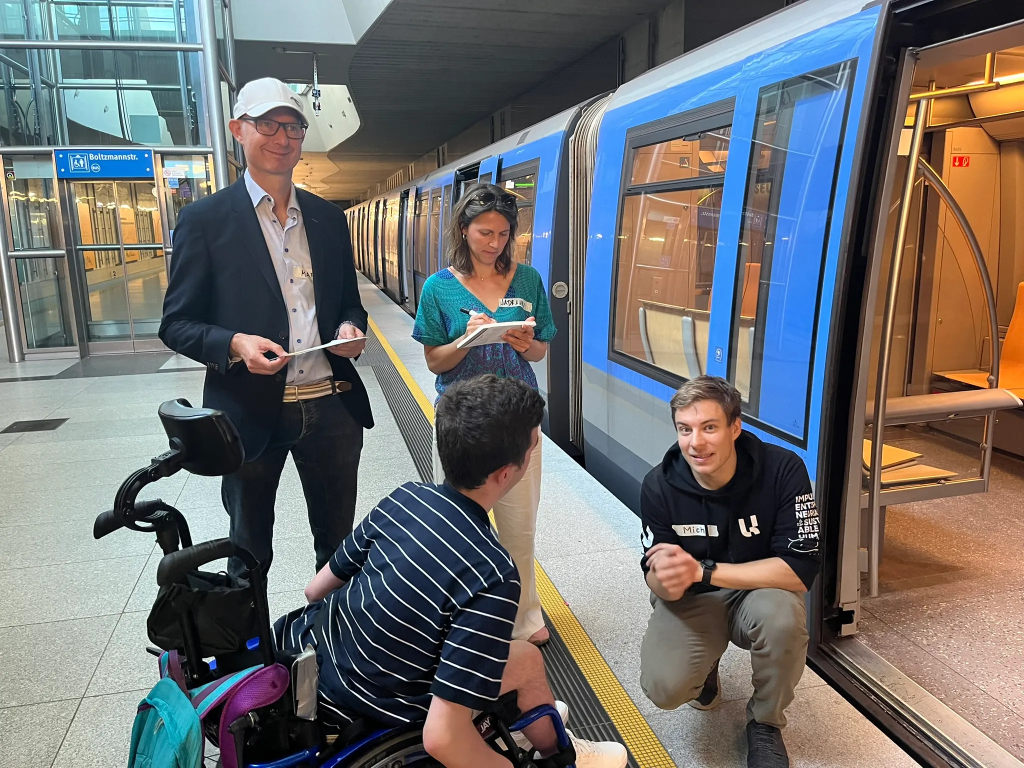
In a small room at Munich’s Garching subway station, two worlds collide: two 17-year-old students with a vision, and the technology of a global corporation. No budget meeting, no PowerPoint. Just an idea that’s long overdue: a mobile ramp to make boarding easier for people using wheelchairs, walkers, or strollers.
“In theory, everyone supports accessibility – in practice, I can’t get into the subway,” says Marko. He knows what he’s talking about. Together with Joy, who is neurodivergent, he’s taking part in the inclusive start-up program Your Capabilities. The two haven’t just identified a problem – they’ve actively worked on its solution.
Your Capabilities fosters a unique spirit of innovation: young people with disabilities are empowered not only to recognize their talents but to actively use them to contribute to innovation processes. The goals are for young people with disabilities to learn to see themselves from a new perspective, discover their strengths, and further develop them. This creates tremendous problem-solving skills and turns barriers into innovation.
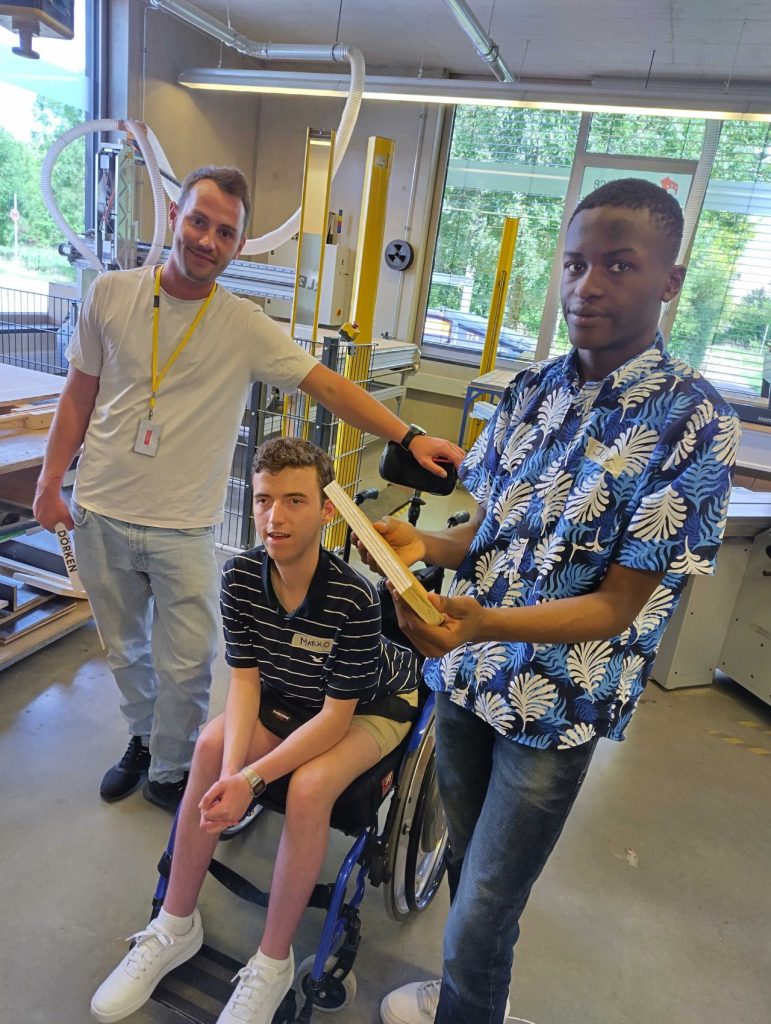
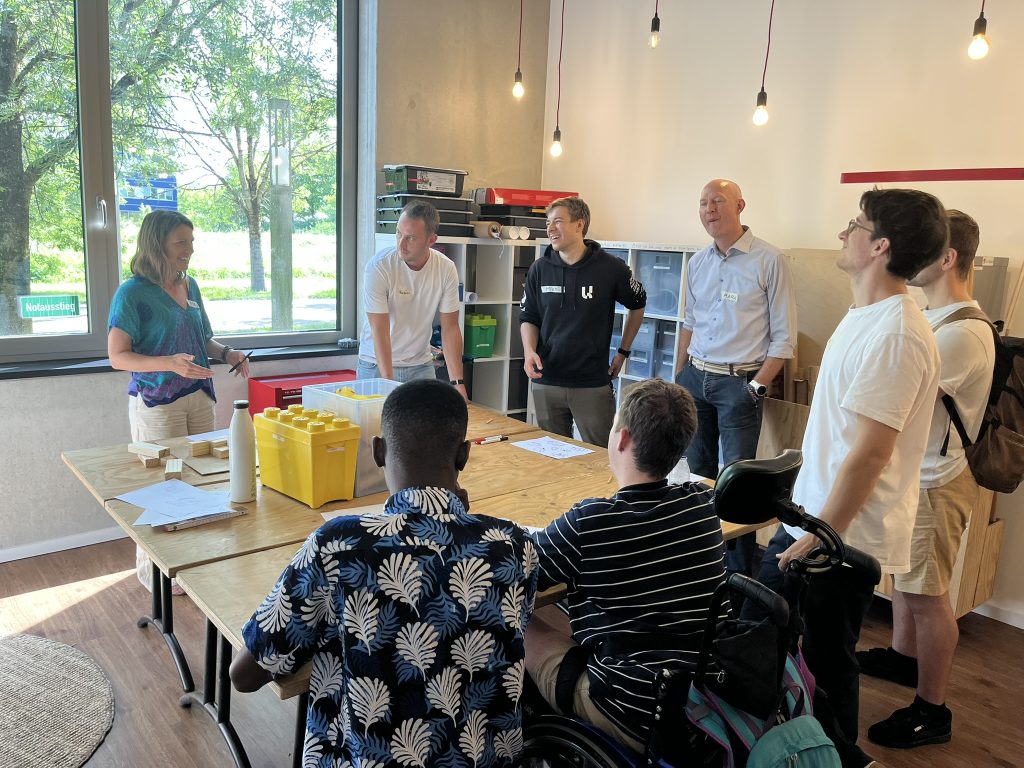
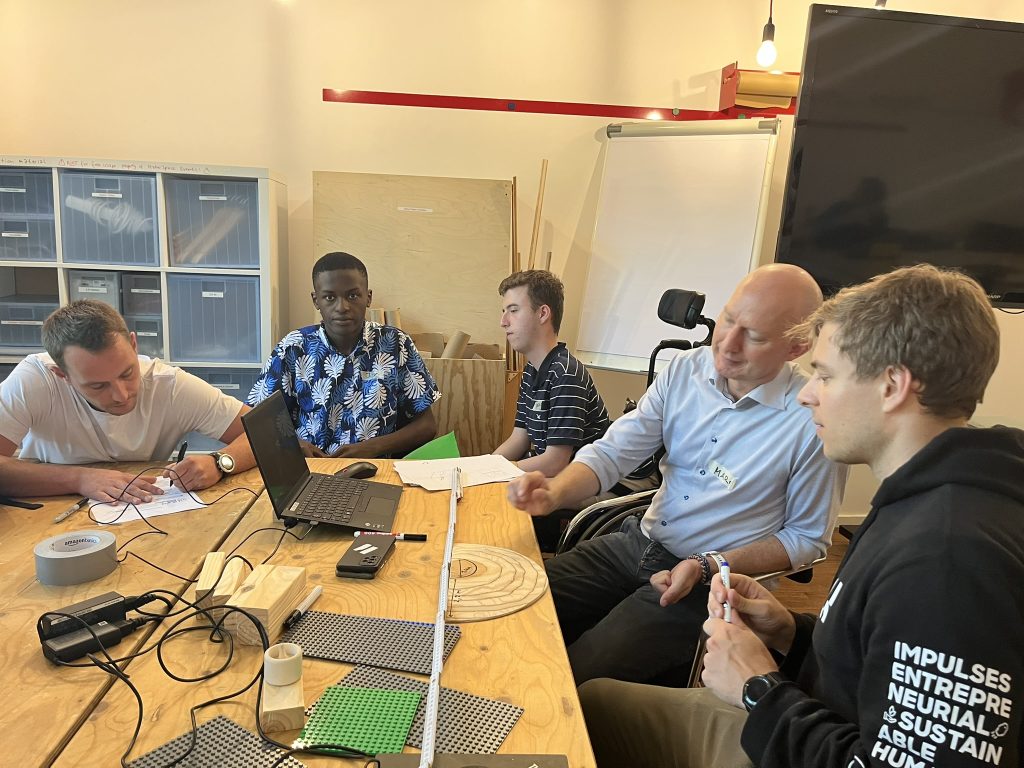
Marko und Joy discussing concept, design, and prototyping steps with mentors from UniCredit Bank AG, Your Capabilities, UnternehmerTUM MakerSpace, Munich Transport Company (MVG), Siemens Software, and Siemens Mobility
The first step towards a better solution
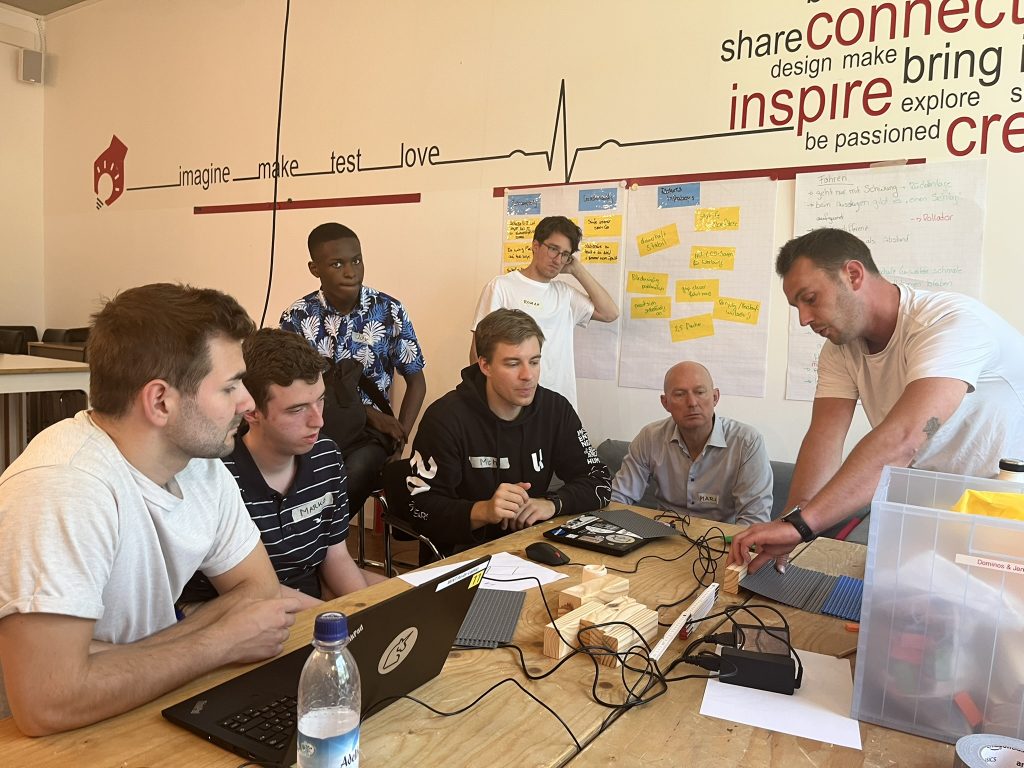
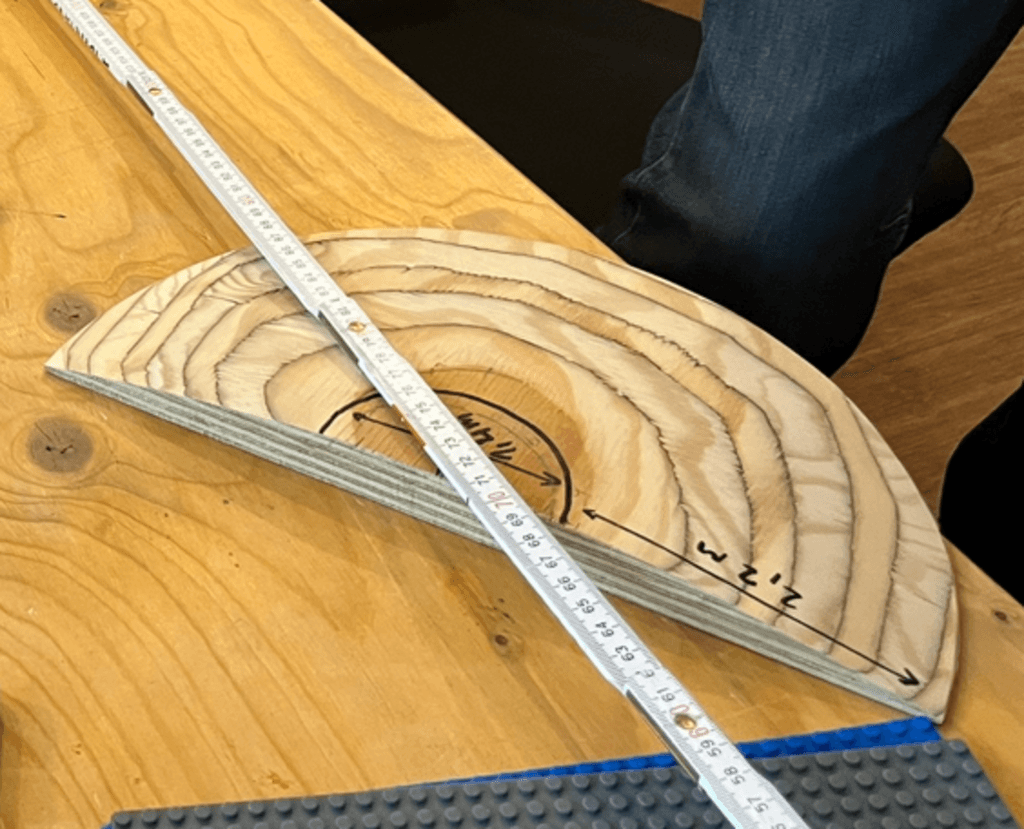
Within a single day, the two developed their first prototype at the UnternehmerTUM MakerSpace with support from Siemens Mobility, Siemens software, the MakerSpace and Your Capabilities teams, and their mentors from UniCredit. The idea: a kind of “molehill ramp” – a gently rising surface that can be approached from all sides and is compact enough to remain mobile and modular. It was made on-site from wood composite material using a CNC milling machine.
The ramp is designed to bridge the small gap between the platform and the subway. For this, Joy and Marko proposed a clever solution: an inflatable tire that automatically fills with air when the train arrives and deflates when it leaves. It’s a minimalist solution designed for maximum impact.
“We wanted a solution that works regardless of wheelchair type or subway model – and is realistically feasible,” the two students explain.
Why is this story more than a school project
This project impressively demonstrates how much innovative power is unleashed when those affected work with technology – not just as users, but as developers and specialists. It’s also an example of what’s possible when young people are given trust, tools, and the space to create their own solutions.
“True co-creation is more than a workshop – it’s innovation in action,” says Veronika Moj, program lead at Your Capabilities. “It’s especially important to us that the young people experience self-efficacy and realize that they can solve their own problems and make the world a little better.”
And it’s a lesson for us as a company:
- User centricity means involving those affected in development – not just asking them afterwards.
- Speed-to-market means building a functional prototype within a day with the right setup.
- Inclusive innovation happens where diversity is not just tolerated but actively incorporated.
The next step: model, market, feasibility
Currently, the team has designed the prototype as a portable demonstration model to show how the ramp works as clearly as possible. The next step is to build a model platform – with train, ramp, and figures – to make the whole system tangible and explainable. The goal is to attract investors for further development and prepare for market readiness.

In parallel, they’re exploring how cooperation with local transport operators could look. An initial conversation with an MVG representative already took place during the workshop on September 4, 2025. All future steps will require budgeting, strong partners, and political will. Millions of people worldwide would benefit from greater accessibility, yet ramps are still required at around 50% of all subway stations in Germany.
What can we learn from this?
This project isn’t a finished product, but it’s a strong beginning.
It shows that technology shouldn’t be developed from the top down, but in collaboration with the people it’s meant to serve. It demonstrates how digital tools like Designcenter Solid Edge can prove their value in practice – not only in industry, but also in a social context.
Meanwhile, the next step was already made; the prototype had been enriched by also adding the surrounding components, like a subway wagon and a platform, all built as wooden prototypes. Two weeks ago the results were presented to the media during a press conference. We are excited about what the future will bring for both young men and their invention.

Learn more:
https://www.zdf.de/play/magazine/heute-106/260505-heute-sendung-17-uhr-100#startTime=616.0
https://www.sueddeutsche.de/muenchen/muenchen-u-bahn-barrierefreiheit-tum-erfinder-li.3475248