Why Establishing Traceability Between Regulatory Requirements and Your Product Specification Matters

In today’s fast-paced and highly regulated industries – whether automotive, medical devices, aerospace, or industrial automation – compliance is not optional. It’s a strategic imperative.
Regulatory requirements are becoming increasingly complex, and the cost of non-compliance can be devastating: product recalls, legal penalties, and reputational damage. Yet, many organizations still struggle to maintain clear traceability between these requirements and their product specifications.
Traceability is the ability to link every product requirement back to its source – whether that’s a customer need, a regulatory mandate, or a business objective – and forward to its implementation, verification, and validation. It’s not just a best practice; it’s a critical enabler of quality, compliance and innovation. Traceability is the backbone of:
- Compliance: Demonstrating that every regulatory requirement has been addressed in your product design.
- Audit Readiness: Quickly producing evidence that your product meets all applicable standards.
- Risk Management: Identifying gaps or inconsistencies before they become costly issues.
- Change Impact Analysis: Understanding how a change in regulation affects your product and vice versa.
Polarion: The Backbone of Requirements Management
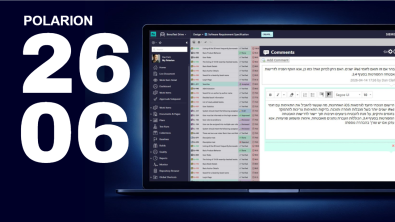
Polarion as an Application Lifecycle Management platform enables unified requirements, quality and risk management. It offers live traceability, version control, collaboration and reporting functions as well as custom worfklows. Polarion ensures that every regulatory requirement is linked to design artifacts, test cases, and verification results – creating a transparent and traceable development process.
Bridging the Regulatory Gap: Polarion + DRIM
While Polarion excels at managing requirements, the AI extension DRIM complements it by focusing on the extraction, structuring, and interpretation of regulatory documents. DRIM enables:
- Domain-specific intelligence to interpret complex legal language.
- Automated parsing of regulatory texts into actionable requirements.
- Automated classification and allocation of regulatory requirements.

When integrated, Polarion and DRIM offer a seamless workflow: DRIM extracts and structures regulatory requirements from standards, laws, and guidelines. Polarion ingests these requirements and links them to product specifications, test cases, and risk assessments. Traceability is maintained automatically, ensuring that every regulatory change is reflected in your product lifecycle. Audits become effortless, with clear evidence of compliance at every stage.
This synergy empowers organizations to move from reactive compliance to proactive governance.
Conclusion
With Siemens Polarion and DRIM working together, companies can confidently navigate the regulatory landscape, reduce risk, and accelerate innovation. If your organization is ready to take compliance and traceability to the next level, it’s time to explore the power of Siemens tools.
Further reading:
AI for Polarion – Industrial artificial intelligence for SIEMENS Polarion
Success Story DRIM – Siemens Global