Successfully developing software-defined heavy equipment with MBSE
The heavy equipment industry is undergoing a fundamental transformation as software becomes the primary driver of product capability and differentiation. From autonomous tractors in agriculture to sensor-equipped mining trucks, manufacturers of construction, mining and agricultural equipment are rapidly developing software-defined heavy equipment products, delivering innovations that mirror, and in some cases surpass, advancements in the automotive sector. In a recent podcast, Chad Jackson of Lifecycle Insights spoke with an industry expert from Siemens Digital Industries Software, Hans-Juergen Mantsch, about how model-based systems engineering (MBSE) is enabling this transition and reshaping the way heavy equipment is designed, developed and maintained.
The conversation explored the rise of software-defined heavy equipment, the challenges of integrating multiple engineering disciplines and how MBSE serves as the connective tissue between hardware, software and systems engineering. As these products grow more complex, understanding the role of MBSE and deploying it effectively become essential for manufacturers seeking to accelerate development, improve collaboration and unlock new business models.
Software-defined heavy equipment enables innovative business models
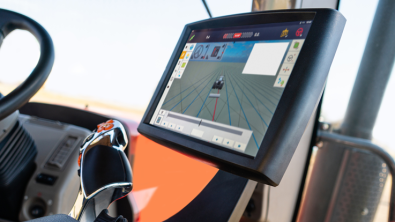
Heavy equipment has long been perceived as a predominantly mechanical industry. However, today’s agricultural, mining and construction equipment relies heavily on embedded software for everything from engine calibration and diagnostics to autonomous operation and predictive maintenance. In agriculture, for example, autonomous driving capabilities on tractors and harvesters have reached a level of maturity that, in many respects, exceeds what is currently available in passenger vehicles. The controlled operating environments of fields and mines make full autonomy more feasible, while the high price points of this equipment make the relative cost of sensors and software a much smaller proportion of the total investment.
This shift toward software-defined heavy equipment products is also enabling entirely new business models. In the mining sector, tires on large haul trucks are now leased rather than purchased, with embedded sensors continuously communicating with the tire manufacturer to predict and prevent failures. In agriculture, engine power can be sold as a service, meaning the mechanical components remain the same, but software calibration determines the performance a farmer can access at any given time. These capabilities also extend to the used equipment market, where a second owner can unlock new features or capabilities through software upgrades, fundamentally changing the economics of equipment ownership.
A total cost of around 10K for sensors is a completely different offset on a 500K high-end tractor than it is on a 60K passenger car. For a relatively small portion of the total purchasing price, a farmer could get a lot of additional features and upgrade potential. This is an excellent opportunity for OEMs which paves the way for new business models, like on-demand access to advanced capabilities.
Hans-Juergen Mantsch
MBSE as the glue connecting engineering disciplines
As software, electronics, electrical systems and mechanical components become increasingly interdependent, the need for a unifying framework grows more urgent for successful development of software-defined heavy equipment. Model-based systems engineering fills this role by providing a single, authoritative source of truth for product architecture, requirements and cross-domain dependencies. Rather than functioning as an isolated academic exercise, effective MBSE delivers consumable outputs to domain engineers, such as software architects, electrical engineers, network designers and mechanical engineers, so that each discipline can work within its own tools while remaining connected to the broader system context.
This connectivity is critical because no single domain engineer can fully understand how the complete system operates. A software engineer developing an ignition function, for instance, needs to know the timing constraints, the network over which signals are transmitted and the physical proximity of wiring to high-power components that could cause electromagnetic interference. Without a system model that captures and communicates these dependencies, critical integration issues may go undetected until long after the product has shipped. MBSE provides the context that allows engineers across disciplines to understand the impact of their decisions on the broader system and to communicate using a common reference framework.
SysML v2 and overcoming scalability challenges when developing software-defined heavy equipment
One of the primary barriers to broader MBSE adoption has been the scalability limitations of traditional diagram-based modeling. A typical piece of heavy equipment may contain 10,000 to 15,000 network signals and a comparable number of electrical connections. Representing this level of complexity through graphical diagrams quickly becomes impractical; the diagrams simply do not scale to the size and intricacy of modern software-defined heavy equipment. As a result, organizations have historically been forced to limit the level of detail captured in their system models, reducing the practical value of the systems engineering effort.
The transition to SysML v2 addresses this fundamental challenge. Unlike its predecessor, SysML v2 adopts a language-based approach that is structurally similar to code. This means that complexity is no longer constrained by the visual limitations of diagrams. Engineers can work with focused subsets of the model, and the underlying language supports the same scale of content that software teams already manage, which easily comes down to 60 to 70 million lines of code in complex vehicles. SysML v2 also improves interoperability between tools and organizations, enabling model exchange between OEMs and their tier-one suppliers without the information loss that plagued earlier graphical formats.
AI offers targeted benefits when applied with discipline
Artificial intelligence is generating significant interest across engineering organizations, but its application in MBSE and software-defined heavy equipment product development requires a measured approach. Some organizations report that while AI-generated code saves time in initial development, the corresponding increase in validation effort offsets those gains. Others have found substantial value in using AI to automate specific, well-defined tasks such as migrating legacy electrical schematics from PDF drawings into digital design tools, where AI can process repetitive content faster and with fewer errors than manual transcription.
The most effective AI implementations focus on using proprietary organizational data rather than general-purpose models trained on publicly available information. When grounded in a company’s own product data and planning documentation, AI can automate the generation of customer-facing materials, translate between design formats and accelerate documentation workflows. The key is to treat AI as a tool that changes specific processes for the better, while maintaining rigorous quality gates on its output. Organizations that approach AI with this discipline, identifying targeted use cases, validating results and building on their own data, are seeing meaningful productivity improvements.
Cloud-enabled collaboration transforms supplier integration
Effective collaboration between OEMs and their supplier ecosystems has traditionally been constrained by file-based exchange processes like PDF specifications, RFQs and manual interpretation of requirements. Cloud-based PLM and ALM platforms are fundamentally changing this dynamic by enabling OEMs to provide suppliers with controlled access to specific subsets of system models, requirements and use cases. This approach preserves intellectual property while giving each contributor the precise information needed to validate that their work product will integrate correctly with the broader software-defined heavy equipment system.
In software development for software-defined heavy equipment products, this evolution is particularly impactful. OEMs can now share compiled binaries rather than source code with suppliers, who can validate software integration against virtual representations of the target hardware. This approach eliminates the need to wait for physical prototypes, dramatically compressing integration timelines. The system engineering model serves as the framework that keeps everything connected, ensuring that each supplier understands the interfaces, dependencies and constraints relevant to their contribution. The result is faster system-level integration with fewer surprises, a capability that was simply not possible before the advent of cloud technologies and model-based approaches.
The shifting value proposition: from prototype reduction to development speed
The traditional value proposition of systems engineering centered on reducing the number of physical prototypes required during development. While this remains relevant, the emphasis is shifting toward development speed and the ability to deliver incremental product updates on shorter cycles. In the automotive industry, development timelines that once spanned 48 months or more are being compressed to 18 to 24 months, and heavy equipment manufacturers are pursuing similar goals.
A model-driven, MBSE-centric approach supports this acceleration by enabling manufacturers to add new functionality without risking the integrity of existing features. Rather than waiting five or six years between major product generations, OEMs can deliver incremental capability upgrades, much like the yearly software releases that the technology industry has practiced for decades. MBSE also streamlines compliance and certification workflows by making it possible to generate cybersecurity documentation, safety analyses and certification artifacts directly from the system model, eliminating the labor-intensive manual processes that have historically slowed regulatory approval.
MBSE enables the transition to software-defined heavy equipment
Model-based systems engineering is emerging as a foundational capability for heavy equipment manufacturers navigating the transition to software-defined heavy equipment products. By connecting engineering disciplines, enabling scalable modeling through SysML v2 and supporting cloud-based supplier collaboration, MBSE provides the framework needed to manage the growing complexity of modern equipment while accelerating development timelines.
For manufacturers of agricultural, construction and mining equipment, the path forward requires integrating MBSE into the fabric of their development processes, not as a separate discipline, but as the connective layer that enables faster, more collaborative and more reliable product development. Those organizations that embrace this approach will be best positioned to capitalize on new software-driven business models that are enabled by software-defined heavy equipment products, shorten their time to market and maintain competitiveness in an industry undergoing rapid and irreversible change.
Additional resources on MBSE and software-defined heavy equipment products
Resource page: MBSE for heavy equipment
Blog: 7 key benefits heavy equipment manufacturers can gain from embracing MBSE
Webinar: Model-based systems engineering for heavy equipment
Podcast: Looking at heavy equipment for the future of software-defined vehicles
White paper: Enhancing MBSE for E/E architecture design to drive key software capabilities
About the speakers

Chad Jackson is the Chief Analyst and CEO of Lifecycle Insights. He leads the company’s research and thought leadership programs, attends and speaks at industry events, and reviews emerging technology solutions. Chad’s thirty-year career has focused on improving executives’ ability to reap value from technology-led engineering initiatives during the industry’s transition to smart, connected products.

Hans-Juergen Mantsch is a Distinguished Engineer and Business Development Director for Software-defined Products, MBSE and Electric / Electronic (E/E) Systems in the Lifecycle Collaboration Software segment of Siemens DISW. Hans has an automotive and aerospace domain background of 25+ years, including various Engineering IT, product management and business development positions at Siemens VDO, Siemens-Yazaki, Continental Automotive and Mentor Graphics.
Interested in learning more about heavy equipment innovation? Check out our other podcast topics here:
Accelerated heavy equipment design
Heavy equipment service lifecycle management
Digital heavy equipment manufacturing
Heavy equipment component innovation: How suppliers can reshape the industry
The Digital Dig - A Siemens Heavy Equipment Podcast
Welcome to The Digital Dig, where Siemens experts uncover the technologies driving competitive advantage in the Heavy Equipment industry. From accelerating time-to-market and achieving operational excellence with digital threads to optimizing performance through IoT and predictive maintenance — we explore how leading manufacturers turn digital disruption into opportunity.
Listen on: