Partner of the month: MCP Algorithm Factory – Elevating production planning with Opcenter APS
This edition of the APS “Partner of the Month” series highlights MCP Algorithm Factory. From its beginnings as an industrial consultancy to becoming a dedicated Opcenter APS implementation partner, MCP has built one of the largest and most experienced Opcenter APS teams in Europe, with a strong focus on complex production planning and optimization.
For this feature, Daniel Walkiewicz shares how MCP works with Siemens Opcenter APS, the value of its “component set solution,” and how artificial intelligence and energy-aware planning are shaping the future of manufacturing scheduling
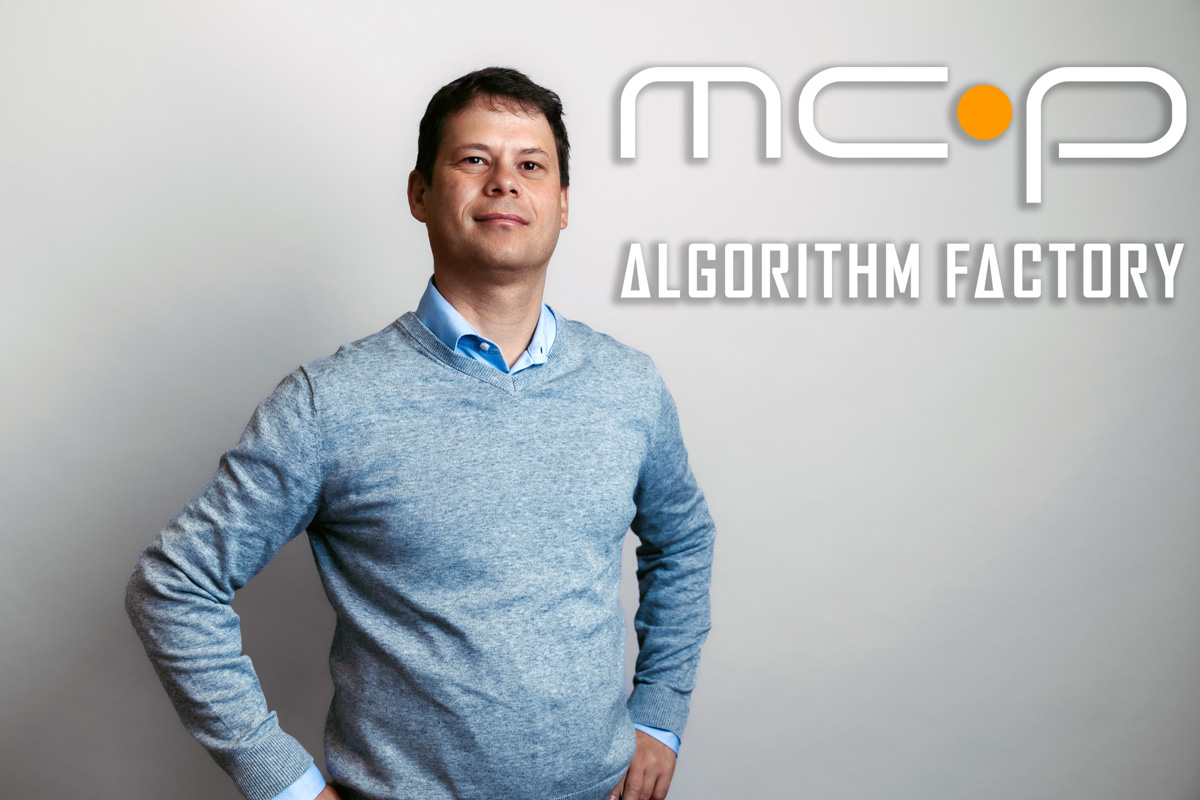
MCP Algorithm Factory
1. Could you tell us about your company and your experience working with Opcenter APS?
Daniel: MCP started as a consultancy for the industry, but in 2010 we had the opportunity to implement the first Preactor solution for Siemens at its transformer factory in Weiz, Austria. The experience with this project was very positive and became a turning point for us.
On the basis of that success, we decided to become an implementation partner for Preactor ourselves. Since then, our company has dedicated itself entirely to the field of production planning. Today, our Opcenter APS team is one of the largest and most experienced in Europe, working exclusively on helping manufacturers improve their planning and scheduling processes with Opcenter APS.
2. What’s your approach to implementing Opcenter APS for clients, and what makes it unique?
Daniel: In our projects, we always follow a holistic approach that encompasses consulting, implementation, and after-go-live support.
Introducing detailed production scheduling usually requires changes in both data quality and business processes in order to genuinely improve a company’s competitiveness. We actively support our customers through this transformation, not only from a technical perspective but also in terms of organization and workflows.

A key objective in every project is to implement a standard solution wherever possible, especially for larger clients who want to equip several sites with Opcenter APS. To support this, we have developed an extensive library of enhancements over the years and integrated them into Opcenter APS.
This is what we call our “component set solution”. It is designed to cover many common requirements that are not yet included in Opcenter APS, in both discrete manufacturing and, above all, in process industries. As a result, we are able to deliver highly complex solutions with comparatively little effort.
Opcenter APS is ideally suited for such custom developments, and this is another strong reason why we chose – and continue – to be a partner.
3. Can you share a specific customer success story where Opcenter APS solved a significant challenge?
Daniel: One of our most complex projects was for a company in the food industry, where we faced two major challenges.
The first challenge involved highly intricate requirements for Opcenter SC, such as managing silos and tanks with varying volumes and restrictions. These constraints applied before, during, and after the production process and frequently led to bottlenecks. On top of that, strict contamination rules had to be observed throughout production.
The second major challenge was a complete shift in process thinking – not only within the company itself but also among many of its customers. Previously, processes relied heavily on ad hoc solutions and substantial manual effort. To enable Opcenter SC to plan effectively, it was necessary to lay a solid structural and data foundation.
We successfully rolled out the solution at multiple sites, supported by the integration of our AI solution for the food industry with Opcenter SC. The benefits quickly became clear:
- A significant reduction in planning effort
- Increased utilization of key equipment through reduced cleaning requirements
- Improved use of silo capacities, reducing bottlenecks and increasing stability in production
This project demonstrates how close collaboration, willingness to rethink long-established practices, and the combination of Opcenter and AI-based optimization can deliver tangible, measurable improvements.
4. What trends are you seeing in manufacturing planning and scheduling, and how does Opcenter APS address them?
Daniel: We are observing several important trends, but there are two areas where we are particularly active.
The first major trend is the growing adoption of artificial intelligence in industry. Within our field, machine learning and mathematical optimization are especially relevant. These technologies have existed for quite some time, and we have been developing our solutions accordingly, but the momentum has significantly increased with the emergence of technologies such as ChatGPT and large language models in general.

The first major trend is the growing adoption of artificial intelligence in industry. Within our field, machine learning and mathematical optimization are especially relevant. These technologies have existed for quite some time, and we have been developing our solutions accordingly, but the momentum has significantly increased with the emergence of technologies such as ChatGPT and large language models in general.
Our solutions are already in use and are continuously evolving. Opcenter APS plays a crucial role by enabling us to generate and visualize highly effective planning results, which then serve as a foundation for applying our optimization algorithms. Typical use cases include:
- Setup optimization
- Utilization of manufacturing tools
- Tank management
- Workforce scheduling
The second major trend is the increasing focus on energy costs, particularly the avoidance of peak loads and unnecessary CO₂ emissions. This can be addressed through intelligent planning rules, such as:
- Batch optimization for tempering processes
- Avoiding unnecessary machine downtimes
- Defining restrictions for maximum permitted energy consumption
We have taken this a step further by integrating energy forecasting modules into Opcenter SC. These modules provide full transparency through an integrated forecasting system, indicating when production is expected to have the highest energy consumption and when energy is likely to be more cost-effective. This creates a strong basis for more sustainable and cost-efficient scheduling decisions.
5. What advice would you give to manufacturers considering implementation of advanced planning and scheduling solutions?
Daniel: Some key pieces of advice are essential for the success of an APS project:
Maintain a culture of continuous improvement after go‑live.
The work does not stop once the system is implemented. To ensure the solution continues to deliver value, companies should establish and maintain continuous improvement practices around planning and scheduling.nderstands both your industry and your global ambitions. The right partner can make all the difference in delivering a solution that works for your unique operational needs and supports your long-term growth objectives.
Adopt an agile, step‑by‑step approach.
Introduce the solution incrementally. With each new release, critically assess which core functionalities are still missing and what may no longer be necessary.
Scrutinize your data and stay open to change.
Be prepared to review and improve both the quality and the quantity of your data. Reliable planning is only possible with reliable input.
Be ready to adapt business processes.
Certain processes will often need to change. It is vital to bring everyone affected along on this journey, while also being willing to adjust structures and responsibilities where necessary.
Reassess the importance of APS in your digitalization roadmap.
APS is often considered less important than MES or ERP. In reality, an APS project is typically far less complex and can deliver significant improvements quickly. It is worth reconsidering the relative priority of APS compared to other initiatives.
About MCP Algorithm Factory
MCP Algorithm Factory focuses entirely on production planning and scheduling, with a strong specialization in Siemens Opcenter APS and Opcenter SC. From its first Preactor implementation at the Siemens transformer factory in Weiz, Austria, the company has grown into one of Europe’s most experienced Opcenter APS teams.
In addition to its “component set solution” for Opcenter APS, MCP has developed its own workforce planning solution that addresses key aspects of employee scheduling in production, including attendance, team membership, and qualifications. Through bidirectional integration with Opcenter SC, employees can be automatically assigned to workstations using AI, and Opcenter SC always has precise information on the number of employees available per shift and team.
MCP warmly invites other Siemens partners to get in touch if they would like to learn more about this workforce planning solution or other MCP products for Opcenter SC, including their AI offerings and component set solution.
For more information:
- Company: MCP Algorithm Factory
- Website: www.algorithm-factory.com
- Contact: Daniel Walkiewicz – daniel.walkiewicz@mcp-alfa.com
- LinkedIn: https://www.linkedin.com/company/mcp-gmbh/
- Partner of the month: ATS Global France – Global excellence in Opcenter APS implementation
- Siemens Partner Spotlight!
Are you a Siemens Opcenter APS partner interested in being featured as our Partner of the Month? Reach out to us and tell us your story!