In the world of electronics manufacturing, especially anything involving complex PCB boards, the stakes are high and the margin for error is razor-thin. With competition at an all-time high—particularly from the Far East—operational efficiency from design to production needs to be agile, efficient, and error-free. This is exactly why Watts Electronics, a leading OEM supplier of HVAC electronics systems, turned to Siemens and its state-of-the-art Manufacturing Operations Management (MOM) solution portfolio to transform their operations company-wide.
A branch of Watts Water Technologies, a global leader in plumbing, heating, and water quality solutions, Watts Electronics is a market leader in advanced HVAC systems. The company handles the entire process from concept and customized PCBs to final packaging, creating innovative products like advanced thermostats and IoT ecosystem solutions for both the Watts Water Technologies group and their own OEM customers.
With two strategically located production facilities—an integrated R&D center in Rosières, France and a main production site in Monastir, Tunisia—Watts Electronics combines innovative technology with manufacturing excellence. The Rosières plant focuses on research, development, and product preparation, while the Tunisian facility specializes in flexible, high-volume production.
Operating at the edge: When innovation outpaces infrastructure
Watts Electronics operates in a uniquely demanding environment. The company dedicates 30% of its production capacity to new product lines annually, requiring constant innovation and rapid market responsiveness.
At Watts Electronics, we introduce 30% new product lines every year. Today, we are operating in an increasingly competitive environment. It is very important that we move towards standardization, simplification and optimization.
However, several interconnected challenges threatened their competitive advantage:
Misaligned Processes Across Sites: With operations split between France and Tunisia, synchronizing design, engineering, and production processes was difficult and error-prone.
Slow Quote and Launch Cycles: Customer demands for faster product quotations, introductions, and upgrades outpaced the company’s ability to deliver, hampered by manual, spreadsheet-based processes.
Complex Production Requirements: The Monastir facility produces middle-volume/high-mix products with 80 SMT series changes and 160 manual parts series changes per week—a level of complexity that demanded real-time visibility and agile scheduling.
Data Management Inefficiencies: Outdated spreadsheet-based processes and manual data entry created bottlenecks, reduced visibility, and made data-driven decision-making nearly impossible.
Quality and Traceability Issues: Without standardized procedures and real-time visibility, ensuring consistent quality and complete traceability across both sites was a constant struggle.
Building the bridge: A phased transformation with Siemens Opcenter
After evaluating market options, Watts Electronics selected the Siemens Opcenter Execution Electronics solution, enhanced with consulting expertise from CDT, a Siemens expert solution partner. CDT provided critical onsite support in both France and Tunisia, guiding the team through every stage of implementation.
We know that Siemens solutions are proven in electronics. We really felt that we were talking to people who work in the same field and that we would get a solution that meets our needs—not a solution that we have to adapt to our needs.
Cédric Vauzelle, Site Director (Monastir), Watts Electronics
Watch the full interview to see how Watts Electronics transformed their operations with Opcenter
Rather than attempting a “big bang” implementation, Watts Electronics adopted a strategic, phased approach:
Phase 1: BOM Connector (Rosières) The journey began with BOM Connector, which streamlined the quote process by connecting the company’s ERP system to map customer bill of materials (BOM) data. This automation delivered faster quote generation through automated part number matching, enabled real-time cost calculations based on current sourcing and pricing, and established a solid foundation for production planning and cost analysis. The implementation also enhanced material traceability throughout the supply chain, setting the stage for downstream improvements.
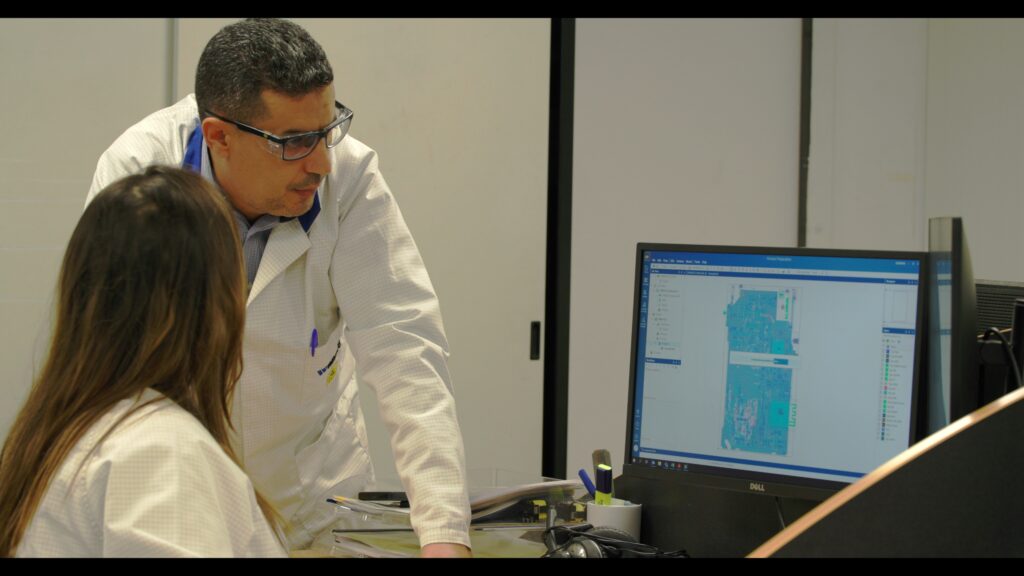
Phase 2: Process Preparation (Both Sites) Next came Process Preparation, deployed in both France and Tunisia to standardize new product introduction processes. The results were immediate, with accelerated new product introduction—especially for SMT operations—and more efficient new product lines that delivered fewer quality issues and defects across both facilities.
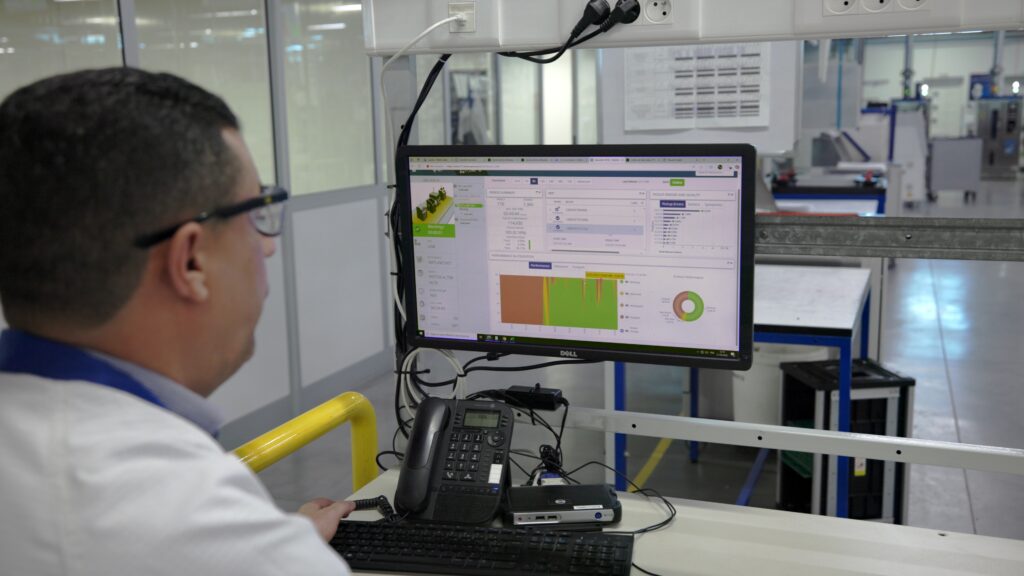
Phase 3: Opcenter Execution Electronics (Monastir and, later, Rosières) With Opcenter Execution Electronics Watts could achieve real-time visibility of what was happening across their production facilities, optimize their production ramp-ups, and enable centralized management of operations from both their Tunisia and France sites. By adopting this comprehensive manufacturing execution system, the company could finally break free from spreadsheet-based workflows and gain the integrated control needed to synchronize operations across their geographically dispersed facilities.
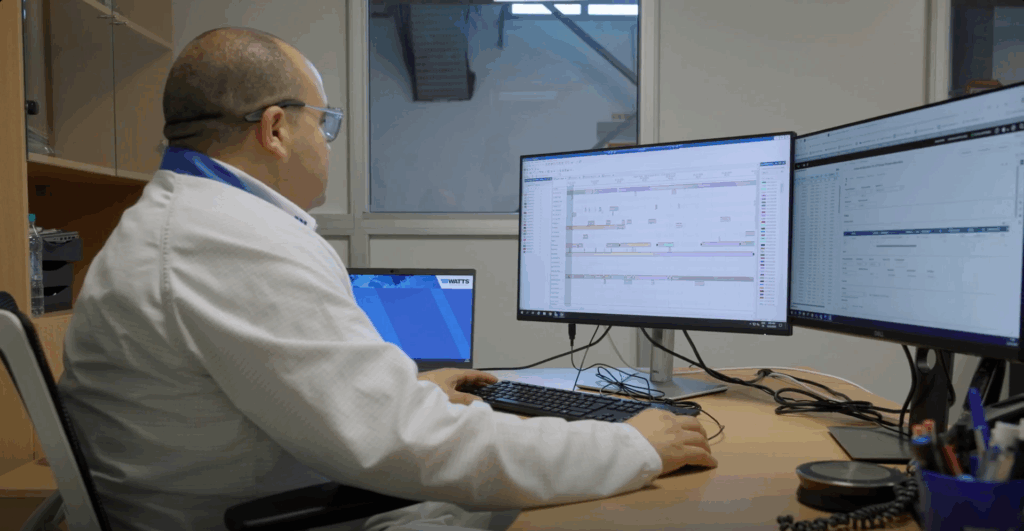
Phase 4: Opcenter APS & SMT Scheduling (Monastir) The team then integrated Opcenter APS and Opcenter SMT Scheduling for comprehensive production scheduling across all SMT lines and the overall factory. This enabled real-time schedule and production priority modifications, gave operators better control over machine programming and production sequencing, and empowered the team to respond rapidly to quality defects and customer requests through synchronized production stages and quick replanning capabilities.
The key to the success of Watts Electronics digitalization project was to start with a long term vision but focus on short term benefits. This gave the opportunity to the Watts team to realize the benefits of using Siemens solutions from day one.
Ibrahim Gogus, CDT, Managing Director Manufacturing Technologies
The payoff: measuring success at Watts Electronics
The impact of Watts Electronics’ Siemens MOM implementation has been substantial and measurable across every dimension of their operations.
Operational Efficiency Unleashed Watts Electronics eliminated paper documentation and outdated data management procedures, creating real-time visibility throughout the production process and across both facilities. Perhaps most importantly, the implementation freed up valuable employee time from non-value-added tasks, allowing teams to focus on higher-impact work such as process analysis, production optimization, and personal development.
Speed and Agility Redefined The company accelerated ramp-ups, pre-series, and series production cycles while significantly shortening quote preparation times. The new system enabled rapid response to customer requests for urgent orders and product modifications, ultimately reducing time-to-market for new products and strengthening customer relationships.
Quality and Traceability Enhanced Across both sites, production quality improved measurably, while material traceability now extends seamlessly from component procurement through final delivery. Standardized processes and real-time monitoring reduced manufacturing errors, elevating the consistency and reliability of Watts Electronics’ products.
Unified Operations Across Continents By standardizing operations and processes between Rosières and Monastir, Watts Electronics successfully managed operational efficiency and production quality across geographically dispersed facilities. The implementation dramatically improved communication and coordination between R&D and manufacturing, transforming two separate operations into a truly integrated enterprise.
Looking forward: The next phase
Watts Electronics isn’t resting on its laurels. The team is already planning the next phase of their digital transformation:
Opcenter IPL (Intra-Plant Logistics) deployment to provide further visibility and control of material flows across both sites
Advanced reporting and analytics to visualize the entire supply chain with complete traceability
Enhanced machine connectivity through the full Opcenter Execution system
Key to success: A phased, guided approach
One of the most important lessons from Watts Electronics’ journey is the value of a phased implementation strategy. As Vauzelle explains: “We are very happy with our choice to split our Siemens MOM project into phases to reduce overall risk and increase its long-term success. This also allowed the teams to get up to speed with the new tools at a reasonable pace and on a daily basis. This measured approach, combined with expert guidance from CDT and strong internal leadership, ensured that the transformation was sustainable and that employees could adapt to new tools without being overwhelmed.”
A small medium sized organization can take on an ambitious digitalization project and deliver it in phases. You don’t have to be a giant corporation to realize the benefits of Siemens solutions.
Ibrahim Gogus, CDT, Managing Director Manufacturing Technologies
Ready for the future
As the electronics industry continues to evolve with more complex and intelligent products, fluctuating prices, and intensifying competition, Watts Electronics is well-positioned for success. Their Siemens MOM solution has standardized operations, improved efficiency, and prepared the company for future growth—all while preserving product quality and employee satisfaction.
As Myriam Granger concludes:
“Our Siemens MOM solution certainly standardized all our operations and processes, but it also has equally aided us in preparing for the future in a much more efficient manner while preserving the quality of our products and those of our customers.” In an industry where agility and precision are competitive imperatives, Watts Electronics has demonstrated that the right digital transformation strategy—implemented thoughtfully and with expert guidance—can deliver measurable results and position a company for sustained success.
As the electronics industry continues to evolve with more complex and intelligent products, fluctuating prices, and intensifying competition, Watts Electronics is well-positioned for success. Their Siemens MOM solution has standardized operations, improved efficiency, and prepared the company for future growth—all while preserving product quality and employee satisfaction.
February 24, 2025Opcenter X for scalable digital transformation Summary Siemens Digital Industries Software is pioneering modular MOM, enabling more manufacturers to take...
June 6, 2025Ready to streamline your quality management approach and boost data consistency across your organization? Don’t miss our quality management sessions...
This article first appeared on the Siemens Digital Industries Software blog at https://blogs.sw.siemens.com/opcenter/futureproofing-in-the-ever-changing-electronics-manufacturing-industry-with-siemens-opcenter/