Partner of the Month: Lean Scheduling Brasil – Unlocking hidden capacity with Opcenter APS

For manufacturers facing volatile demand, tight capital constraints and increasing pressure to improve performance, the answer is not always additional equipment or production capacity. Sometimes, the capacity they need is already there – hidden in inefficient sequencing, lengthy changeovers, shifting bottlenecks and planning decisions that do not fully reflect real production constraints.
Making this hidden capacity visible is the starting point for Lean Scheduling Brasil (LSB), our Partner of the Month. The Brazilian specialist in manufacturing planning and scheduling and Siemens Silver Expert Partner helps industrial companies improve production planning and make better use of the resources they already have.
We spoke with Adriano Dini, CEO of Lean Scheduling Brasil, to learn more about the company’s experience with Siemens Opcenter Advanced Planning and Scheduling (APS), its “Hidden Capacity First” methodology, that identifies underutilized production capacity, and how manufacturers can uncover capacity they may already have.

Lean Scheduling Brasil
1. Could you tell us about your company and your experience working with Opcenter APS?
Adriano: Lean Scheduling Brasil is a Brazilian specialist in manufacturing planning and scheduling and a Siemens Silver Expert Partner. We work exclusively with industrial companies, and our portfolio is built around the Siemens Opcenter MOM family, including Opcenter APS, Opcenter Intra Plant Logistics, master production scheduling and sales and operations planning.
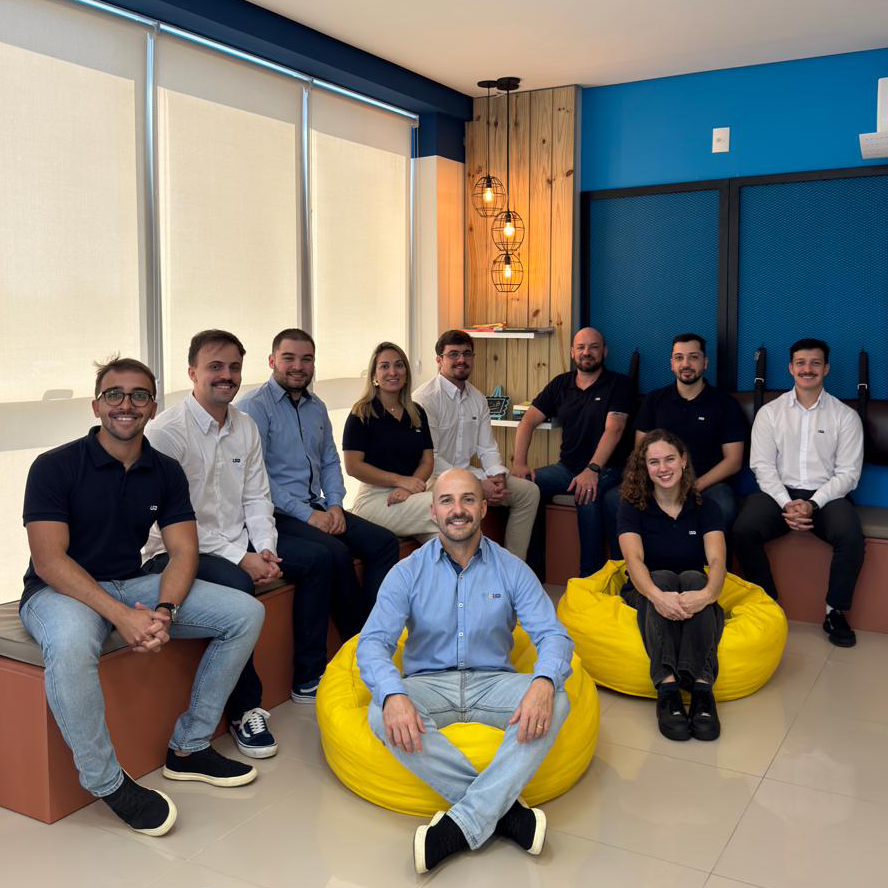
LSB turns ten years old this year, and during that time we have delivered more than 120 projects across Brazilian manufacturing. We work from offices in Florianópolis and Porto Alegre and concentrate on verticals where planning complexity is particularly high: plastics and packaging, consumer goods and automotive and heavy equipment.
The company is younger than the expertise inside it. Our founding partners and several senior members of the team have worked with Opcenter APS back when it was still called Preactor APS. This means the experience behind our implementations spans considerably more than the company’s own history, and we have seen the same manufacturing challenges evolve across multiple industrial cycles.
The Brazilian market has also shaped how we work. Manufacturers often operate under tight capital constraints and high demand volatility, and many cannot commit to a long transformation program before seeing a return. We therefore learned to start where the return already exists: in the production capacity a plant owns but cannot see.
Opcenter APS helps make that capacity visible, and the results achieved can help support the digitalization journey that follows.
2. What’s your approach to implementing Opcenter APS for clients, and what makes it unique?
Adriano: We call our methodology “Hidden Capacity First”. It starts from something we see in almost every plant we visit: manufacturers rarely lack capacity. They often lack visibility into the capacity they already have.
That capacity can be hidden in setup sequences that could be grouped, bottlenecks that move from week to week or schedules built from a planner’s experience rather than from real production constraints. Our work is to surface that capacity, prove it and use the result to support what comes next.
Every project begins with a structured assessment of how the plant actually plans, rather than simply how the process is documented. We map real constraints, changeover matrices, sequencing rules and the informal decisions planners make every day. This allows us to develop a quantified hypothesis of recoverable capacity before implementation.
We then validate the potential value using the manufacturer’s own historical data. By rescheduling a real past production period under real constraints, the planning team can compare the results with what actually happened on the shop floor. This early evidence is particularly important when capital commitments are closely scrutinized.
Another key part of our approach is transferring ownership to the planners. A schedule nobody trusts is a schedule nobody follows. We work with planners so they can understand and own the model, adjust constraints and support the planning process across sales and operations.
Finally, we take a staged approach. The capacity recovered in the first phase can become the business case for the next step, whether that is schedule adherence, execution with Opcenter Execution or sales and operations planning.
What makes our approach unique is the combination of capacity diagnosis before implementation, value validation based on the plant’s own history, strong focus on planner ownership and vertical expertise in plastics, packaging, consumer goods, and heavy equipment.
Ultimately, we measure success by whether the manufacturer can see capacity it could not see before and whether that visibility provides enough value to justify the next step.
3. Can you share a specific customer success story where Opcenter APS solved a significant challenge?
Adriano: One example is our work with Packing Group, a manufacturer of flexible plastic packaging.
Packing Group was already a well-run operation with a disciplined planning team. However, the company was facing a structural challenge in its production scheduling. Scheduling revolved around extruders, where changeovers are long and highly dependent on production sequence. Every setup consumed capacity and generated raw material waste, while many sequencing decisions depended on the experience of a small group of analysts.

Building a schedule for the plant took around 80 minutes. This also meant that disruptions during the production week often had to be absorbed manually rather than through rapid replanning. We implemented Opcenter APS with optimization logic specifically designed for extruder scheduling, modeling changeover attributes and the sequence-dependent rules the plant actually followed.
An important part of the project was involving the shop floor team in discussions about how the business rules should work. Their knowledge helped ensure that the schedules reflected the real factory rather than an idealized version of the production process.
The project demonstrates what we mean by hidden capacity. No additional capacity was added to the plant. Instead, capacity that was already available became more visible through improved sequencing and faster scenario evaluation.
We significantly raised the quality of the planning, ensuring an exceptional level of accuracy and providing even faster and more precise service to our customers.
Carlos Pistarini, Supply Chain Director, Packing Group
4. What trends are you seeing in manufacturing planning and scheduling, and how does Opcenter APS address them?
Adriano: We are seeing several important developments:
Capacity recovery is increasingly competing with capital expenditure:
Manufacturers evaluating expansion are increasingly asking how much of the capacity they want to buy they may already own. Opcenter APS helps address this by exposing throughput that may be lost through sequencing, changeovers and synchronization rather than physical capacity limitations.
Planning knowledge concentrated in individuals is becoming a recognized business risk:
In many plants, important scheduling rules exist primarily in the experience of one or two planners. Opcenter APS helps make this knowledge explicit by turning changeover matrices, sequencing preferences and constraint hierarchies into structured planning parameters.

Artificial intelligence is entering the planning routine as decision support:
Interest in industrial AI is high, but manufacturers want to understand how it can support the planner’s daily work. LSB has developed an AI agent that operates on top of Opcenter APS to help planners interpret schedules, compare scenarios in natural language and understand where constraints are binding and what impact they may have. The planner remains responsible for evaluating and publishing the plan. Opcenter APS already contains a structured model of the factory’s constraints, rules and changeover logic, allowing the AI agent to work with information about the actual operation.
Planning is becoming an arbitration layer between commercial and operations:
Manufacturers are increasingly looking to move discussions about delivery commitments away from negotiation and toward evidence. Opcenter APS supports this with capable-to-promise logic and rapid scenario simulation, allowing commitments to be tested against real production constraints.
APS is increasingly becoming an entry point into broader manufacturing operations management:
Manufacturers often start where the return is fastest and most visible: scheduling. Once the schedule is trusted, opportunities to expand into areas such as execution, master production scheduling and sales and operations planning become clearer.
5. What advice would you give to manufacturers considering implementation of advanced planning and scheduling solutions?
Adriano: Across more than 120 implementations, the pattern we see is that APS projects rarely fail because of technology. Adoption is often the bigger challenge.
Start by deciding who owns the schedule:
Before selecting software, manufacturers should identify who will be accountable for the published plan and whether that person has the authority to maintain it when commercial pressure arises. A schedule with no owner can quickly become a suggestion rather than an operational plan.
Measure how long the current schedule survives:
A useful diagnostic is to look at how many hours pass after publication before the schedule no longer reflects what is happening on the factory floor. If this is measured in hours rather than days, the issue may be that the plan was not built against real constraints.
Assume that some of the most important rules are undocumented:
Every plant has sequencing rules and operational knowledge that may exist only in the experience of the people responsible for planning. Identifying these rules requires conversations with planners and shop floor teams, not just workshops or requirements documents.
Do not let data quality become a reason to postpone indefinitely:
Master data is important, but it will rarely be perfect. Starting with a focused scope can reveal which routings, changeover times and other planning information do not reflect operational reality.
Choose a first scope where the impact is clear:
This could be a bottleneck resource or an area with significant changeovers. A measurable first result can help build confidence and create the business case for further phases.
Treat planner adoption as a project deliverable, not simply as training:
Trust is built by involving planning and shop floor teams in defining the rules that shape the schedule. Even the best-configured system will struggle if the people responsible for using it were never brought along.
It is also important to think beyond the first implementation. Manufacturers do not need to implement everything at once, but they should understand where the journey could lead next, whether that is execution, master production scheduling or sales and operations planning.
About Lean Scheduling Brasil
Lean Scheduling Brasil is a Brazilian specialist in manufacturing planning and scheduling and a Siemens Silver Expert Partner. With more than 120 projects delivered across Brazilian manufacturing, the company helps industrial organizations improve visibility into production capacity and optimize planning processes using the Siemens Opcenter MOM portfolio.
For more information:
- Company: Lean Scheduling Brasil (LSB)
- Website: https://lean-scheduling.com.br/
- Contact: Adriano Dini, CEO – adriano.dini@lean-scheduling.com.br
- LinkedIn: https://www.linkedin.com/company/lean-scheduling-brazil/
Are you a Siemens Opcenter APS partner interested in being featured as our Partner of the Month? Reach out to us and tell us your story!