Ergodinámica: reshaping sports medicine with purpose

When precision meets growth
Barcelona’s Ergodinámica sits at the intersection of sport, medicine, and biomechanics. For years, the specialized network of sports medical centers has been quietly transforming how athletes move: diagnosing injuries before they happen, optimizing performance through customized orthopedic insoles and footwear, and applying cutting-edge technology to prevent the injuries that sideline careers.
It’s meticulous work. Every insole is unique. Every patient’s biomechanics tell a different story. But success creates its own challenges.
As demand grew with more athletes, more clinics, and more customized solutions, Ergodinámica’s manufacturing process began to strain under the weight of its own precision. The workflow that had served them so well started to feel like an anchor. Each insole required a journey through disconnected systems: biomechanical studies conducted in one place, CAD models created in another, and machining instructions manually prepared in a third. Skilled operators repeated the same steps endlessly. Engineering time multiplied. Bottlenecks emerged.
The company had outgrown the very craftsmanship that made them successful.
“We needed to scale without losing what makes us special,” the Ergodinámica team reflects. “But our manual processes couldn’t keep up with demand. We were limited by engineering time, by the number of skilled hands we had, by the sheer repetition of tasks that should have been automated.”
The question wasn’t whether to digitalize. Rather, it was how to do it without sacrificing the precision that athletes depend on.

Finding the right path
Ergodinámica’s search led them to NX X Manufacturing, Siemens’ cloud-based design and manufacturing platform. But software alone wasn’t the answer. They needed a partner who understood their world, someone who could translate their specialized workflows into digital automation without compromising the biomechanical rigor their patients required.
That partner was ATS Global Spain, a Siemens implementation specialist with deep expertise in customized manufacturing solutions.
Together, they reimagined the entire process.
From gait analysis to production: one seamless flow
The transformation began with a simple insight: why should plantar pressure data travel through multiple disconnected systems?
Today, the workflow is elegant in its simplicity: during the gait analysis, plantar pressure data is captured from the patient’s foot. Within minutes, that point cloud flows directly into NX CAD. The system—configured with Ergodinámica’s anatomical knowledge and design rules—automatically generates a customized insole geometry tailored to that patient’s unique biomechanics.
No manual modeling. No interpretation. Just data-driven design.
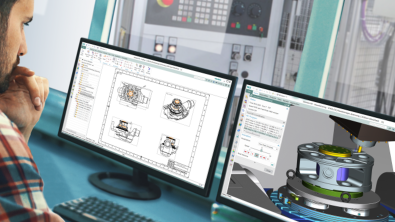
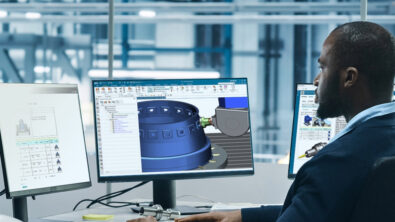
From there, the insole moves into manufacturing. NX CAM takes over, automatically positioning multiple insoles on specialized material sheets and programming the machining operations using pre-configured templates built from years of Ergodinámica’s expertise. Machine tool simulation validates every cut, every angle, every movement before a single piece of material is touched.
Then—and only then—the g-code flows to the CNC machine.

Everything happens inside one platform. Design, manufacturing, simulation, validation. No handoffs between systems. No manual steps where errors can creep in. No rework.
“It’s like we’ve compressed months of manual work into a single, intelligent workflow,” the team explains. “The machine knows exactly what to do because we’ve taught the system our knowledge.”
The impact: more than time savings
The numbers tell part of the story.
Five hours. That’s how much engineering time Ergodinámica saves every single week by automating their insole manufacturing process from digital model to machine-ready g-code. Multiply that across a year, across dozens of patients weekly, and the efficiency gains become transformative.
But the real impact runs deeper.
Standardization replaces variability. Where operator experience once determined quality, validated machining simulations now ensure consistency. Every insole meets the same standards. Every patient receives the same level of precision.
Capacity becomes predictable. The company can now confidently tell athletes, “Your custom insoles will be ready in X days”, because the timeline is no longer dependent on how many skilled hands are available or how busy the schedule is.
Scalability becomes possible. Ergodinámica can serve more athletes without proportionally increasing their engineering team. Growth no longer means hiring more operators to repeat manual tasks. It means leveraging automation to do more with the same resources.
The athlete experience improves. Faster turnaround times mean injured athletes get their customized solutions sooner. Training facilities get reliable, consistent equipment they can trust. Performance optimization happens on the athlete’s timeline, not the manufacturer’s.

A partnership built on understanding
What made this transformation successful wasn’t just the software—it was the partnership.
ATS Global Spain didn’t simply install NX X Manufacturing and walk away. They spent time understanding Ergodinámica’s processes, their design rules, their quality standards, their vision for the future. They customized both the design and machining workflows to match how Ergodinámica actually works, not how generic software assumes manufacturing should work.
Siemens provided strategic guidance on platform configuration and license selection, ensuring that every feature was optimized for Ergodinámica’s specific needs.
The result was a solution that felt less like new software and more like a natural evolution of their own expertise: yet accelerated, automated, and integrated.
Looking forward
The implementation is running smoothly, and Ergodinámica is already thinking about what comes next.
They’re reviewing machining templates to squeeze even more efficiency from their cycle times. They’re planning to expand automation capabilities as new materials and insole designs enter their portfolio. They’re imagining what becomes possible when digital manufacturing is no longer a constraint but an enabler.
“This is just the beginning,” the team says. “We’ve solved the bottleneck. Now we can focus on innovation: new designs, new materials, new ways to help athletes move better.”