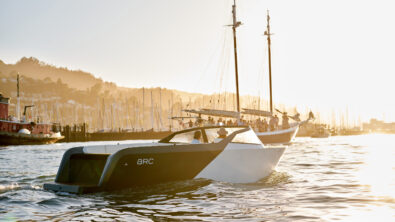
AI-driven generative design expands what’s possible in ship engineering
In July 2026, HD Hyundai – the world’s largest shipbuilder – announced it had selected Siemens as its software partner to establish an AI-powered digital shipyard to modernize U.S. shipbuilding. Combining HD Hyundai’s shipbuilding expertise with Siemens’ leadership in industrial AI, ship engineering, manufacturing, simulation and operational software, the companies aim to help shipbuilders accelerate production readiness, improve quality, reduce rework and create a connected digital thread across the shipbuilding lifecycle.
This news isn’t just great for Siemens and HD Hyundai; it creates a blueprint for next-generation digital shipbuilding, benefiting both commercial and naval shipbuilders. Many shipbuilders around the world will be watching this transformation with interest. How do you establish a completely digital, secure and collaborative environment that enables controlled data sharing, configuration management, digital approvals, production visibility and lifecycle traceability? That’s what the next-generation digital shipyard aims to find out.
AI-driven design and engineering tools help create a bridge between today’s somewhat disconnected, linear engineering workflows and tomorrow’s connected, optimized and innovative processes. And it should be on every shipbuilder’s radar.
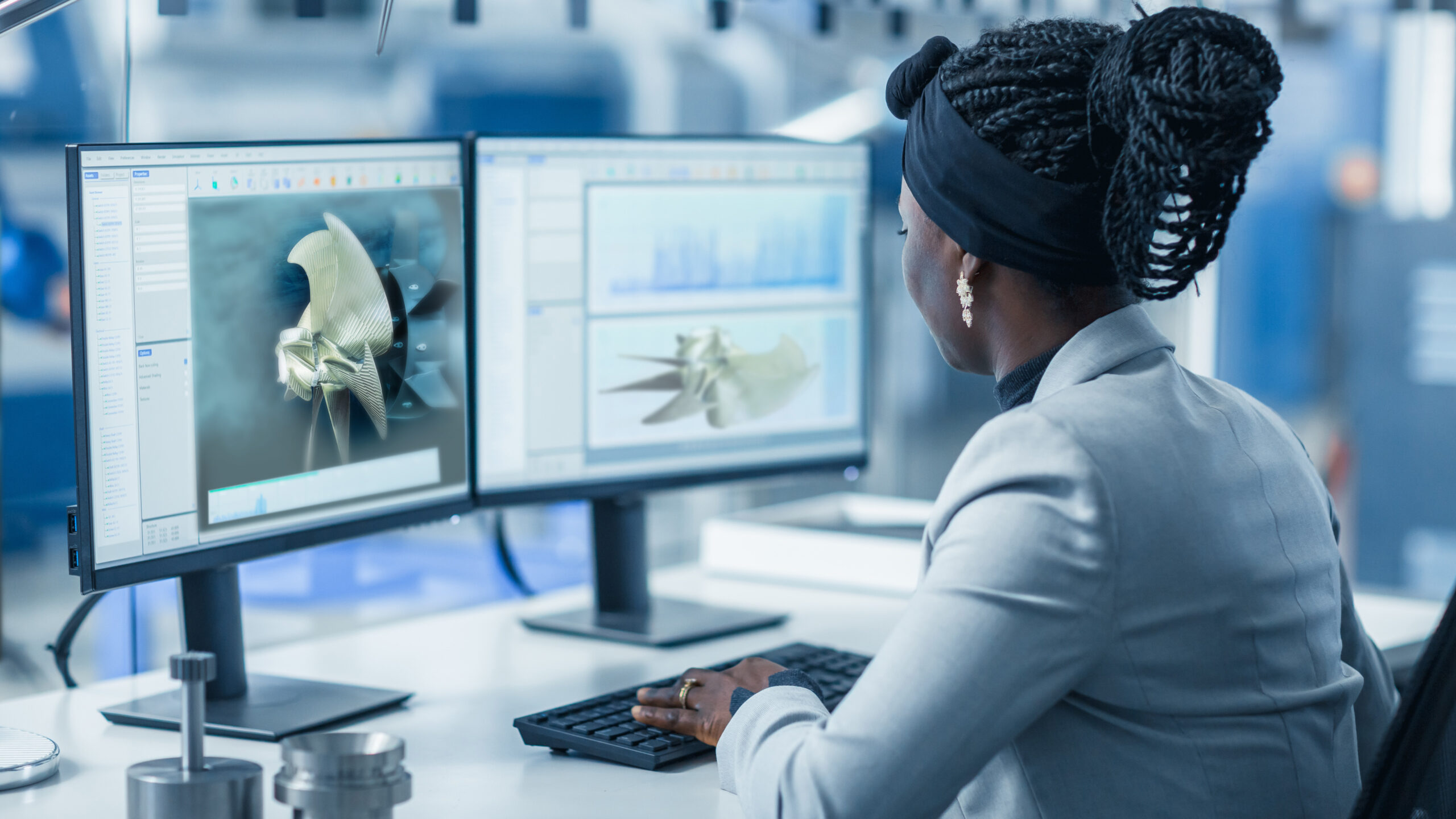
Understanding the industrial shift from ‘smart machines’ to ‘cognitive partners’ in ship engineering
There’s been a lot of change in the manufacturing sector since 2010, dubbed “the fourth industrial revolution,” which brought about connected smart machines and the Internet of Things. Now we’re at the cusp of the “fifth industrial revolution,” and adapting to artificial intelligence, robotics, cognitive systems and improved connectivity. In the shipyard of the very near future, AI is not a replacement for the engineer; it is a force multiplier for human expertise.
In a ‘human-in-the-loop’ model, AI can handle the iterative heavy lifting – calculating thousands of permutations for hull design, weight stress and fluid dynamics in less time. This allows lead engineers to focus on higher-level strategy and radical innovation.
Barriers to AI adoption are real but temporary
We can’t talk about this shift without addressing the reality of AI adoption and understanding the barriers. While AI generates great interest across nearly every industry, including marine, implementation remains a challenge for most companies.
- ROI: 75% of executives report that they have not yet seen a clear return on investment from AI initiatives. Many companies are still in the early stages of applying AI effectively. (Source: BCG 2025)
- Quality: Nearly half of organizations cite poor data quality and concerns about bias as obstacles. If data is incomplete, inconsistent or difficult to access, the quality of AI-driven insights will inevitably suffer. (Source: IBM 2025)
- Data readiness: More than 60% of organizations report that they are not adequately prepared from a data perspective. When company data is spread across multiple systems, documents and databases, it’s difficult to create the trusted foundation that AI requires. (Source: Gartner 2025)
- Employee acceptance: 70% of companies have not yet trained their employees to work effectively with AI. Like any new technology, people need help understanding how to use it and integrate it into workflows. (Source: BCG 2025)
- Trust: Almost half of organizations report a lack of confidence in AI systems. Users want to understand where answers come from and whether results are reliable. (Source: KPMG 2025)
- Isolation: Despite all the excitement, many AI initiatives remain as isolated pilots or departmental experiments rather than fully integrated, enterprise-wide deployments. (Source: McKinsey 2025)
The encouraging message for the marine industry is that these barriers are not permanent. They are challenges that can be addressed through better data management, stronger digital foundations, targeted training and carefully selected use cases that deliver measurable value. Companies that take this approach will be in the strongest position to benefit from AI as adoption continues to mature.
Siemens Designcenter™ software provides the engine for practical AI applications
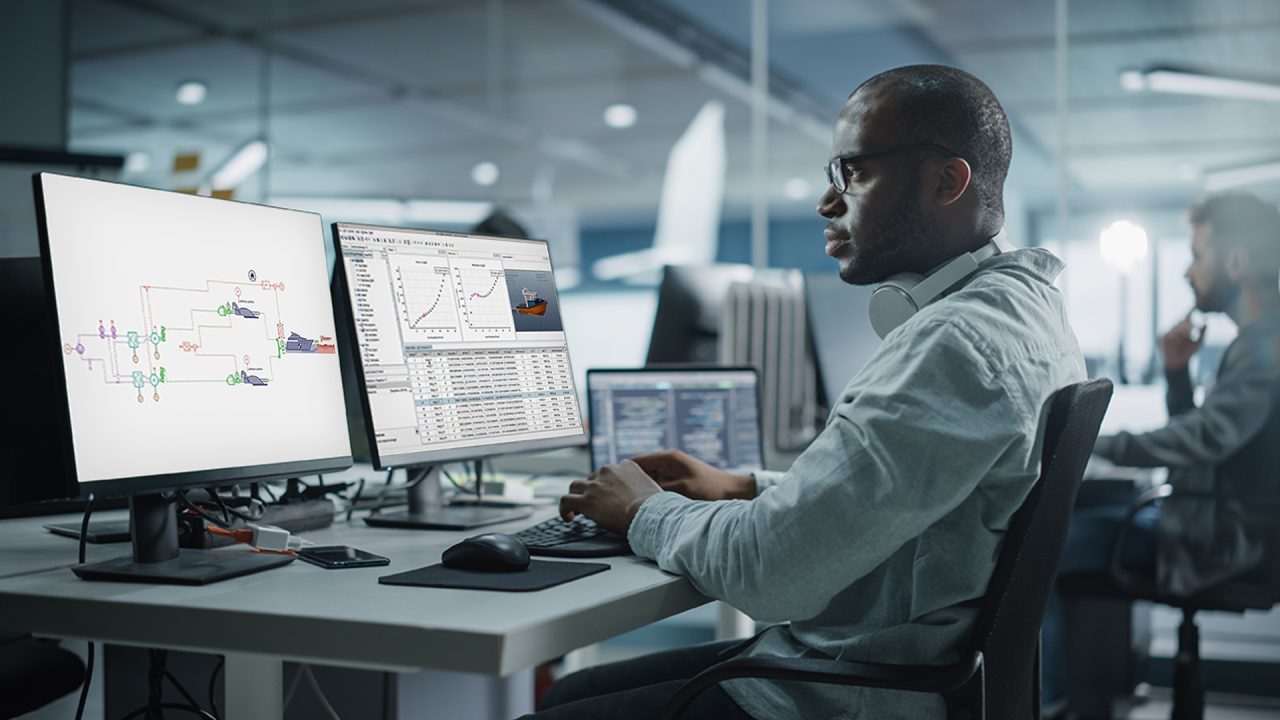
Siemens’ Designcenter software exemplifies how advanced AI and generative design are being deployed in marine engineering projects to enable rapid design iteration.
- AI copilots help users find documentation, commands, best practices and workflow guidance within Designcenter using natural language questions. By providing contextual assistance directly within the engineering environment, copilots help reduce time spent searching for information and enable engineers to focus more on design, problem solving and innovation.
- AI-enabled capabilities help engineers work faster and more efficiently – such as command prediction, component selection, voice command assistant, molded part design – just to name a few. This does not replace engineers; it simply removes low-value administrative work so experts can focus on more complex problems.
- AI-assisted engineering workflows help ship designers automate repetitive engineering tasks and accelerate design creation, helping teams deliver projects faster with greater consistency.
But there’s even more to come. To achieve the full vision of a transformed shipyard, general-purpose AI is not enough. A shipyard needs engineering-aware AI, which learns and understands the specific challenges, physics, materials and regulatory constraints of the maritime world. That’s at the core of Siemens’ new Intelligence Center X. By bridging the gap between advanced AI models and real-world engineering data and requirements with a human in the loop, Intelligence Center X can help ensure that every AI-generated suggestion is not just innovative, but manufacturable, safe and cost-effective.
Siemens’ vision is not for AI to replace expertise in engineering, CAD or simulation. Instead, AI can enhance the engineering tools and knowledge that already exist. For marine organizations, it creates the opportunity to accelerate design cycles, reduce repetitive work, improve knowledge reuse and help engineers focus more of their time on innovation.
Riding the AI tide to transformation
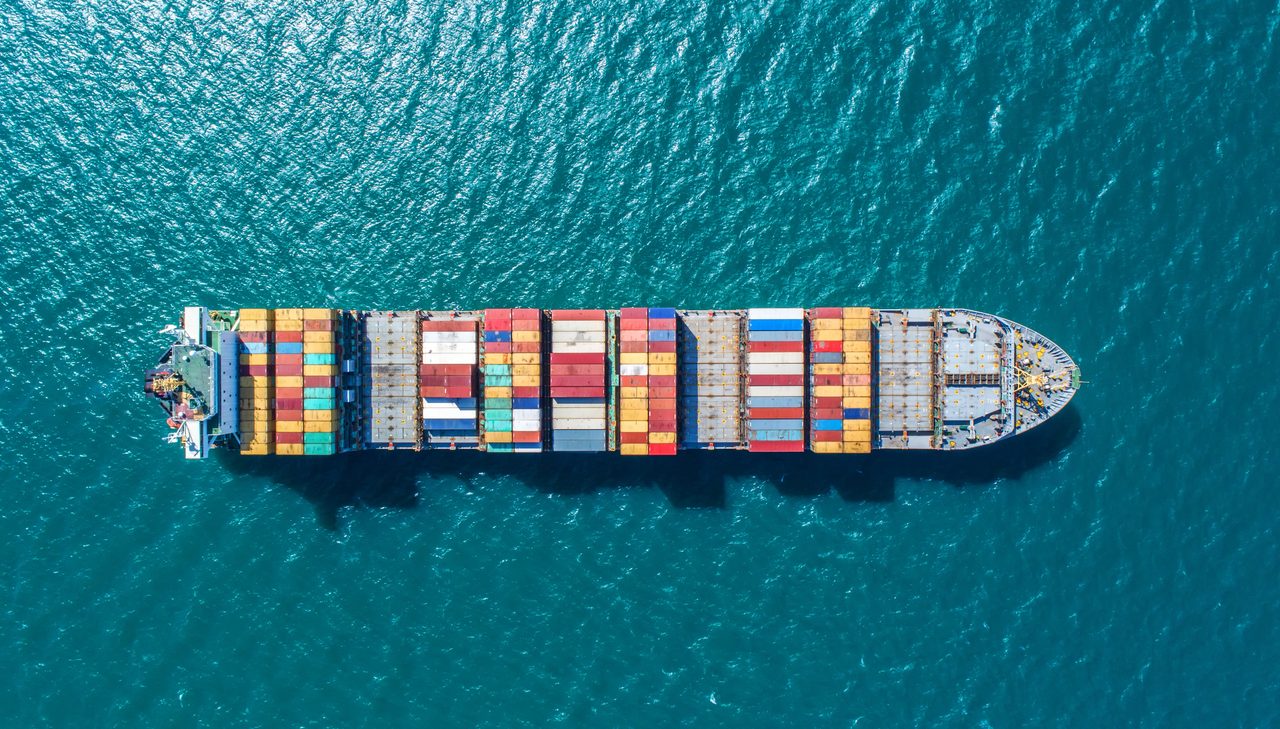
The maritime AI market is growing 23% annually and is rapidly being adopted across vessel operations, with AI‑enabled systems already improving optimization of resources, workloads and maintenance processes throughout the industry.
The future of ship design that’s being propelled by the partnership between HD Hyundai and Siemens is an invitation for others to innovate. “AI is not merely a tool for improving productivity, but a transformative technology that is reshaping how ships are designed, built and operated,” stated H.K. Kim, president and CEO of HD Korea Shipbuilding and Offshore Engineering.
This transformation will model how shipbuilders can establish a secure, collaborative operating environment that enables controlled data sharing, configuration management, digital approvals, production visibility and lifecycle traceability while maintaining design authority and execution responsibility.
Are you ready to navigate the future of maritime engineering? Download our latest e-book, The artificial intelligence tide.