The strategic copilot: AI-enhanced marine engineering is driving business impact
In marine engineering, the questions about AI are swirling around a new urgency to transform the industry through decarbonization, advanced technology and autonomous features – all while delivering vessels faster and more cost-effectively. “Business as usual” – working in siloed, largely sequential workflows – will prevent companies from moving forward. However, AI-enhanced workflows allow strategic copilots to work alongside engineers, handling mundane tasks and allowing specialists to focus on high-impact innovation that drives the bottom line.
What is the business value of AI in marine engineering?
The value of any tool or technology isn’t measured by its novelty, but by its ability to improve business outcomes. In marine engineering, AI has moved past the “experimental” phase and is now delivering quantifiable business results. We are seeing a fundamental shift where AI-enhanced workflows are transforming engineering from a cost center into a primary driver of ROI.
The data tells a compelling story. A recent analysis by The Institute of Marine Engineering, Science and Technology found that early adopters of generative AI in the marine sector are already seeing design cycles accelerated by as much as 20%, while simultaneously reducing overall design costs by 10%. These aren’t just incremental gains; they represent a significant competitive advantage. Furthermore, AI-driven optimization is pushing vessel performance to new heights, achieving hydrodynamic efficiency improvements of 8% or more and reducing fuel consumption by up to 15%.
This is an extremely important point as the International Maritime Organization’s (IMO) Carbon Intensity Indicator requires continuous operational efficiency improvement toward a 2030 target of at least a 40% reduction in CO2 per transport work versus 2008. For leadership, this means delivering a superior product that meets the most stringent performance and environmental standards without the traditional trade-off of extended timelines.
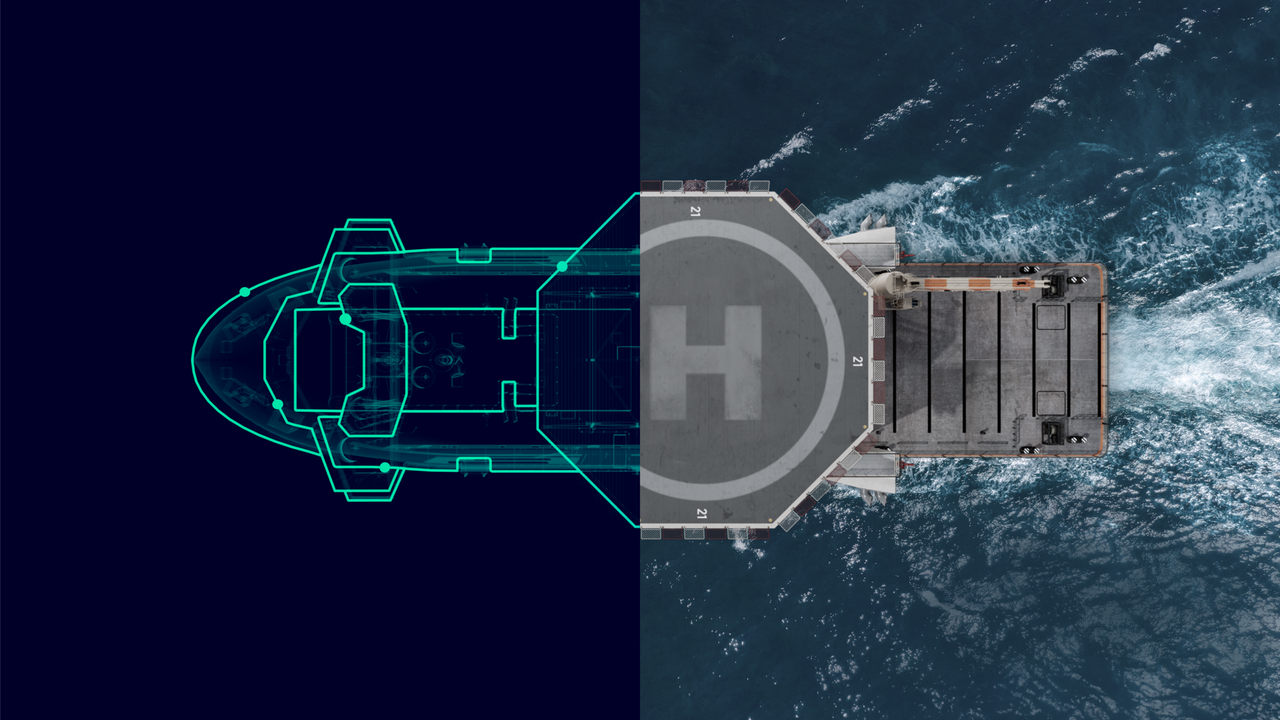
In an industry where being first-to-water with a more efficient vessel is everything, AI can be the differentiator between market leaders and followers.
What are the benefits of AI in marine engineering?
According to the Thomson Reuters Future of Professionals report, 45% of professionals say their biggest hope for AI is improved overall productivity and efficiency, while two-thirds believe AI will have a transformational or high impact on their profession within five years.
One of the most persistent myths about AI is that it will eventually replace employees. The reality is that the most successful implementations of AI in shipbuilding always follow a human-in-the-loop model. In this way, AI acts as a strategic copilot, handling any mundane, repetitive or data-heavy tasks that often act as innovation killers.
Every hour an engineer spends on manual data entry, routine simulation setup or navigating disconnected data sets is an hour lost to high-value innovation. By automating these routine workflows, AI liberates your best talent to focus on the complex, multi-disciplinary challenges that define modern marine engineering, such as developing novel hull forms or integrating alternative propulsion systems. The human engineer remains the final arbiter of quality, safety and creative vision, but they are now empowered by a copilot that handles the heavy lifting of the design process. This synergy ensures that innovation and performance are never compromised by the weight of administrative friction.

Efficiency in modern shipbuilding is no longer just about how fast a single section is designed; it’s about how seamlessly data flows across the entire lifecycle. AI-enhanced workflows help create a unified, interconnected process that breaks down traditional engineering silos.
Siemens’ Designcenter™ software is one example of an AI-enabled solution that’s ready for ship engineers to use today.
- AI copilots help users find documentation, commands, best practices and workflow guidance within Designcenter using natural language questions. By providing contextual assistance directly within the engineering environment, copilots help reduce time spent searching for information and enable engineers to focus more on design, problem-solving and innovation.
- AI-enabled capabilities help engineers work faster and more efficiently – such as command prediction, component selection, voice command assistant, molded part design – just to name a few. This does not replace engineers; it simply removes low-value administrative work so experts can focus on more complex problems.
- AI-assisted engineering workflows help ship designers automate repetitive engineering tasks and accelerate design creation, helping teams deliver projects faster with greater consistency.
How can AI address the skills gap and preserve institutional knowledge?
Like many manufacturing industries, the marine industry is currently facing a dual talent crisis: a rapidly retiring workforce and a fierce competition for new, specialized engineering talent. AI-enhanced workflows offer a strategic solution by helping to capture and codify institutional knowledge (also known as your organization’s ‘digital DNA’).
When senior engineers work within an AI-integrated environment, their expertise helps train the models that will support the next generation. This ensures that decades of design wisdom – normally passed down orally through day-to-day interactions – aren’t lost when a key team member retires. Simultaneously, adopting these modern, AI-driven tools makes your organization far more attractive to the digital-native engineers entering the workforce. When your organization is at the forefront of AI adoption, you’re not just improving your workflows today, you’re building a resilient, future-proof engineering team that can thrive in an increasingly digital landscape.
Adopting AI is a decision for the bottom line
Ultimately, the integration of AI into marine engineering is a strategic business decision, but it’s more than simply using it as an occasional tool. It’s about empowering teams to deliver greater innovation, better efficiency and faster time-to-market. By embracing AI as a strategic copilot, you turn engineering into a powerful engine for business impact.
- Sustainability: AI works alongside the engineer to uncover optimal hull forms, weight distribution and propulsion systems, helping vessels meet regulatory requirements.
- Enhanced safety: Simulation-driven design identifies safety risks in the digital environment before they reach manufacturing, ensuring quick resolution at a fraction of the cost.
- Reduced costs: With fewer late-stage design changes, faster iteration cycles and better utilization of engineers’ time, the economics of AI compound across every program.
- Speed to market: Compressed design timelines mean vessels reach the water faster. In a competitive global market, speed itself is a differentiator.
- Long-term competitive advantage: Organizations that build AI-powered engineering capabilities today create an advantage that will be difficult for competitors to replicate.
The AI tide is rising. Organizations that leverage these tools to streamline their human-defined workflows will be the ones who define the next era of marine excellence. Now is the time to transition from legacy processes to a unified, AI-enhanced future. Don’t just keep pace with the industry – set a new standard for what is possible on the water.
More to explore
Get the complete guide to implementing AI and Digital Twin technology in marine engineering. Learn how the Siemens Xcelerator platform can help you to simulate, test and optimize every aspect of operations before deployment.