Autonomous Operations Start Today: Building the Foundation for AI Data Driven Manufacturing
Autonomous Manufacturing: The North Star of Modern Industry
Autonomous operations, autonomous production, and autonomous manufacturing.
Regardless of the terminology, the vision is the same: a manufacturing environment where intelligent systems continuously optimize operations, support decision-making, and help teams improve performance with minimal manual intervention. However, autonomous manufacturing is not something organizations can switch on overnight. It is the result of a deliberate digital transformation journey.
Long before artificial intelligence became a boardroom priority, leading manufacturers were investing in the capabilities required to support this future. They focused on connecting systems, capturing operational data, and creating the context needed to turn information into action.
As a result, the manufacturers making the greatest progress with AI today are often not the companies that adopted AI first. They are the organizations that built a strong digital foundation years ago.
Why Connected Data Powers Autonomous Operations
Every manufacturer is pursuing the same goals: greater productivity, improved quality, faster decision-making, and more resilient operations.
Achieving these outcomes at scale requires more than automation alone. It requires a connected ecosystem where machines, applications, people, and business processes work together seamlessly.
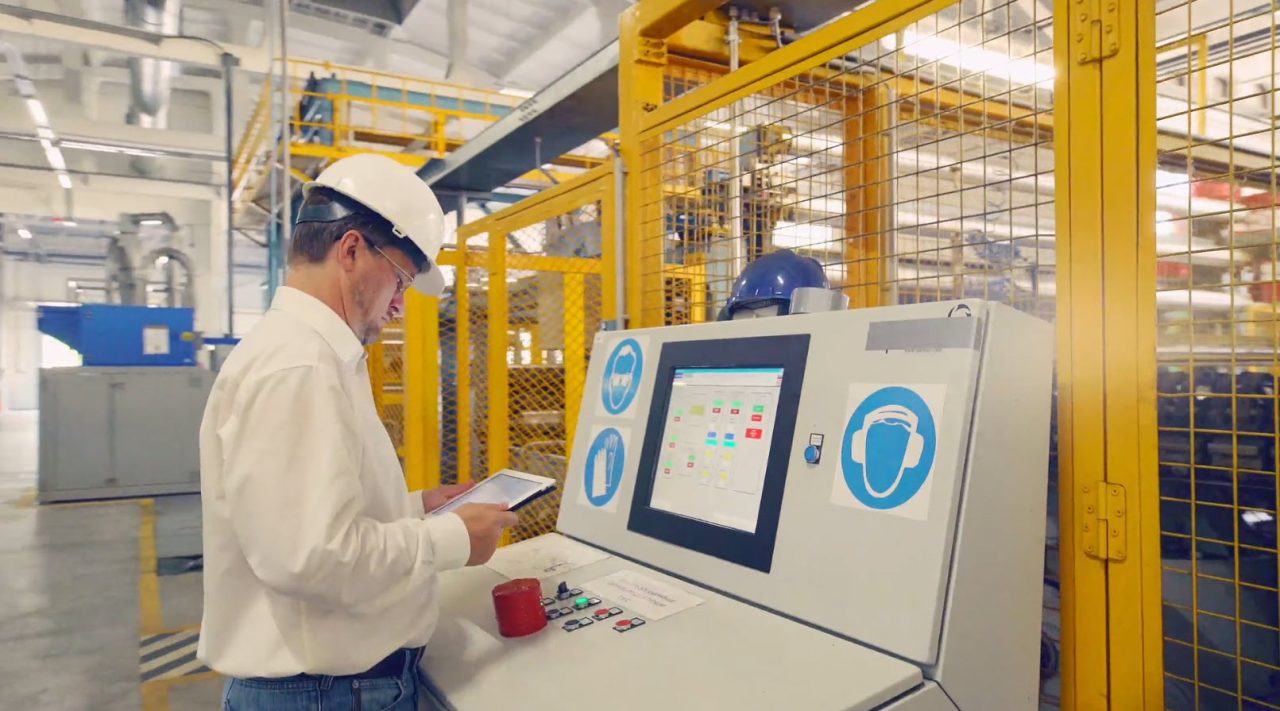
At the center of that ecosystem is data: for AI-driven manufacturing to succeed, industrial data must be accessible, contextualized, and actionable. Without trusted data, even the most advanced AI technologies struggle to generate meaningful business outcomes. With it, manufacturers can move beyond understanding what happened and begin predicting what will happen next and recommending the best course of action.
Autonomous production is a North Star. It is not a flip of a switch. Companies need to build the foundation of connectivity, data, and contextualization to be ready for what’s coming next.”
– Dr. Ralf M Wagner, SVP Insights Hub, Siemens Digital Industries Software
The Three Pillars of Successful AI-Driven Manufacturing
When organizations begin their AI journey, the focus often centers on technology. In reality, successful AI adoption depends on balancing three equally important elements: people, processes, and technology
AI changes more than software; it influences how teams collaborate, how decisions are made, and how operational knowledge flows across the organization.
Manufacturers that achieve the greatest results recognize that digital transformation is not solely a technology initiative. It requires empowering employees, modernizing workflows, and implementing the right technologies together. When people, processes, and technology align, organizations can unlock the full potential of AI-driven manufacturing.
From Production Copilots to Intelligent Manufacturing Co-Workers
One of the first major milestones in industrial AI was the emergence of the Production Copilot. Initially viewed as a new interface for accessing manufacturing data, copilots quickly demonstrated a much broader opportunity: transforming how people interact with operational information.
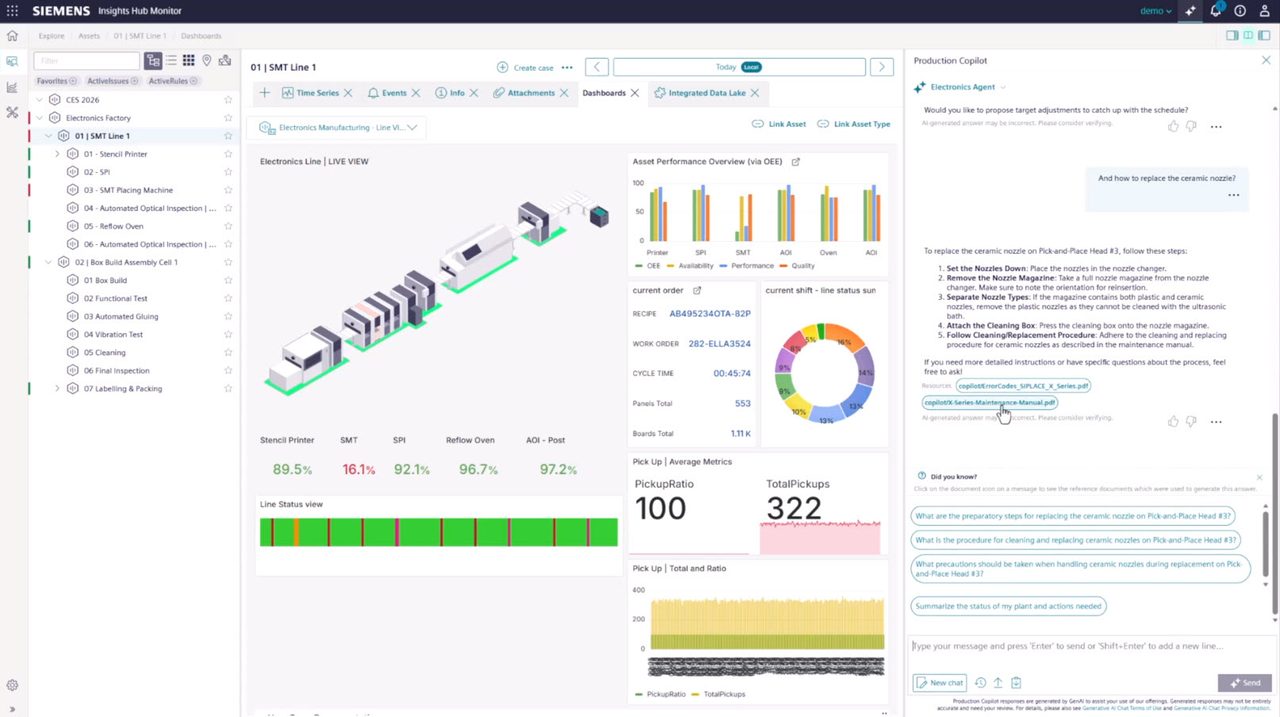
Instead of searching across multiple dashboards, reports, and applications, users can ask questions in natural language and receive meaningful answers in seconds. This shift makes manufacturing intelligence more accessible across the enterprise. Valuable insights are no longer limited to analysts or domain experts. Engineers, operators, supervisors, and business leaders can all engage with operational data using conversational experiences.
The outcome is more than convenience. Organizations benefit from faster decision-making, accelerated troubleshooting, and improved operational visibility.
Empowering Manufacturers to Build Their Own AI Agents
The next evolution of industrial AI is enabling manufacturers to create custom AI experiences tailored to their specific operations. With platforms such as Copilot Studio, organizations can develop specialized AI agents that understand their processes, leverage operational data, and support unique business objectives.
Rather than relying on generic AI tools, manufacturers can deploy intelligent assistants designed around their equipment, workflows, production environments, and performance goals.
This represents an important shift. AI is no longer just a feature embedded within an application. It has become a platform for continuous innovation and operational improvement. The result is greater flexibility, faster problem-solving, and entirely new ways of working.
Giving customers the tools to build their own agents unlocks entirely new ways of working. Copilots and agents can perform analysis in the background and return findings and insights that were previously difficult to uncover.”
– Dr. Ralf M Wagner, SVP Insights Hub, Siemens Digital Industries Software
Manufacturing AI Agents: Working Behind the Scenes
Perhaps the most transformative aspect of industrial AI is not what users see. It is what happens in the background.
Imagine an AI agent continuously monitoring production performance, identifying anomalies, correlating events across systems, and performing root-cause analysis without requiring human intervention.
Instead of asking employees to spend hours gathering information, the agent proactively surfaces insights, explanations, and recommended actions.
This represents a fundamental evolution from traditional analytics. AI is no longer limited to displaying dashboards and reports. It becomes an active participant in operational excellence.
As manufacturing organizations scale their AI initiatives, intelligent agents will play an increasingly important role in helping teams identify opportunities, solve problems faster, and continuously optimize performance.
Building the Future of AI-Driven Manufacturing
The pace of AI innovation is accelerating faster than ever before. New capabilities are emerging continuously, creating opportunities to improve productivity, strengthen operational resilience, increase quality, and enable smarter decision-making. The challenge for manufacturers is not adopting every new technology that appears. The challenge is creating the digital foundation needed to capitalize on innovation as it evolves.
That vision sits at the heart of AI-driven manufacturing. By bringing together connected industrial data, intelligent applications, production copilots, and autonomous AI agents, manufacturers can move closer to autonomous operations while delivering measurable business value today.
The future of manufacturing will not be defined by AI alone. It will be defined by how successfully organizations combine data, technology, people, and processes into a continuous cycle of learning, adaptation, and optimization. Autonomous operations may be the destination, but the journey begins now. Manufacturers that invest in connected data, industrial intelligence, and AI-ready architectures today will be best positioned to lead the next generation of manufacturing. In that future, AI will do more than help people work faster. It will transform how decisions are made, how operations are optimized, and how value is created across the industrial enterprise.
Autonomous operations begin with a strong digital foundation. Connect with Siemens experts to learn how data-driven manufacturing solutions can help transform operational data into actionable intelligence and measurable business value.