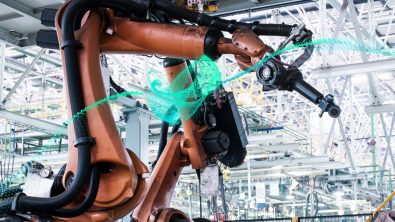
Making the case for industrial machinery companies to embrace the comprehensive digital twin | Podcast
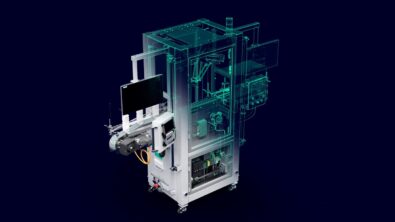
How can machine builders, OEMs and component manufacturers accelerate innovation and shrink development times to improve engineering efficiency?
According to one expert with more than two decades of industry experience, the comprehensive digital twin is significantly changing manufacturing, design and production.
In a recent episode of “Welcome to the Future” podcast from Siemens, host Conor Peick sits down with Dominik Zettler, Vice President of Simulation for Industrial Systems at Siemens, to explain this technology and uncover its importance.
If you’re wondering how other industrial companies are navigating digital transformation and what the future holds for industrial innovation, listen to their full conversation.
Mr. Zettler shares practical advice and fascinating insights that will change the way you think about digitalization.
Listen to the full podcast:
The digital twin: From concept to comprehensive reality
The podcast opens up with Dominic Settler’s background and his journey with digitalization, which began in the late ‘90s. He started his career as a technical designer who grew up with 3D modeling in the automotive industry.
This experience has given him a unique perspective on the evolution of digital technology.
He explains the fundamental concept of a digital twin as “that representation in the virtual world of a physical asset from the real world.” It’s a virtual counterpart that mirrors a physical object, allowing for analysis, simulation and optimization.
Learn more: Integrated design and simulation for industrial machines | White paper
However, the real strength lies within the comprehensive digital twin. It’s not just a digital representation of a single component, but an integrated network of digital twins representing an entire product, a machine, a production line or even a whole plant, all connected and consistent throughout their lifecycle.
This holistic approach allows for unparalleled insights and control.
The comprehensive digital twin bundles together various disciplines — mechanical behavior, physics, drives, sensors and even safety topics — to create a complete virtual model, allowing for early-stage prototyping, rapid testing and continuous optimization throughout the entire lifecycle.
One of the most striking examples of the comprehensive digital twin’s power is its ability to compress project timelines.
Dominic notes a significant shift in the industry: “The whole lead time from idea of a product until start of production was made in the past in maybe five years, today maybe we’re talking about three years.”
This incredible reduction isn’t just about design. It encompasses the entire production facility and machinery.
By enabling parallel engineering phases and digital prototyping, the comprehensive digital twin dramatically speeds up the journey from concept to market.
Thinking big and starting small: Navigating digital transformation
Despite the clear benefits, many companies still hesitate to adopt digital twin technology.
Dominic acknowledges this apprehension, observing that “they are quite often very afraid of and say, ‘oh, where do I need to start?'”
The sheer scale of a comprehensive digital twin can seem overwhelming. His advice is simple yet profound: “Think big. But start small.”
This philosophy emphasizes identifying “low hanging fruit” and “quick wins” to build momentum. Digital transformation isn’t a single leap but a continuous journey.
Try it: Integrated design and simulation | 30-day trial
It involves not just technology, but also significant change management, including hiring new talent, setting up IT departments and different processes.
By taking incremental steps, companies can gradually integrate digital twins, discover new possibilities and scale their efforts in multiple directions.
This approach makes the seemingly daunting task of digital transformation achievable and sustainable.
Don’t miss out on the future and the comprehensive digital twin
From basic definitions to practical strategies for adoption, this podcast provides valuable insights for anyone interested in the future of industrial technology.
If you’re ready to unlock the potential of the comprehensive digital twin and discover how to navigate your own digital transformation journey, listen to the full episode above.
You’ll gain a clearer understanding of why this technology isn’t just a trend, but a fundamental shift in how we design, produce, and innovate.
Frequently asked questions:
Q: What is a digital twin?
A: A digital twin is a virtual representation of a physical asset from the real world. It’s a digital counterpart that mirrors its physical twin.
Q: How is a comprehensive digital twin different from a regular digital twin?
A: A comprehensive digital twin combines multiple specialized digital twins across different disciplines (e.g., mechanical, electrical, software) and maintains their consistency throughout the entire product or production lifecycle. It offers a more holistic and integrated view than a single digital twin.
Q: What are the main benefits of using a comprehensive digital twin in production?
A: The comprehensive digital twin helps make production processes more efficient and sustainable. It allows for early-stage prototyping, rapid testing and optimization of machines, lines and entire plants. It also significantly reduces project lead times by enabling parallel engineering.
Q: Why do some companies struggle with adopting digital twin technology?
A: Many companies are overwhelmed by the perceived scale of digital transformation and are unsure where to start. They may also face challenges related to change management, such as acquiring new talent, setting up new IT infrastructure and adapting existing processes.