The Road to Adaptation: Geeta Dixit on Harley riding and HR excellence
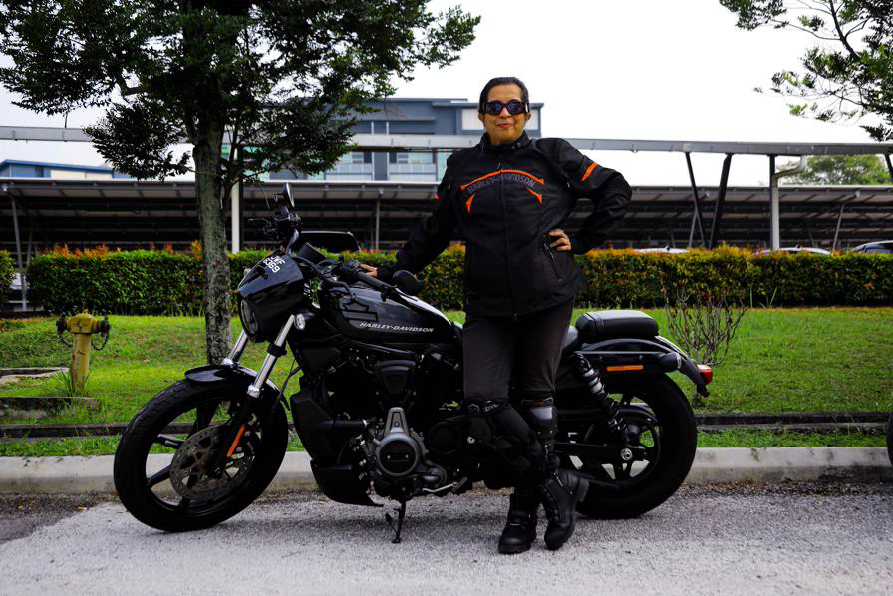
HR Business Partner Geeta Dixit shares a bit of her story, which includes traveling across Malaysia on a bike and helping attract and grow a future-ready workforce India. The ethic she applies everywhere? Embrace the unknown and move ahead.
Human resources business partner, Geeta Dixit, spends her workdays in Bengaluru, a major hub of India’s burgeoning tech industry, expected to generate more than $300B in revenue FY2026. The city, India’s fourth largest with a population of 14 million, is known for its traffic too, perhaps one reason why on weekends and holidays you’re more likely to find Dixit throttling her Harley across India’s highways and beyond, seeking that blend of freedom and focus that most riders know, no matter where they live.
This dual identity — Harleys and HR — isn’t mere coincidence. For Dixit, who also serves as an Asia Pacific diversity champion at Siemens Digital Industries Software, the skills required for both pursuits are remarkably similar: constant adaptation, unwavering vigilance, and the courage to embrace the unknown while maintaining responsibility for outcomes.
“Riding, especially solo riding, builds resilience and mental toughness,” Dixit explains from her office in office Bengaluru, regularly in the news as India’s Silicon Valley, which means no shortage of creative disruption and growing pains. “There’s always a need to adapt and learn and change as per the evolving scenario, and riding a bike reinforces that.”
The parallel isn’t academic. As India cements its position as a global technology powerhouse—with the country now home to over 5 million tech professionals and serving as a critical innovation hub and market for multinational corporations — those in the talent and people arena like Dixit find themselves managing unprecedented change. Such is the case at Siemens, where the “ONE Tech Company” vision demands integration across diverse markets and cultures, and the ability to adapt quickly while maintaining core values has become essential.
India represents a particularly compelling case study for this transformation. Siemens enjoys strong brand recognition and respect across the subcontinent, where the company’s history goes back 150 years, when the founder, Werner von Siemens, supervised the construction of the London-Calcutta telegraph line. “When you tell your friends or relatives or neighbors that you’re working with Siemens, you get a very positive reaction,” Dixit notes, highlighting goodwill that extends beyond typical employer-employee relationships.
This reputation stems partly from tangible impact from other Siemens business units. Recent projects like the electrification of a 42-kilometer railway stretch in Kashmir—connecting 7 million residents to improved transportation, healthcare access, and economic opportunities—demonstrate how industrial technology can transform entire communities. Dixit’s conversation with senior executive communications manager Natalie Navales appears below, edited for length and clarity.
Building India’s future-ready workforce
Q: You’ve been at Siemens for 11 years, moving from a position as a narrowly focused HR business partner to a much wider role that includes leading diversity initiatives across Asia Pacific. How has your position evolved?
A: When I joined Siemens as an HR business partner, I focused primarily on one business group in India. But as the company evolved toward our “ONE Tech Company” vision, my role expanded to support other software segments. Then I got the opportunity to drive DEIB initiatives across the entire Asia Pacific region, which is something of a volunteer position. This expanded role allows me to collaborate across geographies, influence at various levels, and create impact through multiple initiatives. I find myself very fortunate to contribute to the company’s success in both capacities.
Q: What’s the biggest challenge you’re grappling with as you work to create what you call a “future-ready workforce”?
A: The fundamental question is: How do we close skills gaps while aligning talent with rapidly evolving business requirements? This isn’t a one-time fix — it’s a continuous process driven by technological shifts and market changes. Take AI, for example. It’s evolving at an incredible pace, and while it’s not a threat to our people, we need to foster a mindset shift. How do we help employees embrace these technologies and view change as an opportunity for growth rather than disruption?
At Siemens, we’re fortunate to have continuous learning embedded in our culture, which helps. But the challenge is ensuring our people develop both technical capabilities and essential soft skills—influence, relationship building, cross-geographical collaboration. These are equally important for success in any role.
AI is not a threat, but a way to augment your capabilities. The mindset shift is essential for viewing change as an opportunity for growth.
Q: How are employees responding to these technological changes, particularly in India?
A: There’s been significant acceptance that technology is changing at rapid speed and that adaptation is required. People understand they need to embrace continuous learning. In India specifically, we have a massive talent pool and one of the fastest-growing economies globally, which makes the country a critical hub for our growth. The combination of technical skills and soft skills development is what will differentiate our workforce.
Riding toward innovation
Q: Let’s talk about your passion for motorcycle riding. What draws you to it, and how does it connect to your professional philosophy?
A: It’s the love for open roads — this powerful blend of freedom and exhilaration that presents a unique personal experience. When you’re riding, especially solo, you’re physically present in the moment, emotionally engaged with the experience, and mentally strong while being vigilant. That state of complete presence and focus is something you can apply to any challenging situation.
Riding teaches you to let go of your ego while being completely responsible for your actions. It builds resilience and mental toughness because there’s no room for error. You’re constantly making decisions, staying focused, and adapting to changing conditions — whether it’s weather, road surfaces, or other vehicles.
Q: You recently participated in an official Harley ride across Malaysia. What was that experience like?
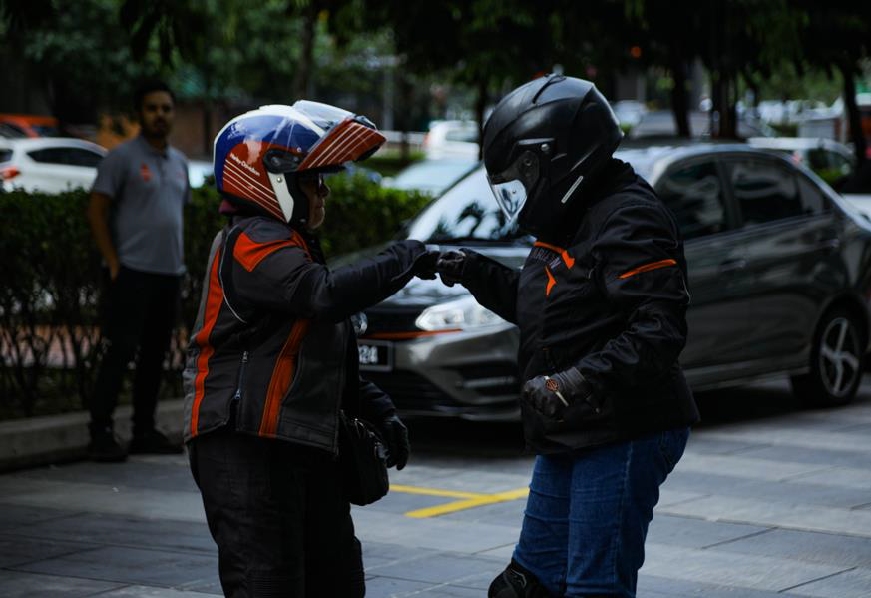
A: It was organized for the Ladies of Harley from Asia Pacific, and it was absolutely thrilling to ride through Malaysia’s scenic views and beautiful roads. But here’s the interesting part — when we arrived, we were given Harleys that were different from what I normally ride. This bike responded completely differently, so I had to adjust my technique and adapt to this new machine in an unknown environment.
There was this immediate need for unlearning and adapting, and I could relate that process directly to my profession. In our careers, while we bring our strengths to new teams or projects, there’s always a need to adapt and evolve with changing scenarios. The Malaysia experience reinforced how important it is to stay flexible while maintaining safety as a non-negotiable principle.
While we bring our strengths to new teams or projects, there’s always a need to adapt and evolve with changing scenarios. Riding teaches you that.
Transforming Communities Through Technology
Q: Siemens’ purpose is “to create technology to transform the everyday, for everyone.” Can you share a concrete example of how you’ve seen this play out?
A: The Kashmir railway electrification project stands out as a perfect example. We completed electrification for a 42-kilometer stretch on the Udhampur-Srinagar-Baramulla Rail Link project. Kashmir is home to 7 million people, and this project has helped connect the region seamlessly in ways that are transforming the area’s economic prospects.
The impact goes far beyond transportation. It’s improving access to healthcare, creating job opportunities, boosting trade and tourism, and driving economic progress in a region that previously had limited connectivity. When you see technology making that kind of tangible difference in people’s lives, it reinforces why our work matters.
This kind of impact is what makes Siemens technology meaningful. It’s not just about efficiency or innovation in abstract terms. It’s about real transformation in people’s everyday lives.
Q: How does this community impact influence your work in HR and talent development?
A: It reinforces why creating an inclusive, future-ready workforce is so crucial. When our technology is touching millions of lives, we need teams that understand diverse perspectives and can innovate for varied communities. The diversity of thought and experience in our workforce directly impacts our ability to create solutions that truly transform everyday life for everyone.
Creating inclusive cultures across Asia Pacific
Q: As Diversity Champion for Asia Pacific, what drives your passion for DEIB initiatives?
A: It’s about creating safe spaces where people can be themselves at work. At Siemens, we have an inclusive culture from day one that allows everyone to be respected for who they are. When you’re in that kind of psychologically safe environment, you can bring your full self to work, which ultimately drives better outcomes.
I’m passionate about this because I’ve experienced how powerful it is when you can combine your authentic self with your professional capabilities. Whether it’s someone’s cultural background, their unique perspective, or even their hobbies like motorcycle riding. When organizations create space for these diverse elements, it strengthens the whole team.
Q: What does the future hold for Siemens in India and across Asia Pacific?
A: India will continue to be a critical hub due to our massive consumer market and skilled talent pool. The future belongs to organizations that can combine technological innovation with human-centered cultures. That’s where Siemens is headed, and that’s the workforce we’re building.