From prototype to production: Building bulletproof validation workflows for complex electronics systems

The sobering reality facing electronics manufacturers today is that 70% of field failures stem from thermal issues that could have been identified during early validation. Yet most organizations still rely on outdated “test-to-failure” approaches that destroy prototypes, consume months of development time and miss critical failure modes until products reach customers.
As electronics systems become increasingly complex—from automotive power electronics to high-performance computing modules—the cost of late-stage design discoveries has skyrocketed. A single thermal miscalculation can trigger costly respins, delayed launches and worst-case scenarios: field failures that damage brand reputation and trigger expensive recalls.
The solution isn’t more testing. It’s smarter validation workflows that catch problems early, preserve prototypes for further iteration and create repeatable processes that scale from concept through manufacturing.
The hidden cost of traditional validation approaches
Traditional electronics validation follows a destructive pattern: build prototypes, run them until failure, then physically dissect components to understand what went wrong. This approach creates a cascade of problems:
- Time inefficiency: Each failure requires building new prototypes, extending development cycles by weeks or months.
- Resource waste: Destroyed prototypes represent significant material and engineering investment lost.
- Limited learning: Physical dissection often obscures the root cause, making it difficult to separate cause from effect.
- Late discovery: Critical issues surface only after substantial investment in tooling and supply chain commitments.
For electronics manufacturers targeting automotive, industrial or high-reliability applications, these limitations aren’t just inconvenient—they’re business-critical risks that can derail entire product programs.
A new model: non-destructive, standards-based validation
Forward-thinking companies are revolutionizing their validation approach by implementing systematic, non-destructive workflows that provide deeper insights while preserving development velocity. The transformation centers on three key principles:
1. Electrical testing over physical destruction
Modern validation leverages purely electrical measurement techniques that characterize thermal, mechanical and electrical performance without damaging components. This approach provides more accurate data while preserving prototypes for continued iteration and refinement.
2. Standards-driven methodology
Rather than ad-hoc testing approaches, leading manufacturers implement validation workflows built around established industry standards—JEDEC, JESD51, AQG and AEC requirements—ensuring both regulatory compliance and consistent, repeatable results across development teams.
3. Customized environmental simulation
Validation effectiveness depends on accurately recreating real-world operating conditions. This requires custom fixtures, environmental chambers and measurement setups tailored to specific application requirements, from extreme temperature ranges to vibration and electromagnetic interference scenarios.
Case study: Transforming automotive electronics validation
A leading Japanese thermal testing specialist, KeenusDesigns, demonstrates how systematic validation workflows deliver measurable business impact for electronics manufacturers. Founded by mechanical design engineer Junichi Tachibana, the company has become Japan’s leading consultancy for thermal characterization by implementing precisely the kind of bulletproof validation processes that modern electronics development demands.
The challenge: Rising automotive reliability standards
As automotive manufacturers accelerate electrification initiatives, power electronics face increasingly demanding thermal requirements. Traditional consumer electronics thermal testing approaches prove inadequate for automotive applications, where quality standards represent the industry’s most stringent requirements.
“In vehicle electronics, the quality standards are the highest, so there is a greater requirement for testing,” explains Tachibana. “For example, if a customer has been making cameras for consumers, the thermal testing requirements are not severe. But if they are selling to an automotive manufacturer, they have a new requirement for thermal reliability testing with higher quality expectations.”
The solution: Systematic non-destructive validation
The company built their validation workflow around advanced thermal testing systems that provide transient thermal resistance measurements and power cycle testing capabilities. This approach delivers three critical advantages:
- High-precision measurement: The systems provide thermal resistance measurements with unprecedented accuracy using static electrical methods, enabling detection of subtle thermal issues that traditional approaches miss.
- Non-destructive testing: Since all measurements are purely electrical, prototypes remain intact for continued development iteration, dramatically reducing development costs and timeline.
- Standards compliance: The workflow supports JEDEC, JESD51, AQG and AEC standards testing, ensuring automotive qualification requirements are met systematically rather than discovered late in development.
Custom environmental simulation
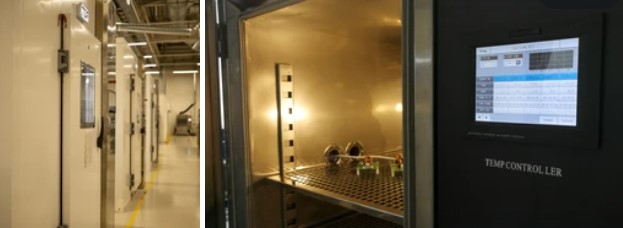
Recognizing that standard testing equipment often falls short of real-world application requirements, the company develops custom jigs and environmental chambers that extend testing capabilities from -55°C to 250°C. These customized fixtures enable accurate simulation of actual operating conditions while maintaining testing repeatability and standards compliance.
“We listen carefully to our customers to understand the measurements they need, and if they cannot obtain them with a conventional solution, we use our unique equipment and jigs to solve these challenges,” says Tachibana.
Measurable business impact
The systematic approach delivers quantifiable results:
- Shortened thermal test cycles through elimination of destructive testing iterations
- Improved circuit board designs that meet thermal reliability requirements on first pass
- Standards compliance achieved systematically rather than through trial-and-error approaches
- Enhanced customer confidence through use of industry-standard validation equipment
Building your bulletproof validation workflow
Based on successful implementations like this systematic approach, electronics manufacturers can establish comprehensive validation processes using this framework:
Phase 1: Assessment and planning
Document existing testing equipment and measurement capabilities against target application requirements. Identify specific industry standards (JEDEC, AEC, etc.) that products must meet and map these to validation test procedures. Define the complete range of operating conditions—temperature, humidity, vibration, electromagnetic interference—that validation must cover.
Phase 2: Equipment and process integration
Deploy electrical measurement systems that characterize thermal, mechanical and electrical performance without component damage. Create application-specific test fixtures that accurately simulate real-world mounting, cooling and environmental conditions. Implement robotic handling and automated data collection for long-duration tests like power cycling validation.
Phase 3: Workflow optimization
Document step-by-step validation procedures that ensure consistent results across different engineers and development programs. Establish systems that capture validation data in formats compatible with design tools and simulation software for closed-loop optimization. For organizations with limited internal testing resources, establish relationships with specialized validation service providers who can supplement internal capabilities.
Phase 4: Continuous improvement
Correlate validation results with actual field performance to continuously refine testing procedures and improve predictive accuracy. Leverage validation infrastructure investments across multiple product lines and development programs to maximize ROI. Connect physical validation results with thermal, mechanical and electromagnetic simulation tools to create comprehensive digital twins.
The competitive advantage of systematic validation
Organizations that implement systematic validation workflows gain significant competitive advantages beyond risk reduction:
- Faster time-to-market: Non-destructive testing eliminates redesign iterations, accelerating development schedules.
- Higher first-pass success: Standards-based validation ensures regulatory and customer requirements are met systematically.
- Enhanced design optimization: Preserved prototypes enable rapid iteration and optimization cycles.
- Customer confidence: Industry-standard validation equipment and procedures build customer trust and facilitate design wins.
Cost predictability: Repeatable processes eliminate surprise validation costs and schedule delays.
Implementation roadmap
For electronics manufacturers ready to transform their validation approach, success requires systematic implementation:
Immediate actions (0-3 months):
- Audit current validation capabilities against target applications
- Identify critical standards requirements for key markets
- Evaluate non-destructive testing equipment options
Short-term implementation (3-12 months):
- Deploy core electrical measurement systems
- Develop custom environmental simulation fixtures
- Train engineering teams on new validation procedures
Long-term optimization (12+ months):
- Integrate validation data with design and simulation tools
- Expand validation capabilities across product portfolios
- Establish service partnerships for specialized testing requirements
The bottom line
Electronics manufacturers face an inflection point. Traditional validation approaches that served simpler products are inadequate for today’s complex, high-reliability applications. Organizations that implement systematic, non-destructive validation workflows will achieve faster development cycles, higher first-pass success rates and enhanced customer confidence.
The question isn’t whether to modernize validation processes—it’s how quickly your organization can implement the bulletproof workflows that will define competitive advantage in an increasingly demanding electronics marketplace.
Those who act decisively will validate with confidence. Those who delay will continue discovering problems when it’s most expensive to fix them.
Frequently asked questions
- What is the difference between destructive and non-destructive electronics validation testing? Destructive testing runs prototypes until failure and then physically dissects components to understand what went wrong, destroying the prototype in the process. Non-destructive validation uses electrical measurement techniques to characterize thermal, mechanical and electrical performance without damaging components, allowing prototypes to be preserved for continued iteration and development.
- How much can non-destructive validation workflows reduce product development time? Organizations implementing systematic non-destructive validation typically see 30-50% reduction in thermal test cycles by eliminating the need to rebuild prototypes after each failure. This translates to weeks or months of saved development time, especially for complex electronics systems requiring multiple validation iterations.
- Which industry standards should electronics manufacturers follow for validation testing? Key standards include JEDEC and JESD51 for thermal testing, AQG (Automotive Qualifications Guidelines) and AEC (Automotive Electronics Council) standards for automotive applications. The specific standards depend on your target markets, with automotive requiring the most stringent thermal reliability requirements.
- What temperature ranges should validation testing cover for automotive electronics? Automotive electronics validation should typically cover operating temperatures from -55°C to 250°C to account for extreme environmental conditions and component self-heating. Custom environmental chambers and fixtures are often required to achieve these temperature ranges while maintaining measurement accuracy.
- How do you validate electronics for electromagnetic interference and vibration requirements? Comprehensive validation requires custom test fixtures that simulate real-world mounting conditions and electromagnetic environments. This includes recreating actual vibration profiles, electromagnetic interference scenarios and thermal cycling conditions that products will experience in their intended applications.