Rethinking CAD design: Why flexibility is critical for engineering success
The world of engineering and CAD design is rapidly evolving: products are getting more complex; tools vary across engineering specialties and teams are distributed. The challenge is no longer about designing innovative products; it’s about navigating and managing a maze of processes, standards, approval checkpoints, and cross-disciplinary handoffs.
And the biggest bottleneck? Traditional and rigid design environments that force engineers to work around their tools and processes instead of enabling intelligent development and innovation.
Is your design environment holding you back?
With traditional design tools, even a simple update can trigger a multi-step chain reaction that often result in:
- Slower collaboration
- Late-stage engineering changes
- Manual handoffs
- Siloed data
- Design rework across disciplines
In fact, research confirms what many engineers already know:
According to Tech Clarity, engineers lose 19% of their time to non‑value‑added data management tasks. In another survey on CAD challenges and industry trends, 22% of users reported that collaboration with internal teams or design and manufacturing partners remains a key challenge. Moreover, 62% agreed that while history‑based modeling is powerful, it often lacks flexibility, resulting in slow concept development work, frequent model recreation, and challenges when making late‑stage design changes.
A flexible design solution is fundamental for engineering success. And this requires a fully integrated design environment that treats design data as a continuous, interconnected system, enabling engineers to shift modeling approaches, connect domains, and transition data between various systems with minimal design rework.
This is the engineering foundation Designcenter is designed to provide.
Built on the industry-standard Siemens Parasolid kernel, it provides a flexible design environment that allows engineers to make design changes quickly and share data effectively across teams, tools and supply chain processes. This means fewer delays, smoother handoffs, and better use of engineering time.
The flexibility engineers need, all in one single environment
From parametric to convergent, choose modeling approaches as needs evolve
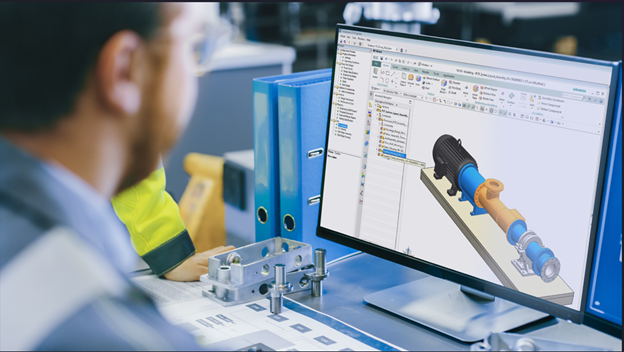
Designcenter supports multiple modeling approaches, so teams can work the way they prefer and switch without losing momentum. Whether your teams are building from scratch using parametric modeling, exploring concepts using direct modeling, working with synchronous methods or convergent modeling, engineers have access to the right design mode for their specific needs, all within a single environment.
And with AI‑driven design capabilities and generative design exploration, Designcenter augments flexible workflows so engineers can iterate faster, reduce rework, and optimize designs in real time.
Enable a fully integrated engineering process
Modern engineering doesn’t happen in isolation. Instead of treating mechanical, electrical, software and simulation as separate disciplines, Designcenter integrates them at the data level, enabling teams to operate within a connected engineering environment. With a single source of truth, engineers can see the real-time state of design, not a version saved by someone else, and quickly identify changes across the product design lifecycle.
Leverage best practices and industry-focused workflows
Teams can begin with established industry-focused workflows and best practices and then tailor them to reflect their organization’s standards. Whether you are designing equipment, vehicles, or devices, use proven patterns where they help and adapt processes as needs change.
Additionally, teams can mix and match Siemens Xcelerator apps, third‑party tools, and their own code, building on the same integrated design foundation.
Define design workflows that fit your business
With Designcenter, engineers gain the flexibility to define design workflows that work best for their business while connecting and sharing data effectively with diverse systems and partners. They can use customizable, rules-based design automation and configurable engineering workflows that match their specific business needs, and work seamlessly with integrated domain tools, such as simulation, mechatronics, all within a single environment.
Seamlessly exchange data with open standards
Designcenter is open by design, enabling engineers the flexibility to move data throughout an open ecosystem. Teams can exchange data easily with open data models and standards, such as JT, STEP, and B-rep. Use open APIs to integrate with existing IT systems so everything “plugs in.”
Thanks to Designcenter X’s advanced cloud capabilities, engineers can collaborate in real time across teams, suppliers, and partners, from the browser to the desktop. These capabilities are available to organizations through Designcenter X Solid Edge software and Designcenter X NX product offerings, with the flexibility to choose the level of capability that best fits their workflows.
Additionally, engineering teams can visualize and review data in an immersive and interactive virtual reality (VR) or desktop experience at a true one-on-one scale. Explore and develop designs before committing resources to physical prototyping, all within a fully immersive and comprehensive environment in Immersive Explorer. This add-on capability is available through Designcenter Value Based Licensing, which allows companies to flexibly utilize specialized capabilities as needed.
Learn more about VBL
Case Study
Discover how Sony uses Designcenter to improve engineering efficiency by 25%
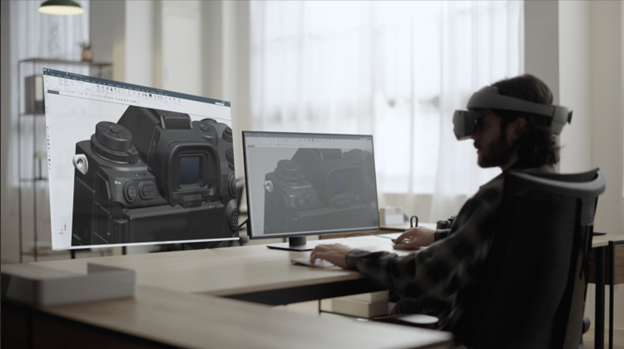
Sony Corporation faced the challenge of organizational silos and inconsistent engineering workflows. A company‑wide technology and personnel exchange initiative led to the formation of a cross‑company mechanical strategy committee, which identified the need to standardize all CAD processes across product categories. By unifying its CAD environment with Designcenter, Sony streamlined mechanical design workflows, reduced translation issues, while improving engineering efficiency by 25%.
Read blog
Watch video
Strategic partnership: Sony is a major innovation partner to Siemens, working together to advance the next generation of immersive engineering. Their joint solution enables engineers to interact directly with high‑fidelity design data in a secure, mixed‑reality environment, streamlining global collaboration, accelerating decision‑making, and enabling teams to interact directly with product prototypes.
Learn how Playa-Rent elevated its paddleboard rental experience
Designcenter isn’t just used by large enterprises. Its scalability makes it ideal for small and medium businesses, providing startups and growing teams with professional grade design, simulation and manufacturing tools with workflows that fit within their modest budgets and headcounts.
For example, Playa-Rent, a startup in France that has transformed beach-side paddleboard rental experience through self‑service stations. By leveraging the Designcenter Solid Edge portfolio and the Solid Edge for Startups program, founder Nicolas Roche designed the station structures and components with precision and efficiency.
The interface of Solid Edge is very user-friendly. Every function, every tool, and every button is easy to understand and helps me make the right design decision.”
– Nicolas Roche, Founder, Playa-Rent
Key Takeaways
To sum up, modern engineering needs flexibility, not only as a feature, but as the core design foundation. Your engineers can design faster, smarter, and cheaper when their tools don’t get in the way.
Siemens Designcenter provides:
- Freedom to choose a modeling approach as needs change
- A connected view across engineering disciplines
- Open collaboration across teams and tools
- A flexible CAD design environment that adapts as designs evolve
Designcenter is part of the Siemens Xcelerator platform, giving engineers access to a unified, cloud‑connected ecosystem that streamlines design, engineering, and collaboration.
For more information, visit: our website.
Top FAQs on flexibility in engineering design
1.How does flexibility in a design environment improve engineering collaboration?
A flexible design environment allows teams to design, review, and share updates instantly from any device. Engineers can access live 3D CAD models, eliminate version conflicts, and collaborate with suppliers or remote teams without waiting for file transfers. This flexibility, from browser to desktop, keeps projects moving even when teams are distributed.
2.Can parametric modeling and direct modeling work together in Designcenter?
Designcenter is built for flexibility. Engineers can blend parametric modeling (for precise, rule‑based control) with direct modeling (for fast edits) in the same workflow. This means teams can switch between structured parametric design and rapid experimentation without recreating geometry, ideal for evolving requirements.
3. What makes flexible CAD environments essential for modern product engineering?
Modern product engineering is iterative, needs real‑time collaboration and the ability to respond quickly to evolving requirements. A flexible design environment supports multi‑discipline workflows, AI-enabled designs, integrates simulation and validation, and allow teams to pivot without losing work, making flexibility a competitive advantage.
But flexibility isn’t just about access. It’s also about how much your modeling tools can adapt to the requirements. With capabilities like convergent modeling and implicit modeling, teams can explore complex shapes and lightweight strategies without time-consuming conversions or data recreation.
4. Can we stay on‑premises while some teams use cloud?
Yes, with Designcenter you can keep your core engineering systems on‑premises while other teams, partners, or suppliers work in the cloud. Your data can flow securely between environments, while your engineers focus on their core work. This means teams who need browser‑based access, real‑time collaboration, or supplier integration can use Designcenter X, while others continue using on‑prem tools.
5.What makes Designcenter different from traditional CAD tools?
Most traditional CAD tools require teams to use certain modeling methods and follow strict workflows. Designcenter, on the other hand, is designed for flexibility at every layer:
Modeling: You can use parametric, direct, synchronous, convergent, and implicit modeling, all within a single environment.
Process: Workflows are configurable, and rules-based automation can be adjusted to match your standards.
Data: The platform supports open standards, manages CAD data and efficiently handles very large assemblies.
Deployment: Teams can choose between hybrid cloud and on-premises options, depending on what works best for them.
Intelligence: AI-powered suggestions and insights help teams make decisions faster while still maintaining control.

