Enabling seamless connection between electrical and mechanical processes in aerospace and defense
In today’s highly integrated aerospace and defense product landscape, the distinction between electrical and mechanical engineering disciplines has become increasingly fluid. Modern products, from advanced aerospace platforms to sophisticated automotive systems, combine electrical, electronic and mechanical components. This convergence necessitates a collaborative design approach, yet many organizations continue to operate with siloed engineering processes, leading to significant inefficiencies and risks.
Engineering leaders, particularly those overseeing mechanical product engineering, frequently encounter challenges stemming from disconnected electrical and mechanical workflows. According to a Lifecycle Insights report, 94 percent of executives are seeking improvement in productivity from their mechanical engineering team. Common challenges that hamper productivity include recurrent design cycles, costly rework and manual data translation between disparate systems. These challenges are not merely operational inconveniences; they represent fundamental impediments to faster innovation in an era where speed defines market competitiveness.
The need for seamless electromechanical design synchronization
Historically, the separation between electrical and mechanical domains was manageable due to less complex product architectures. However, the exponential increase in electrical and electronic content within modern products makes traditional approaches unsustainable.
There are many implications for failing to achieve seamless electromechanical synchronization:
- Increased rework and development delays: Common scenarios involve the late discovery of conflicts between electrical components and mechanical systems or unforeseen thermal interactions requiring significant redesigns. These late-stage modifications lead to increased development costs, extended timelines and delayed schedules.
- Compromised product performance and reliability: Disconnected design processes make critical interdependencies hard to assess. For instance, mechanical vibrations near a harness mount may induce electrical noise, or localized electrical heat loads may exceed the thermal dissipation capabilities. Such unaddressed interactions result in suboptimal product performance, premature failures, diminished product longevity and ultimately add unmanaged risks to engineering development programs.
- Decrease in innovation: When engineering resources are diverted to resolving electromechanical integration issues and manually exchanging data between electrical and mechanical design tools, the capacity for additional innovation cycles is reduced. This burden detracts from higher-value activities such as new feature development and performance optimization.
- Data inconsistencies: The lack of a unified data environment results in ambiguity and inconsistency. Discrepancies in design data between electrical and mechanical domains lead to misinterpretations, design errors and a fragmented understanding of the overall product.
How Siemens Xcelerator helps you deliver next-generation electromechanical designs to market faster
To remain competitive and deliver complex products faster, organizations must accelerate their digital transformation. This requires optimizing designs across all engineering functions while rigorously meeting regulatory demands. A flexible design approach that integrates both electrical and mechanical design workflows is paramount for quicker decision-making and accelerated time-to-market.
The answer lies in leveraging the most comprehensive digital twin. Siemens solutions create a powerful virtual representation of real products that enables engineers to visualize, share and collaborate across global teams, ensuring regulatory compliance throughout the entire product lifecycle.
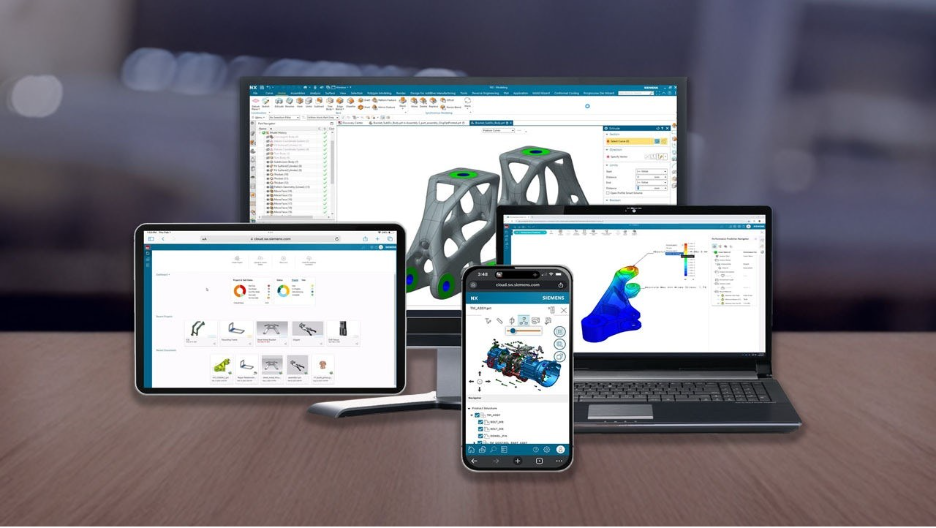
To fully leverage the benefits of the comprehensive digital twin, implementing an integrated product engineering solution that enables transparency across both electrical and mechanical domains is essential. This can dramatically reduce development time and rework, improve product quality, increase productivity and enable cost savings across the product development lifecycle.
This integrated solution from Siemens facilitates:
- Collaborative and simultaneous design: Teams can work on electrical and mechanical designs concurrently, sharing information and fostering efficiency and innovation, leading to a competitive edge and improved time-to-market. This includes cross-probing of the electrical and mechanical design to better understand how design trades and changes affect the product’s function.
- Design reuse: Approved designs, either mechanical or electrical, can be easily modified and repurposed, significantly cutting development time and complexity and ensuring consistent quality. This is particularly beneficial for companies with frequent design changes or customized products. And, by virtue of the integrated product lifecycle management capabilities of Siemens Xcelerator, the design team can have confidence that they are using the most up-to-date data sets.
- Intelligent, connected products: Siemens solutions provide instantaneous feedback for closed-loop systems, accelerating the design process. Robust version control allows engineers to track changes, correct errors and continuously refine designs based on previous iterations and feedback. This is all supported along a digital thread for electromechanical product development embedded within Siemens Xcelerator.
- Definition of electromechanical characteristics: The increasing complexity of modern designs introduces the critical need for robust characteristics management. This discipline enables the capture of critical design attributes. For example, often elements of electrical designs are captured in callouts or notes within mechanical designs. This capability to capture and manage design information that exists at the intersection of electrical and mechanical designs, e.g., surface coatings to ensure electrical conductivity, is essential to fully capture the product definition. The “bill-of-characteristics” serves as a foundational element throughout the product lifecycle. Its ability to seamlessly define, manage and disseminate these characteristics across both electrical and mechanical domains is no longer just an advantage but instead a fundamental requirement for achieving product quality, regulatory compliance and competitive advantage.
- Supplier communication issues: Translating data between different ECAD and MCAD systems frequently results in a loss of intellectual property and design intent. This is a big enough problem within a single company, but when portions of the electrical and mechanical design are built across multiple suppliers, the challenges can be overwhelming. With Siemens Xcelerator, a common platform exists for the authoring of both electrical and mechanical design in context of each other within a single company or throughout the supply chain. This streamlines the development process, increases quality and reduces time-to-market.
Legacy design systems that are prevalent in many companies are ill-equipped to support development of next-generation products. These systems, built for the needs of legacy design organizations, lack the inherent integration necessary for modern product development, where designs must be seamlessly connected with simulation, validation and manufacturing. This disconnect leaves companies vulnerable to market shifts and competitive pressures. For many, adopting a more efficient design system is not only an advantage, but a matter of survival. By embracing a co-design methodology and an integrated electromechanical product engineering solution, organizations can remove the limitations of traditional siloed approaches. This integrated strategy enhances efficiency and reduces development risks. It unlocks new avenues for innovation, enabling the creation of more sophisticated, reliable and competitive products. The journey toward seamless electromechanical design and holistic product engineering is a strategic imperative for any organization aiming to thrive in the demanding landscape of next-generation product development.