Learning as a success factor: Successfully shaping transformation
Learning as a driver of innovation and progress
Change doesn’t begin with technology, but with trust —and with people who are willing to learn new things. The PLATON project by Daimler Truck AG and Siemens Digital Industries Software demonstrates how digital transformation can succeed when learning is considered a strategic success factor. The learning program for transitioning to PLATON focuses on empowerment: role-based learning paths, practical scenarios and short learning impulses that accompany the global transition to the new Product Data Management (PDM) system, Teamcenter. This concept combines expertise, acceptance and change. It provides proof that continuing education is the decisive lever for sustainable system implementations.
When companies digitalize global value chains, they face a threefold challenge: technologies must be migrated, processes harmonized and people empowered — worldwide, in parallel and without any loss of productivity. The spin-off of Daimler AG into Daimler Truck AG and Mercedes-Benz AG required new, independent product data processes. At the same time, complexity, integration pressure and global collaboration requirements increased. SMARAGD, which had been in use for over 20 years, was no longer scalable and not user-friendly enough for this purpose. With PLATON, a globally-harmonized PDM/PLM backbone based on Siemens Teamcenter Active Workspace, Daimler Truck is now laying the foundation for end-to-end development processes across the entire product lifecycle. In cooperation with Siemens Digital Industries Software, a global provider of industrial automation and digital product development, a learning and qualification concept has been developed that considers learning an integral part of change management.
The project focus was not only on preparing users for the new system, but also on creating a scalable learning architecture that imparts knowledge in a context-related and practical manner. For this purpose, the PLATON Enablement Team developed a broad-based communication initiative as well as a learning journey ranging from awareness formats and role-based learning units to just-in-time microlearning content. The close connection between communication, training and performance support resulted in an e-learning concept that embraces change as a learning opportunity and sets new standards for digital empowerment in global projects.
Success factor: Agile and digital learning ecosystem
Different system landscapes, established processes and heterogeneous data interfaces caused extensive effort for design, approval and quality assurance. At the same time, complexity, data consistency requirements, system integration and global collaboration increased.
The switch to PLATON represented a fundamental change for all employees who work with product data on a daily basis. Therefore, it was crucial to involve and empower users at an early stage.
The technical changeover required the development of a wide range of skills. However, analysis showed traditional training courses did not meet the requirements. They were too general, difficult to roll out on a global scale and not sufficiently tailored to specific work situations. This was compounded by target groups being spread across different countries and heavily involved in day-to-day business.
The learning requirements were twofold: all affected employees needed to be able to use new processes and data flows confidently while learning needed to be permanently embedded as part of their work. This required clear role-based learning paths. The change perspective was also crucial: learning measures needed to build not only knowledge, but also trust and acceptance, particularly for new workflows, responsibilities and global standards.
The analysis resulted in a multi-stage enablement program that replaces traditional training with a flexible digital learning system. The offerings are modular, practical and available at any time so learning permanently supports system change.
Agile learning and change ecosystem for the introduction of PLATON
The plan was to create comprehensive digital learning documentation that would support training, enable individual learning and later serve as a reference work. This would allow different learning needs to be covered in a flexible manner.
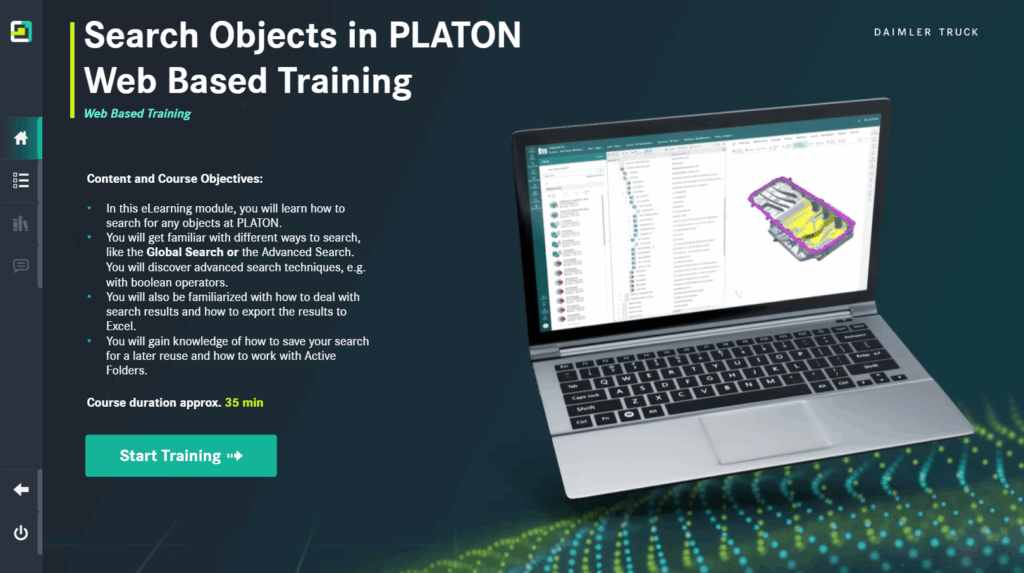
The development of the eLearning documentation followed a clearly structured, agile approach that combined technological, organizational and didactic requirements from the beginning. After an intensive analysis phase, in which target groups, role profiles and system processes were identified, the conceptual work began in parallel with the technical implementation of the new PDM system. This allowed the enablement team to ensure learning content was linked to real work scenarios early on and immediately applicable.
The project was divided into three phases: design, development and rollout, based on the approach of Siemens Digital Industries Software. In the design phase, the team defined learning objectives, target groups and usage contexts. Key user groups were trained early on via the Siemens Xcelerator Academy to establish a uniform basic understanding of PLATON.
The main user groups were trained on the standard functions and prepared for the changes. This resulted in a modular learning journey with general and role-related content that combines system knowledge with process logic and quality requirements. As a result, learners understood not only the “how” but also the “why” of the new way of working.
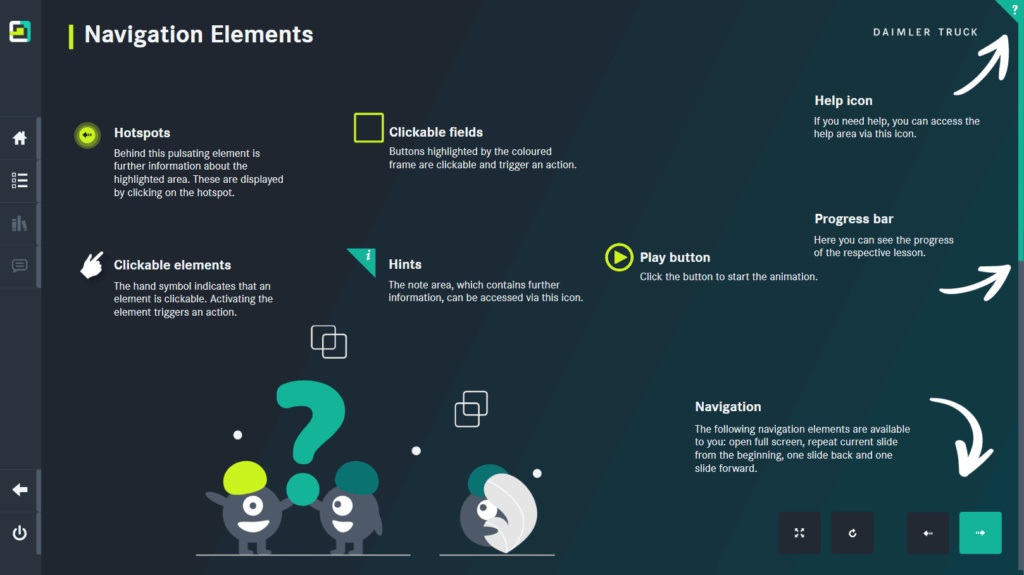
In the development phase, the team used a mix of methods, including web-based training and classroom training. The offering was supplemented by microlearning elements, such as tutorials and simulations that can be accessed just-in-time and provide direct workplace support. The instructional design focused on short practical units with clear learning objectives and variable learning paths. The technical implementation was carried out on a scalable platform with performance tracking, multilingual support and LMS integration.
A crucial factor for success was the early involvement of the target groups. In pilot workshops, engineers, project managers and data managers tested the first e-learning modules and provided feedback on comprehensibility, relevance and usability. This feedback was incorporated iteratively into the optimization process and strengthened the practical relevance of the learning content. At the same time, the communications team used targeted awareness measures to ensure learning was embedded into the transformation program.
The aim of communication was to make the benefits and processes transparent, spark curiosity and engage employees at an early stage. To this end, the team used international information campaigns, live formats such as roadshows and demos, and workshops to encourage participation. A uniform appearance ensured recognition. This strengthened transparency and acceptance for PLATON.
Change management is a crucial part of the implementation project. It encompasses all the essential elements needed to anchor the introduction of PLATON in the long term, including early stakeholder involvement, transparent communication, targeted awareness measures, onboarding and training. The combination of technology, didactics and communication created a learning ecosystem that is continuously being developed. It’s agile, data-driven and consistently user-oriented.
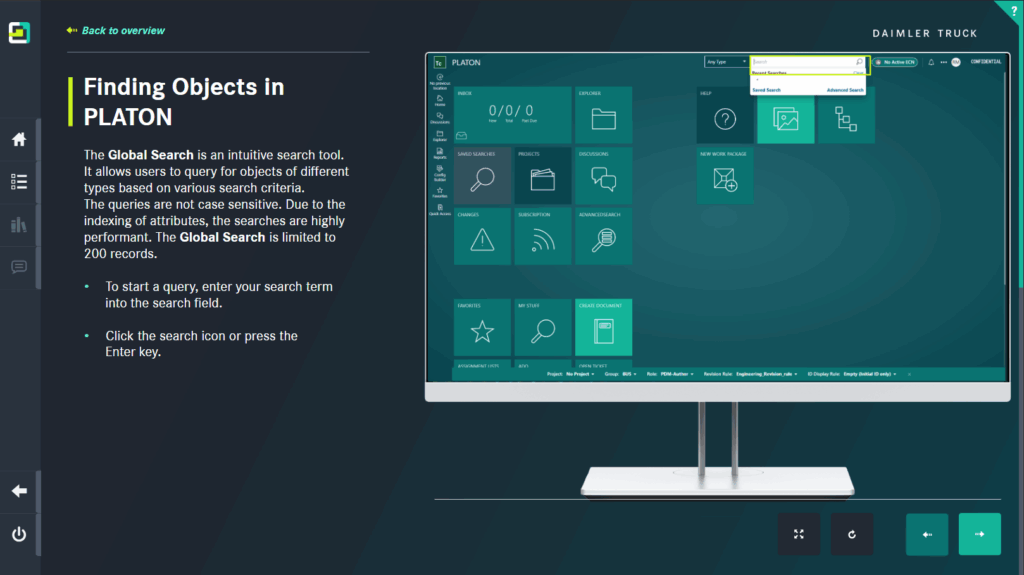
Impact and sustainability of the PLATON learning ecosystem
The learning ecosystem was a milestone in Daimler Truck’s digital transformation. It demonstrated that system transitions can only be successful in the long term if technology and employee empowerment are closely interconnected. The data-based learning concept streamlined the transition and established a practice-oriented engineering learning culture.
Change management was crucial throughout the PLATON project. It involved users early on, created transparency and reduced reservations. Digital learning formats and in-person training were complemented by open communication with regular updates, question-and-answer collections and direct support. As a result, the system change was perceived as an opportunity for personal and organizational development.
PLATON also had a lasting organizational impact: the learning architecture now serves as the foundation for further digitalization projects. Modular content and clearly-defined roles allow new programs to be quickly added and adapted. The system supports future requirements and enables continuous development.
Additional value was created by combining learning and communication: the project provides knowledge while conveying the meaning and benefits of the transformation. It supported the cultural shift toward greater personal responsibility, digital literacy and global collaboration.
The learning ecosystem not only enabled a complex system change, but also created a reference model for successful learning and change projects that is methodologically sound, technologically mature and sustainably effective.
Conclusion
The learning ecosystem shows how learning in transformation programs can evolve from a supporting factor to a success factor. Learning was integrated into the project from the beginning and aligned with roles, processes and global rollout. It enabled a sustainable system that imparts knowledge, creates acceptance and supports change.
The close collaboration between Daimler Truck AG and Siemens Digital Industries Software clearly shows that successful enablement goes far beyond technology: it combines didactics, communication and cultural change into a holistic approach.
In this project, collaborative innovation was combined with excellent organizational change management. It’s a prime example of a new generation of eLearning initiatives that secure digital transformation through targeted learning while setting new standards.
Against the backdrop of the outstanding integration of learning, technology and change management, the eLearning Journal jury has awarded the “Transformation project | Replacement of a legacy system” with the eLearning AWARD 2026 in the “learning management system” category with a focus on “system migration.” Congratulations!
Key takeaways
Initial situation: A complex PDM system landscape that had developed over time led to inefficiency and media discontinuity.
Heterogeneous target groups, limited training time and a lack of scalability in traditional training courses.
Project objective: Development of a global, role-based enablement program for more than 7,000 employees.
Ensuring a smooth system transition and establishing a sustainable learning culture.
Implementation: Development of a modular learning journey with awareness, role-based and microlearning elements.
Agile project management, close user involvement and global rollouts in several batches.
Measurement: Continuous tracking of usage figures, feedback and skills development.
Project Managers:

Siemens Digital Industries Software
Sabine Dahlhaus
Principal Learning Architect
Lindenplatz 2, 20099 Hamburg

Daimler Truck AG
Celina Erath
Product Owner User Enablement
celina.c.erath@daimlertruck.com
Fasanenweg 10, 70771 Leinfelden-Echterdingen