How to conquer the smart glasses design frontier
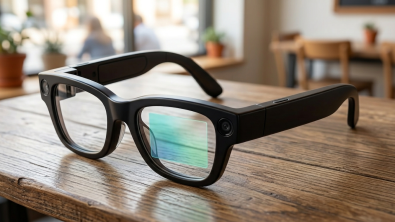
Smart glasses technology is accelerating at a rapid pace with an expected 60+ million extended reality (XR) wearable devices sold annually by 2035.1 Winning companies will be the ones pushing the boundaries of what’s possible in wearable device design, using the leading simulation technology to solve the technical challenges of SWaP-C: size, weight, power and cost as well as comfort, style and reliability.
Bringing these sophisticated devices from concept to consumer is no small feat as engineers and designers grapple with the “Wearable Paradox” – a dance between cutting-edge technology and the unwavering demand for sleek, stylish and comfortable eyewear.
How do smart glasses designers and engineers pack high-fidelity optical paths, robust battery systems, powerful processors and advanced acoustic arrays into a frame that weighs less than a few ounces and looks like something you’d actually want to wear?
This complex engineering problem, while formidable, is entirely solvable. In fact, leading manufacturers are already leveraging Siemens’ advanced solutions to overcome these hurdles and bring the next generation of smart glasses to life.
In this blog post, we’ll explore the diverse landscape of smart glasses, delve into the critical design and engineering pain points and share how integrating fragmented data systems can help speed up innovation.
Four categories of smart glasses, all with unique challenges
While the term “smart glasses” might conjure an individual operating their eyewear like a smart phone, the reality is that there are four product classes, each with its own unique set of wearable tech design and engineering challenges.
1. Mixed reality or extended reality headsets. This is the most capable and technically advanced category in the XR industry right now. They are full immersion, high-compute devices for gaming, media and enterprise, like Apple Vision Pro or Meta Quest.
2. AI smart glasses or intelligent eyewear. This is the fastest-growing category in the XR and Smart Glasses industry right now. Shifting towards a more subtle integration, these devices generally offer a camera, microphone and AI assistant built into a frame that looks and weighs more like normal eyewear without a display, similar to the Meta Ray Bans.
3. Display glasses. This is a lightweight display built into the lens for notifications and visual information, without full immersion.
4. Augmented reality (AR) glasses. The market is trying to converge on AR glasses because they are true see-through augmented reality, overlaying digital content on the real world. They demand incredibly precise optics, powerful yet efficient processors and sophisticated sensor array.
To shrink the capabilities of the most advanced XR headsets into the elegant, lightweight form factor of everyday glasses means integrating complex systems into a device that weighs less than 50 grams, or 1.76 ounces.
This ambition highlights one of the hardest engineering challenges that pushes the boundaries of electronics miniaturization, thermal management and power efficiency.
“The big drive right now in smart glasses products is the everyday consumer,” Ben Widdowson, Head of Marketing Immersive Engineering at Siemens said. He referenced recent ads during the FIFA World Cup and celebrity endorsements as examples of this broader push. “I think some of the other product categories, like XR headsets, have their biggest audience in gaming and maybe enterprise. And then the current generation of AR glasses are probably for early adopters on the technology landscape rather than the everyday consumer at this point.”
Key pain points in smart glasses development
Smart glasses manufacturing is fraught with complex engineering challenges. Manufacturers face several pain points that can stall development, inflate costs and determine the success or failure of a product.
The Wearable Paradox – SWaP-C: size, weight, power and cost
Trade-offs are being made on all the product category areas, but the goal is convergence. Therefore, the success of smart glasses lies in their wearability, yet this is precisely where the “Wearable Paradox” emerges.
Battery power versus battery size is a major pain point. Larger batteries add weight and bulk, directly contradicting the desire for a lightweight, discreet device. On top of that, thermal generation plays a critical role in product success – no one wants an overheating device sitting on the bridge of their nose.
Batteries for wearables aren’t the only means for heat generation either. Engineers must also balance high-performance displays, essential for clear visuals, with how much heat they emit. Managing this heat, especially in proximity to the human temple where it’s imperative to stay below the 62°C operating temperature threshold and standard 41°C to 42°C temperature for surface temperature, becomes a critical safety and comfort concern. Inadequate thermal management can lead to discomfort or even product failure.
| Design constraint | Engineering challenge | Technical risk |
| Battery scaling | High-capacity cells vs. 50g total frame weight | Bulkier frames, user fatigue |
| Thermal dynamics | Heat dissipation near the human temple | Component throttling, skin discomfort |
| Optical path display | Micro-displays requiring high power for outdoor legibility | Rapid battery drain, localized heat generation |
What are the root cause of design and engineering issues?
The root cause of many downstream issues is the siloed and fragmented nature of design tools and engineering disciplines. Smart glasses are inherently multidisciplinary, requiring the seamless integration of system design (EDA), electrical design (ECAD), mechanical design (MCAD), simulation (thermal and structural), product lifecycle management and manufacturing.
The problem arises when these specialized teams work in disconnected software environments, using tools that don’t “talk” to each other. A seemingly minor adjustment to a chip design, for instance, might unknowingly impinge upon a crucial thermal path designed by the mechanical team, or interfere with an antenna placement determined by the electronics engineers. Because these domains are fragmented, such conflicts are often not detected until late in the design cycle, sometimes only during physical prototyping.
Silos can create endless, expensive prototype rework loops where discovering issues late means redesigning and rebuilding physical prototypes – a process that is incredibly time-consuming and drains R&D budgets.
It can also create wasted R&D efforts where teams become frustrated by constant rework. On top of that, valuable engineering resources must be diverted from innovation to problem-solving a problem that should have already been solved much earlier in the process.
This lack of integrated communication and data flow is a foundational problem that cascades into nearly every other aspect of smart glasses development, making it the most critical hurdle for manufacturers to overcome.
Why wearables companies struggle to go from prototype to production
Companies creating the next generation of smart glasses aren’t interested in prototyping a handful of devices in a lab. They want to scale from a meticulously crafted prototype to high-volume manufacturing. But the path from prototype to production is where many innovative products falter.
One of the reasons is because smart glasses rely on incredibly precise components, particularly for optics and electronics miniaturization. Translating these tight tolerances from a controlled R&D environment to a high-speed, automated factory floor is immensely difficult.
Designcenter eliminates the dire consequences of high defect rates, assembly bottlenecks, catastrophic yield losses and the inability to meet market demand, undermining its commercial viability.
Designcenter Immersive Engineering with Sony’s XR HMD won three design awards (CES 2025 Best of Innovation, GOOD DESIGN Best 100, and Red Dot).
Because wearables companies want to release smart glasses on an annual product lifecycle cadence, they can’t afford long development cycles. That means as smart glasses are being released today, the next generation needs to already be in the works. Overcoming these pain points requires a holistic approach to product development – a digital thread that connects every stage from concept to customer and fosters an integrated simulation environment.
From chip to glasses with Siemens
The key to unlocking the potential for groundbreaking innovation lies in moving beyond fragmented processes and embracing a holistic, integrated approach to smart glasses design.
With the introduction of Siemens Designcenter, smart glasses companies can significantly reduce the tech-fashion selection cycle. Siemens’ digital thread offers a unified methodology that connects every stage of product development, from initial concept to manufacturing and beyond. It’s an ecosystem where all engineering disciplines – mechanical, electrical, simulation, PLM, software and manufacturing – operate within a connected framework, ensuring that data flows seamlessly and intelligently across the entire product lifecycle.
How the digital thread addresses fragmentation
The digital thread confronts the issue of disconnected tools and disciplines by:
- Seamless data flow. Every team works with the most current and accurate information, eliminating manual data transfers and the errors that often accompany them.
- Early interference detection. With a seamless data flow, potential clashes or design conflicts can be identified and resolved earlier in the design cycle. This proactive approach prevents costly surprises and rework down the line.
- Reduced rework and costs. By catching issues digitally, manufacturers significantly reduce the need for expensive and time-consuming physical rework loops, saving R&D budget and accelerating design iterations.
- Improved cross-functional collaboration. The digital thread provides a single source of truth for all product data, enabling mechanical, electrical and optical engineers to work together more effectively.
Specific benefits for smart glasses manufacturers
Beyond simply addressing fragmentation, the digital thread delivers tangible benefits that are crucial for success in the competitive smart glasses market:
- Optimized SWaP-C. The digital simulation tools allow engineers to make informed trade-offs that lead to better performance in terms of size, weight, power and cost.
- Faster design turnaround. The digital thread streamlines workflows, reduces rework and accelerates issue resolution contributing to significantly faster design iterations.
- Enhanced manufacturability. By integrating Product Lifecycle Management (PLM) and considering manufacturing constraints from the outset, designs are created for efficient, high-volume production.
- Validation before prototyping. Digital simulation capabilities allow for thorough validation of thermal performance, structural integrity and performance before committing to expensive physical prototypes.
The biggest hurdle is fitting all that technology into a practical size, weight, power and cost framework. Fortunately, the necessary technology is already available, and our Siemens customers are actively using it.”
Ben Widdowson, Head of Marketing Immersive Engineering
Siemens provides smart glasses manufacturers with the comprehensive framework needed to tackle the complexity of these devices with greater efficiency, accuracy and speed. The technology is not just aspirational, but rather part of a genuine digital thread running from chip to glasses to the frame around it.
Smart glasses touch these six distinctive engineering disciplines that are part of Siemens solutions and digital tools:
- Semiconductor design (EDA) for chip design and verification (Calibre)
- ECAD for designing things like the rigid flex circuit boards that have to bend and wrap around tightly constrained geometry (Xpedition)
- MCAD to design the physical frames, the lens housings, the thermal architecture and the actual industrial design of the product (Designcenter)
- Multi-physics simulation to visualize, optimize and validate designs, such as thermal management, digitally before building prototypes (Simcenter)
- PLM to manage the bill of materials, design history and concurrent projects for current and future generations of these products (Teamcenter)
- Digital manufacturing to ensure manufacturability and resource availability (Opcenter and Tecnomatix)
Wearable device design: engineering the eyewear of the future
The convergence of fashionable eyewear and technology depends on managing highly complex engineering disciplines with comfort and affordability. Those who succeed in this industry won’t necessarily be the ones with the best technology, but the companies that ensure their data is integrated and teams are connected to take advantage of the digital solutions.
FAQs about wearable technology and smart glasses
1. What are the main challenges in designing smart glasses for mass adoption?
The primary challenge lies in overcoming the “Wearable Paradox,” which involves balancing cutting-edge technology with the demand for sleek, stylish and comfortable eyewear. This translates into the critical engineering problem of SWaP-C: optimizing size, weight, power and cost, while also ensuring comfort, style and reliability.
2. How does the digital thread concept address the complexities of smart glasses development?
The digital thread is a holistic, integrated approach that connects every stage of product development, from initial concept to manufacturing. It tackles the issue of fragmented design tools and engineering disciplines by providing:
- Seamless data flow
- Early interference detection
- Reduced rework and costs
- Improved cross-functional collaboration
3. What are the different categories of smart glasses and their unique design considerations?
There are four main categories of smart glasses:
- Mixed reality/extended reality headsets: full-immersion, high-compute devices for gaming, media, and enterprise
- Augmented reality glasses: overlay digital content onto the real world in a natural way, combining the technological capabilities of XR glasses with the comfort and appearance of everyday eyewear
- Display glasses: lightweight display built into the lens for notifications and visual information, without full immersion
- AI smart glasses/intelligent eyewear: everyday wearability and fashion-forward design, often without a display
- https://omdia.tech.informa.com/om135790/xr-market-in-2035-and-beyond-forecast-challenges-and-the-road-to-mass-adoption ↩︎