The eco-design “Undo” button: Engineering better products with Teamcenter Sustainability Lifecycle Assessment
We’ve all been there. You’ve engineered a masterpiece. It’s lean, it’s high-performing, and it’s ready for production. Then comes the “Sustainability Wall.” The Lifecycle Assessment (LCA) report arrives weeks later, flagging environmental impacts—like high acidification or resource depletion—that force you back to the drawing board.
It’s frustrating, it’s expensive, and frankly, it’s an outdated way to work.
The 80% opportunity: Why early-stage environmental intelligence matters
We often hear that 80% of a product’s environmental impact is locked in during the design phase. But here is the part people miss: You can’t optimize what you can’t see. If you’re waiting for a post-mortem LCA report to tell you how you did, you aren’t designing—you’re guessing.
Our animated infographic shows a different reality. One where sustainability isn’t a final exam, but a real-time engineering variable powered by Teamcenter Sustainability Lifecycle Assessment.
Beyond reporting: Making eco-design an engineering variable
Teamcenter Sustainability Lifecycle Assessment isn’t just a tool to keep the regulators happy. It’s about giving designers a “digital conscience” while they work, providing a multi-indicator view of a product’s true environmental footprint.
Here is how we are bringing unique value to your engineering teams:
1. Stop hunting for data
Instead of manually scouring disconnected LCA databases for material impact factors, the system enriches your Bill of Materials (BOM) automatically. Using AI and 140+ empirical sources, it fills the gaps so you have a complete environmental profile of your product from day one.
2. The “What-If” superpower
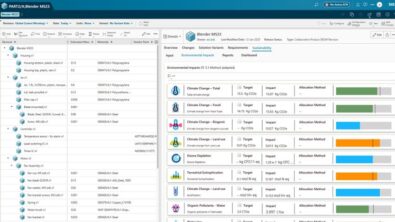
What if you swapped a traditional polymer for a bio-based alternative? What if you changed the primary manufacturing process? With Teamcenter Sustainability Lifecycle Assessment, you can simulate these impacts in seconds. Visualize how design choices affect a broad range of environmental factors—from water scarcity to ozone depletion—before a single physical prototype is built.
3. ISO-grade confidence and standardized reporting
We take the “scary” out of compliance. By the time you’re ready for review, your Environmental Product Declarations (EPD) and Product Environmental Footprints (PEF) are already generated, traceable, and ISO-compliant.
Watch the infographic: See the shift to holistic eco-design
Environmental impact shouldn’t be a burden that designers have to carry at the end of a project. It should be the fuel for the next generation of great, holistic eco-designs.
Ready to make environmental intelligence a design variable rather than a design barrier? Make Teamcenter your single source of truth for sustainable engineering.