The Manufacturer Spotlights how Siemens Industrial AI Accelerates CNC Programming – from Model to Machine

For manufacturers, the race is on: those who harness AI effectively will set the pace in efficiency, quality, and sustainability, but the challenge is doing so while keeping human expertise at the core. As featured in The Manufacturer — an online publication tailored to manufacturing innovation and technology — Siemens is helping leaders address one of the most pressing questions in modern industry: how can manufacturers harness artificial intelligence without losing the human expertise that keeps production moving?
Rahul Garg, Vice President for Industrial Machinery at Siemens Digital Industries Software, frames it this way: “AI in part manufacturing isn’t about replacing people; it’s about amplifying their expertise. Think of it as a copilot — taking on the heavy lifting so engineers and operators can focus on higher-value work.”

Just a few years ago, AI was seen as an emerging technology with untapped potential. Today, it has firmly established itself as a powerful driver of transformation in manufacturing. Factories generate vast amounts of data — from machines, processes, and people — and AI is unlocking that value, turning raw information into actionable insights and smarter decisions.

But unlike consumer apps, where an occasional misstep is acceptable, errors on the shop floor can mean broken tools, wasted materials, or safety risks. “Industrial-grade AI must be robust, reliable, and repeatable,” Garg warns. “Trust is non-negotiable.”
The Copilot Transformation
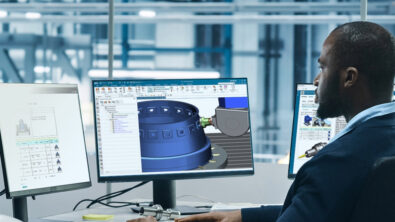
Inside Siemens NX CAM software, AI copilots are already changing the rules. CAM programming that once took hours can now be done in minutes. Algorithms detect chatter before it damages parts. Ergonomics analysis helps protect workers from repetitive strain.
“What makes copilots so powerful,” says Garg, “is their ability to capture expert knowledge and scale it across the organization. They ensure best practices live on — even as teams change.” And the next leap is generative AI, which allows engineers to interact with machines in natural language. Suddenly, advanced systems become accessible to everyone, not just specialists.
“Generative AI lowers the barriers,” Garg explains. “It lets engineers speak to machines in their own language — democratizing advanced manufacturing and accelerating innovation,” explains Garg.
Why It Matters Now
This is about more than technology. It’s about competitiveness, resilience, and sustainability. AI is fast becoming the connective tissue of modern manufacturing — linking design, engineering, and production into one intelligent system.

The benefits for leadership teams are clear:
Resilience — make operations more adaptable in the face of disruption
Speed — reduce programming and setup times by up to 80%
Quality — predict and prevent defects before they cause waste
Workforce empowerment — scale expertise across teams and generations
Sustainability — optimise processes to cut energy use and material waste
As Garg concludes: “AI is not an add-on. It’s becoming integral to how we manufacture, compete, and lead in the next generation of industry.”
Read the Full Article
Discover Siemens’ full perspective — and explore real-world case studies — in The Manufacturer’s feature: Enhancing the Shop Floor with AI