Panel Discussion with Microsoft: AI-Powered Manufacturing – From Big Ideas to Real Shop Floor Impact

Artificial intelligence is no longer a future concept waiting somewhere on the horizon. It is here, it is moving fast, and it is already changing the way manufacturers design products, manage operations, support workers, and accelerate innovation.
That energy came through clearly in a story showcased at Hannover Messe, where Siemens and Microsoft highlighted how AI-powered manufacturing is moving from vision to reality. The conversation brought together industry expertise, technology leadership, and a shared sense of excitement about what happens when deep manufacturing knowledge meets the speed and scale of AI.
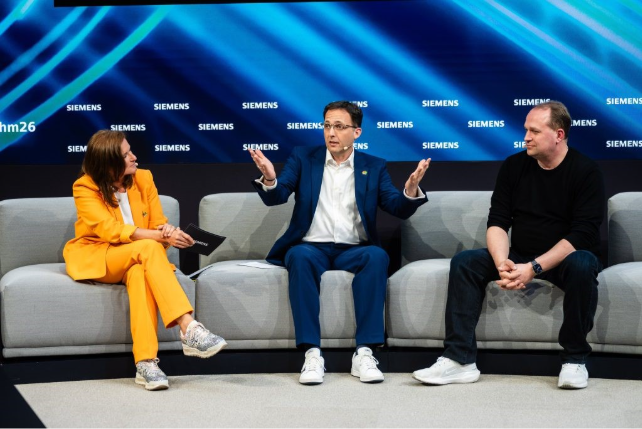
And at a fair known for showcasing the future of industry, this discussion felt especially timely. The message was clear: AI is not just another technology trend. It is becoming a practical tool for helping manufacturers move faster, work smarter, improve quality, and empower people across the value chain.
The New Era: AI Is Here to Stay
One of the strongest themes from the panel was that AI is no longer something manufacturers can treat as experimental or optional. It has entered the industrial world with real momentum, and the next step is proving where it creates measurable value.
For manufacturers, that value shows up in very practical ways. AI can help speed up processes, increase quality, improve efficiency, and reduce the time it takes to bring new ideas to market. It can support teams as they work through complex engineering decisions, analyze large volumes of data, and find better ways to manage operations in an increasingly dynamic world.
The exciting part is not just that AI can automate tasks. It is that AI can help people work with more speed and confidence. In manufacturing, where every decision can affect quality, productivity, cost, and delivery, that kind of support can be incredibly powerful.
This was one of the reasons the story resonated so strongly at Hannover Messe. The fair is all about industrial innovation, but the most exciting innovations are the ones that feel useful, scalable, and connected to real business outcomes. AI-powered manufacturing is becoming exactly that.
The Big Shift: Moving Faster in a More Complex World
The panel described AI as part of a major industrial shift, with some even comparing it to a new industrial revolution. That comparison makes sense. Every industrial revolution has changed how people work, how companies operate, and how value is created. AI is doing the same by changing how humans interact with information, machines, software, and decisions.
Manufacturing has always been about speed, efficiency, precision, and continuous improvement. But today’s operating environment is more complex than ever. Companies are dealing with supply chain volatility, changing customer expectations, skilled labor gaps, localization strategies, sustainability pressures, and the need to produce more variations of products faster than before.

AI helps address that complexity by giving manufacturers the ability to analyze data quickly, identify patterns, recommend actions, and support repetitive or highly detailed tasks. That does not remove the need for human expertise. It makes that expertise more scalable.
Instead of asking people to manually search through disconnected information or repeat time-consuming tasks, AI can help bring the right insight forward at the right moment. People can then use their experience, judgment, and creativity to make better decisions.
That combination of human knowledge and AI support is where the magic happens.
The Human Role: From Doing Every Task to Supervising Smarter Systems
A major idea from the discussion was the rise of a supervisory model in manufacturing. This does not mean humans disappear from the process. In fact, it means the opposite. It means people become even more important as supervisors, decision-makers, and experts who guide intelligent systems.
In this model, AI can support the detailed, repetitive, data-heavy work that machines and algorithms are well suited to handle. Humans remain in the loop to review, validate, guide, and make decisions based on context and business priorities.
This is especially important in manufacturing because expertise is often distributed across many people, systems, plants, and regions. In the past, a company might have relied heavily on one expert in one location who understood a specific process, machine, or production challenge. But as companies scale globally, that model becomes harder to sustain.
AI creates the opportunity to capture knowledge, apply it more consistently, and make it available across teams and locations. This helps manufacturers move from isolated expertise to shared intelligence.
The future is not about AI replacing manufacturing teams. It is about helping those teams become faster, more informed, and more effective.
The Cloud and the Shop Floor: Managed Globally, Executed Locally
Another important theme from the panel was the balance between cloud capabilities and local shop floor execution.
In modern manufacturing, not every decision happens in the same place. Some decisions need to happen close to the machine, where speed and responsiveness matter. Other decisions need a broader view across plants, regions, supply chains, and enterprise systems. This is where the combination of cloud, edge, automation, and AI becomes so valuable.
The idea shared during the conversation was simple but powerful: manufacturers can manage intelligence globally while executing locally. In practice, that means companies can use centralized capabilities to scale AI, governance, data models, and decision frameworks, while still enabling local operations to act quickly where production happens.
This balance matters because manufacturing is both global and local. A company may want consistent standards across the business, but each plant still has its own machines, workforce, processes, constraints, and priorities.
AI supported by cloud and industrial technology can help connect those layers. It allows manufacturers to see across the enterprise while still supporting practical decisions on the shop floor.
That is a big part of why partnerships matter. No single tool or platform can solve every industrial challenge on its own. Manufacturing requires deep expertise in engineering, automation, software, cybersecurity, operations, and enterprise scalability. Bringing together best-of-breed capabilities enables manufacturers to move faster while still accounting for the complexity of the industrial environment.
The Showcase: AI-Powered Manufacturing of Humanoid Components
One of the most engaging examples shared at Hannover Messe focused on the AI-powered manufacturing of humanoid robot components.
The story was not simply about a humanoid robot moving left or right. The real focus was on how parts of that humanoid are designed, engineered, and manufactured using AI-supported workflows.
The example looked at components such as a servo motor and showed how AI can support the process from design through engineering and manufacturing. Using Siemens technologies together with Microsoft capabilities, the demonstration highlighted how copilots and AI-supported applications can help teams work more efficiently across the product development and production lifecycle.
In design, AI can assist engineers through natural language interactions, helping them assess options faster and move through design decisions with more confidence. In the panel, this type of support was connected to significant efficiency gains, including approximately 30 percent improvement in certain design-related workflows.
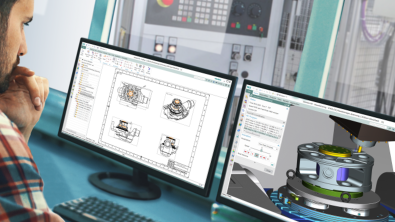
The conversation then moved deeper into engineering and manufacturing, including CNC programming. This is where AI can help recommend how to machine parts, drill holes, create pockets, select tools, and consider the capabilities of specific machines. By learning from existing data, procedures, and past experience, AI can suggest options that help programmers and manufacturing teams move faster.
Importantly, the AI does not make the final decision alone. The human remains in the loop. The system recommends, supports, and accelerates, while people validate and decide.
That is what makes the use case so practical. It is not about technology taking over. It is about giving skilled workers a better starting point, reducing repetitive work, and helping teams get to value faster.
The Workforce Opportunity: Helping People Learn and Adapt Faster
One of the most exciting ideas from the panel was how AI can help workers adapt to new machines, new processes, and new production environments.

Imagine a manufacturer buying a new machine. The company may already have experienced workers, but those workers may not yet be familiar with that exact equipment. At the same time, the company has years of internal data, procedures, rules, and production knowledge. The machine builder also has technical information and operating guidance.
AI can help bring those knowledge sources together. It can support workers as they learn the new machine, understand procedures, and apply best practices more quickly. This kind of support can reduce ramp-up time, improve confidence, and help teams become productive faster.
That matters because workforce transformation is one of the biggest challenges in manufacturing today. Companies need to support experienced workers, onboard new employees, and make knowledge more accessible across teams. AI has the potential to become a practical companion in that journey.
In a fun way, it is like giving every worker a smarter guide that understands the company’s processes, the machine’s requirements, and the task at hand. The human still brings judgment, context, and skill. AI helps make the knowledge easier to access and apply.
The Future: AI as a Powerhouse for Human Expertise
The panel closed with a forward-looking view that felt both ambitious and grounded. The future of AI in manufacturing is moving quickly, and what once felt far away may now be only months away. But the most important message was positive: AI is not expected to replace people across manufacturing. Instead, it will help people focus more on the areas where humans are strongest. AI can handle many of the hard-skill, data-heavy, repetitive, and optimization-focused tasks. Humans can bring creativity, judgment, collaboration, problem-solving, leadership, and the soft skills that are essential to running complex operations. That division of work creates a powerful pattern. AI accelerates the process, and people guide the outcome.
This is especially important as manufacturers continue to face complexity across supply chains, workforce availability, product customization, and global operations. The companies that succeed will likely be the ones that learn how to combine technology and human expertise in practical, scalable, and trusted ways.
What Manufacturers Can Learn from This Story
The story showcased at Hannover Messe offered a clear and energizing lesson for manufacturers: AI-powered manufacturing is not just about futuristic ideas. It is about practical use cases that help teams design faster, manufacture smarter, improve quality, and scale expertise.
The journey starts by understanding where AI can create value. It continues by connecting the right technologies, data, people, and processes. And it succeeds when companies keep humans at the center of the transformation.
For manufacturers, the opportunity is significant. AI can help improve speed, efficiency, and innovation while supporting the people who make industrial operations run every day. It can help companies move from manual, fragmented workflows to more connected, intelligent, and proactive ways of working.
That is what made this discussion such a strong highlight at Hannover Messe. It brought the future of manufacturing to life in a way that felt practical, positive, and exciting.
AI is here to stay. The next chapter is about turning its potential into real industrial impact.