The AI factory operating system – How Siemens and NVIDIA are creating the infrastructure for intelligent manufacturing

We can all cite numerous examples of how artificial intelligence is reshaping global manufacturing at warp speed.
Today, several types of AI have quickly evolved to impact software, systems, applications, and even entire infrastructures. When it comes to industrial AI, it seems everywhere you look there’s a bold, new initiative promising new ways to operate and compete.
The race to harness AI is reshaping the traditional data center into what we now call an “AI factory.” But what does that mean?
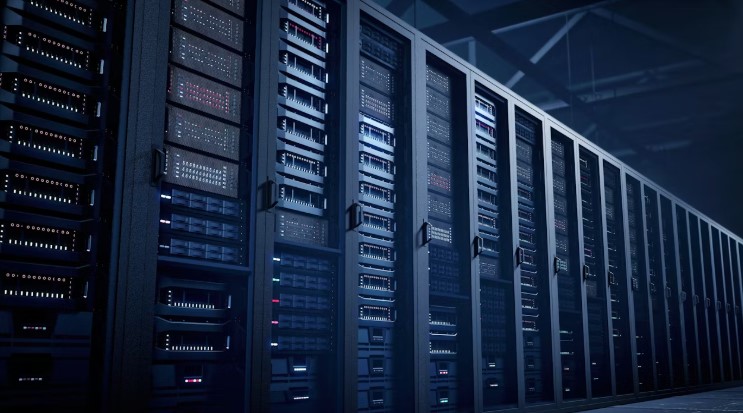
Quite simply, an AI factory is the evolution of the traditional data center – purpose-built to generate AI outputs, called tokens, at the speed and scale of industrial production. AI becomes the lifeblood of the facility, with billions of dollars of advanced infrastructure working together to continuously produce intelligence.
Like any high-performance system, the AI factory is comprised of best-in-class technologies, including GPUs, electrical infrastructure, advanced cooling systems and high-speed networking. What sets it apart is how tightly these elements are integrated and engineered to run as a unified system optimized for performance, efficiency and scale.
The AI factory is more than a standalone facility; it is also part of a broader ecosystem, which extends from chip to grid and across every layer in between. In this context, power and cooling systems, operational data and external grid interactions are no longer peripheral considerations. Every element plays an active role in how efficiently and reliably AI workloads are executed.
Like any fast-scaling industry, the AI factory is growing faster than the systems designed to support it. The good news? Siemens is helping customers enable and manage AI factory infrastructure across the full lifecycle from power and cooling to automation and real-time optimization.
Today’s AI factory constraint: infrastructure
Modern AI factories operate at the edge of physical constraints. They consume power at levels comparable to our cities. They depend on advanced thermal strategies, dense electrical architectures and resilient control systems. To complicate matters further, they must adapt continuously as AI workloads, GPU performance and regulatory conditions evolve.
Taking AI acceleration to the next level, AI factories must operate with unprecedented efficiency and speed. One of the primary challenges, put simply, is to maximize token production while operating in a world of limited power. The AI factory targets knowledge production that is abundant and unbound but limited by today’s modern infrastructure.
To counteract these pressures, AI factories must do more; they need to communicate more efficiently within themselves and learn from advanced modelling tools. All of this must all be done at unprecedented speed. Data must flow in new ways, not only within but across the value chain and efficiently between the digital and physical worlds.
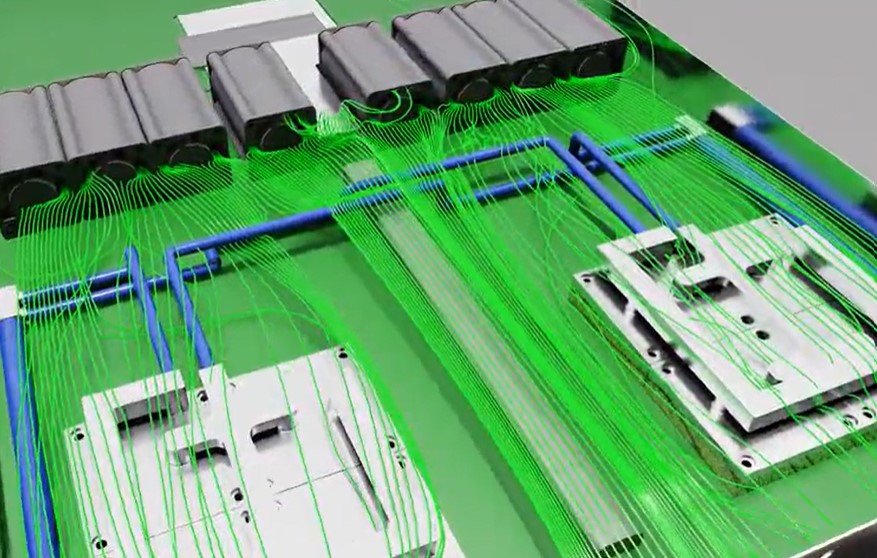
The Siemens comprehensive digital twin changes its role within this new type of environment. Simulation has existed for decades, but in the world of the AI factory, simulation can no longer serve as mere inputs to intelligent design decisions. Simulation must now be used to improve facilities in operation – detecting anomalies, adjusting to change, enhancing safety and ultimately helping the factory produce more tokens at a fraction of the cost. In addition, the digital twin provides the data foundation needed to enable AI-driven operations. NVIDIA’s Omniverse DSX Blueprint for AI factory digital twins shows how OpenUSD-based models, SimReady assets and Omniverse libraries can bring power, thermal and operational simulations into a unified digital twin which is exactly the kind of environment Siemens’ digital twin capabilities are designed to integrate with.
The control strategies of the AI factory must evolve as well. The modern compute system has become a heterogeneous machine with complex interdependencies across compute, networking, power and fluid flows. This type of operation is intimately dependent on systems that sit outside its four walls. None of this can be managed in isolation.
The need for an open-standard AI factory operating system
It is from these pressure points that the AI factory operating system is born. Understand this is not a literal “operating system,” but rather a unifying layer of blended software and technology, infrastructure and orchestration layers. Operational technology (OT) and informational technology (IT) can no longer operate as two separate software stacks. Decisions can no longer be made piecemeal. Digital twin data cannot sit isolated from the operational world. These systems must merge into an integrated and open unified layer that is modular, interoperable and flexible. Further, it must be compatible with components from different providers and with interfaces that perform rigorously, consistently and at the speed the market demands. Progress is being made on this front. At this year’s CES, Siemens and NVIDIA announced how our partnership is expanding to build an AI industrial operating system. You can read the official announcement here.
Siemens contributions move the AI factory operating system forward
At Siemens, we are actively working with NVIDIA on an open-standards AI factory operating system with key solutions in both the physical and digital worlds. Our collaboration is focused on providing the modular building blocks for the next generation of AI factory operating systems.
Our operational backbones are built on the combination of building and industrial automation platforms, Desigo and SIMATIC WinCC. Our digital twin capability – integrated through Digital Twin Composer taps into our suite of liquid cooling, air cooling, electrical and optimization simulations to form the core of the digital layer. Alongside these capabilities, our file management strategies in Teamcenter help data center operators organize their operating environment while seamlessly converting assets across file types, preserving an underlying data backbone of unprecedented consistency.
We help create connections to help physical systems and agents that run on top of them better understand themselves. Cooling systems will know the electrical power drawn the instant it is consumed. Interactive power and cooling systems will react with data exchanged directly from the compute environment. New techniques can be deployed to optimize safety across the risks associated with electricity, heat and pressure.
The importance of the Siemens and NVIDIA partnership
Few partnerships span both sides of the AI factory equation: the intelligence being produced and the infrastructure that enables it. The collaboration between Siemens and NVIDIA brings together complementary strengths to address this challenge in a holistic manner. As AI workloads evolve, infrastructure must be designed as an integrated system, where power, automation, and digital technologies work seamlessly together to deliver tokens efficiently at an unprecedented scale.
Together Siemens, Fluence, nVent and NVIDIA are advancing this vision through DSX-aligned reference designs that integrate NVIDIA’s Vera Rubin specifications and other AI factory requirements. Built to reflect real-world constraints—land, energy availability and deployment timelines—these designs connect every layer of the AI factory, from chip to rack to grid, creating a scalable, efficient and performance-optimized foundation for next-generation AI factories.
NVIDIA defines the frontier of accelerated computing and AI platforms. Siemens brings deep expertise in industrial infrastructure – power distribution, automation, building systems, and physics-based digital twins. Through open standards like NVIDIA DSX Flex and DSX Exchange, and Siemen’s digital twin and automation platforms, we are advancing our mission to create a truly open and interoperable AI factory operating system, an industrial AI operating system that is flexible, simulation driven and built for continuous change.
Watch Siemens’ Roland Busch and NVIDIA’s Jensen Huang together on Bloomburg TV – as they discuss industrial AI operating systems.
Conclusion
The global AI race will not be decided by AI alone. It will be decided by who can build and operate the most resilient, efficient and adaptable AI factory infrastructure. AI factories are becoming critical sovereign and economic assets – the very foundations for manufacturing, healthcare, mobility, energy, defense and many other industries.
Together, Siemens and NVIDIA are advancing the AI digital enterprise by introducing the AI factory operating system. Soon industrial companies will benefit from software, digital twin simulations and agents built on and powered by AI factories. In fact, the partnership is building the world’s first, fully AI-driven manufacturing model in Erlangen, Germany.
The end goal is clear – the operating system of the future will allow the AI factory to achieve unprecedented performance, running on an open-standards basis and GPU-accelerated by some of the best tools on the planet. Now more than ever, AI factories must fit real-world constraints, real-world schedules. From chip to grid and all layers in between.
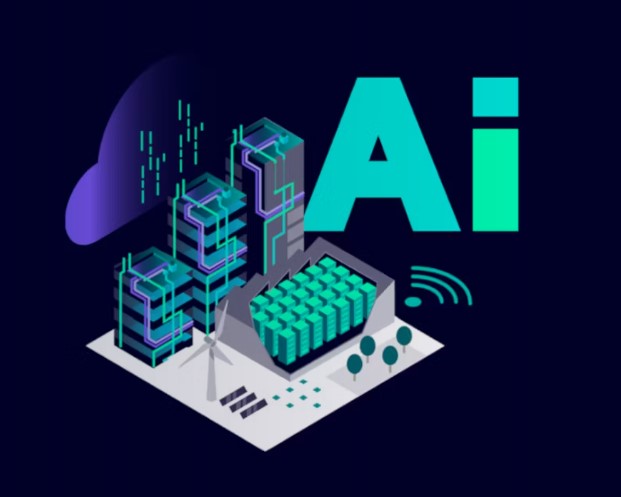
Siemens and NVIDIA are engineering the infrastructure for the next generation of DSX AI factories.
We invite you to climb aboard.
(This blog was made possible with special contributions from Ales Alabegovic and John DeBoer.)
This blog scratches the surface of what Siemens and NVIDIA are doing in the realm of the AI factory. A comprehensive white paper is currently under development. An upcoming blog will be posted announcing the completion of this paper.