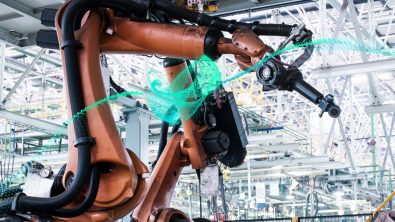
Faster product optimizations demand better processes for new product introduction for component manufacturers

The best machine components are never good enough. They’re constantly evolving and improving.
Component manufacturers and machine builders can’t afford to stand still. They need to keep pace with shifting customer demands to stay competitive.
From highly configurable drive systems to smarter, more sustainable actuators and bearings, the new era of component manufacturing is continuously moving, shaped by complexity.
Continuous product optimization and faster product introductions are essential to keeping up.
Why industrial machinery components need to keep evolving
Today’s market asks for more variety, more intelligence and more efficiency with every single machine shipped.
Competition is fierce, and every customer wants a solution tailored to their exact requirements.
These requests don’t wait for traditional development cycles. The pressure is on to design, validate and launch high-quality, customer-specific variants faster than ever.
At the same time, cost and sustainability pressures mount. Can different materials be used to reduce weight without losing reliability?
Quality standards only get tighter, and production windows compress. Delays carry a real cost when slow launches lead to lost orders.
Machine components must continue to evolve even after they hit the market.
How product optimization supports Accelerated Product Introduction
To master this relentless pace, industrial machinery leaders are rethinking their approach to new product introduction (NPI) with Accelerated Product Introduction solutions.
Product optimization is the critical link. It’s the digital process of iteratively refining designs to deliver the best possible balance of performance, cost, manufacturability and compliance before a single part is made.
The smart component manufacturer doesn’t wait until the end to optimize. Optimization is baked into every phase of NPI.
With integrated, connected digital tools, teams make better decisions earlier, rapidly evaluating dozens of design choices virtually.
Instead of waiting for physical prototypes, they validate performance with high-fidelity simulations, using AI to spot trade-offs and explore alternatives.
The result is a faster, smoother NPI process where risk is drastically lowered, product launches hit their targets and engineering teams spend more time innovating.
Digitalize NPI for configurable components and equipment
Too many organizations still grapple with legacy NPI practices. Vital information is siloed in shared drives and disparate CAD tools. Collaboration is slow and clunky. As a result, updated requirements get missed or misunderstood.
A new configuration shouldn’t take as long as a brand new design.
Digitalizing your NPI processes changes everything.
When the process is centered on a connected digital thread, engineering, CAD, simulation and manufacturing can work from the same up-to-date model.
Digital twins let teams prototype assemblies virtually, test configurations and catch downstream production challenges early.
High-quality documentation, work instructions and service materials are generated from the same single source of truth.
Engineers and managers move faster, avoid rework and keep innovation alive even as products grow more customized and complex.
Explore more design alternatives with generative design
Modern CAD and simulation technology have put generative design and topology optimization within reach for industrial machinery teams.
Rather than starting from scratch or relying on hand-me-down designs, engineers can ask “What if?” and let the algorithms propose efficient structures shaped by real-world performance constraints.
Give the system your functional requirements, physical boundaries and manufacturing processes, and instantly receive innovative design options that you may never have considered on your own.
These alternatives are lightweight and ready for manufacturing and assembly, with data connected directly into the engineering workflow.
The creative friction of moving geometry or recreating data is eliminated, freeing teams to focus on evaluating the best ideas rather than overcoming tool limitations.
Connect CAD, simulation, CAM, quality and manufacturing data
The real value of digital new product introduction for component manufacturers emerges when design, analysis and manufacturing live in one ecosystem.
With tools like Designcenter, component manufacturers connect every phase from CAD modeling to CAM programming, quality inspection and shop floor execution.
RELATED: Your comprehensive guide to CAD software
A proposed design change instantly updates part geometry, related simulations and downstream manufacturing details.
Any issues caught during CAM programming or quality planning flow back to engineering, closing the loop.
Design libraries and standards are maintained, and hard-earned optimization insights become assets the whole organization can share and reuse.
These integrated workflows enable teams to accelerate iterations, reduce disconnected handoffs and launch customer-ready components faster and at lower risk.
Build a repeatable path from concept to production
Industrial machinery leaders are building repeatable, transparent paths from idea to operation.
Standardized NPI processes make team collaboration seamless, while connected data models ensure every engineer, quality analyst and production manager works with the latest information.
Design reuse becomes effortless because optimized subassemblies and validation routines are readily available for the next project or variant.
Every design change is captured in the digital twin, with traceability for compliance, quality and sustainability.
LEARN MORE: What you need to know about Designcenter X NX 3D CAD Software
With an integrated digitalization platform, engineering managers lower launch risks, deliver innovative products faster and set the stage for continuous improvement as products evolve.
The digital twin becomes more than just a model of the machine component. It’s a guide for the business, showing what’s possible when you combine optimization with Accelerated Product Introduction.
Frequently asked questions (FAQ) about new product introduction for component manufacturers
What is Accelerated Product Introduction?
Accelerated Product Introduction (API) is the process of integrating digital tools and workflows to bring new or customized components and machines to market faster, with fewer errors and less risk. API combines requirements management, virtual design, simulation, quality planning, and integrated validation so teams can make better decisions, reduce physical prototyping, and ensure smoother launches.
How can component manufacturers improve new product introduction?
By digitalizing NPI, component manufacturers break down data silos, integrate design and manufacturing teams, and use real-time collaboration tools. Leveraging simulation, generative design and closed-loop quality systems, they can validate more alternatives early, reduce errors and reuse proven designs, leading to faster cycles and higher-quality outputs.
How does product optimization help industrial machinery companies?
Product optimization enables engineering teams to find the best design compromise between performance, cost and manufacturability that meets complex customer and regulatory demands without sacrificing speed. It enhances reliability and quality, and it supports continuous improvement as new operational data is fed back into design.
What role does CAD play in accelerated product development?
CAD tools serve as the digital backbone of the development process. Modern CAD solutions like Designcenter integrate with simulation, generative design and manufacturing planning, keeping all product data in sync and helping teams iterate rapidly, analyze alternatives and generate downstream documentation with confidence.
How does generative design improve component design?
Generative design automates the exploration of design alternatives by considering real-world constraints and manufacturing processes. It allows engineers to quickly identify the lightest, strongest or most cost-efficient geometry, resulting in innovative components that are well-suited to contemporary production methods.
What is multidisciplinary design optimization?
Multidisciplinary design optimization (MDO) is the coordinated process of balancing requirements and constraints across mechanical, electrical, software and other domains to deliver a component or assembly that performs well as a system and not just as an individual part.
How does a digital twin support NPI for configurable components?
The digital twin acts as a virtual, always-current model of the product. For configurable components, it provides instant feedback on the impacts of any change across performance, manufacturability and regulatory compliance while also ensuring that customer-specific documentation and instructions are automatically generated and always accurate.
How can Designcenter X support product optimization for industrial machinery?
Designcenter X enables the library-driven management of optimized designs, materials and manufacturing processes. It streamlines reuse, standardizes best practices and enables rapid design iteration while keeping the product twin current, so that learnings from one project benefit every future initiative.
What is the difference between product optimization and new product introduction?
Product optimization is the continuous process of improving a design to deliver the best balance of goals. New product introduction is the overarching workflow that takes a product from idea through launch. Optimization is woven throughout NPI, ensuring each phase delivers maximum value and lowest risk.
How can engineering managers reduce risk when introducing new machine components?
Digital NPI platforms help managers mitigate risk by bringing simulation, quality and manufacturing feedback upstream, automating compliance checks and enabling transparent, traceable decision-making. By leveraging a connected ecosystem like Siemens Xcelerator, teams can identify and resolve problems before they ever reach the shop floor.