Observations and highlights from the Arm Everywhere China event in Shanghai
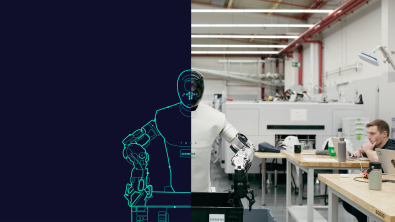
Last month in Shanghai, the Arm Everywhere China event drew a lot of attention and interest. As the industry races toward “Physical AI” and AI-defined vehicles, development timelines remain a major bottleneck for these software-rich vehicles. Two announcements at the event directly address this challenge.
The first was the announcement of Arm® Total Design for Physical AI. This partner ecosystem brings together the assets needed to develop the complex AI workload-driven products emerging in automotive and robotics, all powered by the Arm compute platform. Siemens is proud to be a participant in Arm Total Design for Physical AI at its launch and looks forward to working with other members to provide integrated solutions for the next generation of products.
The second important reveal was the groundbreaking demonstration of Siemens Innexis Architecture Native Acceleration (ANA), a virtual platform hosting a virtual SoC based on the latest Arm Zena™ Compute Subsystem (CSS).
The Demo: A Cockpit That Doesn’t Lag
The centerpiece of our showcase was a fully functional automotive cockpit. The demo featured a dual-screen setup:
- In-Vehicle Infotainment (IVI) : Running complex, high – resolution media and navigation.
- Instrument Cluster: Displaying a graphically rich cluster, including critical, safety – related vehicle data.
- Full Vehicle Digital Twin: The smart cockpit was linked to a full-vehicle digital twin, providing realistic vehicle data.
What made this demo a “showstopper” wasn’t what was on the screens, but how it ran. Traditionally, virtual platforms struggle to keep pace with real-world hardware, often running at a small fraction of the speed. Our Innexis ANA platform, however, runs near real-time. By leveraging Arm native execution on Arm-based host compute, Innexis ANA significantly reduces the overhead associated with traditional processor simulation, enabling complex software workloads to run at these speeds. This means developers can use a responsive, productive software development environment for early porting and development, with a fluid UI that virtually mirrors what they would see on the physical chip.
Flexible Development, from Cloud to Desktop
A key advantage of Innexis ANA is its flexibility to run on Arm-based compute, whether in the cloud or on local hardware. Through AWS, developers can leverage Arm-based Graviton instances to run complex software workloads on high-speed virtual platforms, with scalable compute resources and browser-based access that supports collaboration across distributed engineering teams.
For the demonstration at Arm Everywhere China, Siemens used NVIDIA DGX Spark, powered by an Arm-based NVIDIA Grace CPU and NVIDIA Blackwell GPU. This provided a compact, desktop-based environment capable of running the virtual SoC at near-real-time speeds, offering an alternative for developers who prefer local infrastructure or have limited cloud connectivity.
Together, these deployment options give engineering teams greater flexibility to develop, test and validate software before physical silicon is available.
Industry Perspectives
The collaboration highlights the value of bringing together expertise from across the computing and software ecosystem to accelerate automotive development, as demonstrated by Siemens’ work with Arm and NVIDIA.
“Giving developers access to realistic virtual compute environments before silicon is available is a key enabler for how complex physical AI products are developed,” said Dermot O’Driscoll, Vice President of Go-to-Market, Physical AI, Arm. “Siemens’ demonstration shows how virtual platforms can bring full stack software development and validation forward, reflecting the kind of accelerated innovation we aim to deliver through Arm Total Design for Physical AI.”
The Road Ahead
Running a virtual SoC at real-time speeds on accessible hardware like the DGX Spark means automotive and robotics OEMs can shave months off their development cycles. It enables shift-left software development, integration and validation earlier in the product lifecycle, at a scale never before possible.
We want to thank the Arm team for hosting a fantastic event in China and our partners at NVIDIA for helping us power the future of automotive virtualization and for making this collaboration possible.

Scot Morrison is the Vice President of Shift-left Software for Siemens EDA