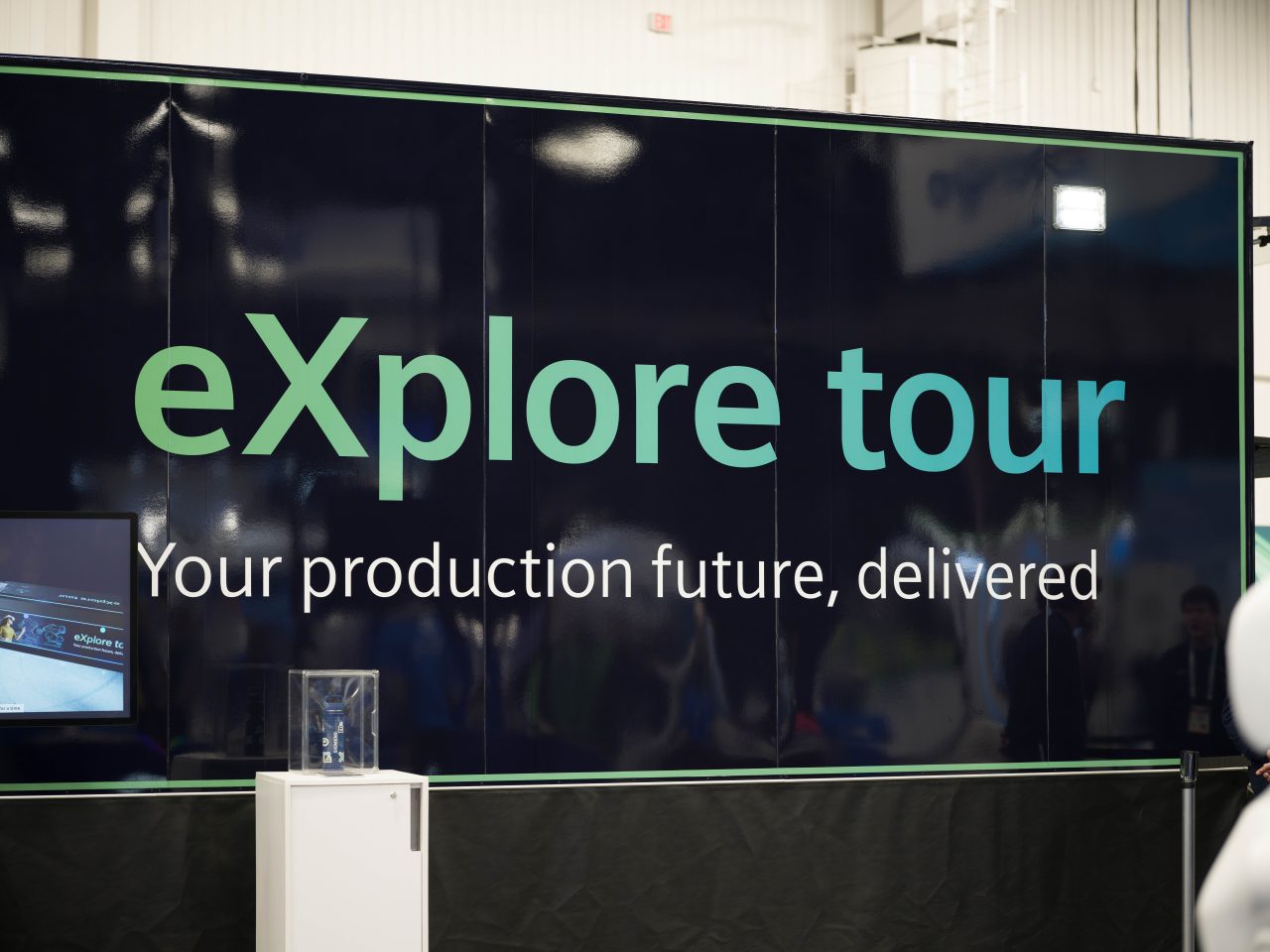
What happens inside the Siemens eXplore tour?


A production issue appears on a screen. Somewhere in the facility, a team needs to understand what changed, what else may be affected and where to look first. The answer may exist in the plant’s data, although finding it may take longer than the team can afford.
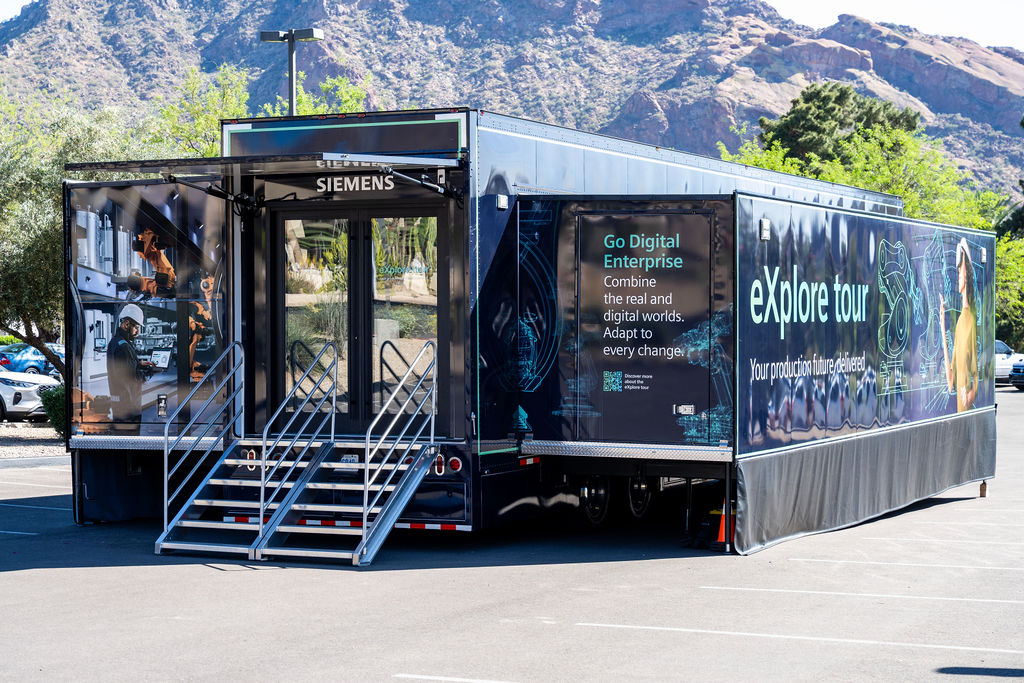
This is the kind of pressure that shapes the experience inside the Siemens eXplore tour. Its mobile showroom immerses visitors in a guided manufacturing story that connects shop-floor events with information from across an organization. Visitors watch a problem develop, follow the evidence surrounding it and learn how better visibility into data can help engineers, operations leaders and other team members decide what to do next.
The experience builds from challenges manufacturers already recognize. Skilled employees leave and newer technicians need access to knowledge. Plants collect growing volumes of operational insight. Teams are also assessing artificial intelligence, vision-based quality systems and other technologies while production continues around them.
“The [tour] demonstrates how industrial, financial, supply-chain and other operational data could be aggregated into a usable source for AI systems and newly hired technicians,” says Shane Lacina, exploratory docent for the eXplore tour.
The tour starts with a familiar production problem
Visitors enter a space modeled around a manufacturing environment. The docent introduces the pressures affecting the fictional operation and gives the group enough context to understand what is at stake. Soon, a production problem demands attention.
The scenario feels recognizable because the issue reaches beyond one machine or one screen. A process deviation may affect output. An equipment concern can put a schedule at risk. Quality data may sit in another system. People need to sort through these signals while the line keeps moving. The current storyline uses this day-to-day tension to show why connected data matters.
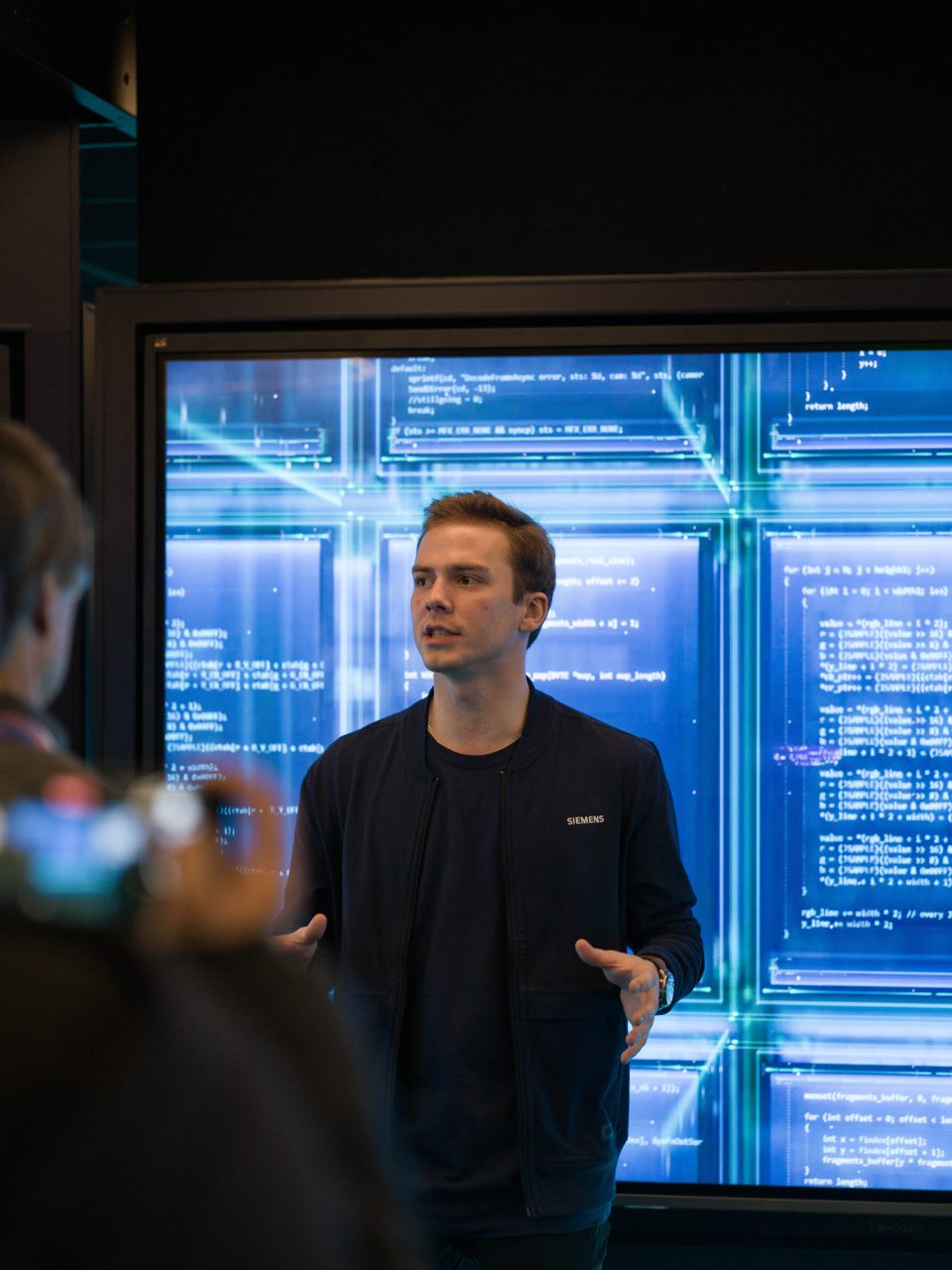
The docent guides the group through the situation rather than presenting a sequence of isolated product demonstrations. Each part of the tour adds another piece of the puzzle, and visitors begin to see how an event on the shop floor can relate to operating history, engineering information or business data elsewhere within the organization.
How connected manufacturing data supports plant-floor decisions
Most manufacturers already collect information from equipment and production systems. Other data comes from quality processes, finance and the supply chain. The challenge is bringing manufacturing, quality and business data together to support faster decisions.
“Organizations were collecting more data than they could effectively use or were unable to connect it,” says Sophia Martin Pardo, exploratory docent for the eXplore tour. She explains that Siemens helps bridge that knowledge gap by adding the practical context people need to understand what is happening.
Inside the tour, visitors follow that idea through the manufacturing story. Information gains meaning as its relationship to the production issue becomes clearer. A reading from one system may explain part of the event. Data from another area may change the diagnosis. The scenario shows how connected records can support troubleshooting, root-cause analysis and earlier awareness of a potential failure.
The tour also gives artificial intelligence a practical setting. AI depends on data and knowledge that teams can access and understand. When data remains scattered or lacks the connections that explain what it means, it becomes more difficult for people and AI systems to use it well. Lacina describes the connected data foundation as a resource that can help experienced employees investigate problems and give newer technicians a clearer point from which to begin.
The story stays close to the shop floor
The current Smart Manufacturing storyline follows people who respond when production changes. Plant supervisors and human-machine interface operators need to identify an issue, understand its effect and make a sound decision under pressure. Martin Pardo says the experience focuses on helping these users respond faster through aggregated data and connected digital threads.
That perspective reflects the complexity of real manufacturing environments. Manufacturing problems seldom remain neatly contained. A technical issue can affect production planning. A quality concern may involve several teams. Important knowledge may live with an experienced employee who is already helping somewhere else.
Visitors can discuss what they see as the scenario develops. People from operations, engineering, information technology and leadership may notice different parts of the problem. During a customer-site visit, those perspectives can shape a longer conversation about the facility’s open projects and current needs. At a flagship event, the guided visit offers a more compact introduction to the same manufacturing story.