How CPG’s manufacturing approach is costing billions, and what you can do about it
In the dynamic world of consumer packaged goods (CPG), where consumer preferences shift rapidly and supply chain agility is critical, a shocking reality persists: not only can external supply chain disruptions can severely impact profitability, but many CPG companies remain blind to their biggest optimization opportunity—the production floor itself.
The numbers don’t lie. Supply chain volatility costs the CPG sector billions annually, with a significant majority of companies experiencing disruptions that eat into profit margins. Yet, the critical solution often lies closer to home: the invisible, often manual, flow of materials within your own facilities.
The drive for speed-to-market, SKU proliferation, and demand for fresh products and trending beauty and personal care products means that efficient internal material flow is no longer a luxury but a necessity. Most facilities still treat their internal logistics as a separate operational concern, missing critical opportunities. It is therefore imperative that CPG leaders recognize that optimizing intralogistics—the movement of goods within their factories—can unlock substantial gains, leading to significant operational efficiency improvements and a marked reduction in costly downtime.
Download “Beyond Warehouse Management” now and join the manufacturers who are moving beyond traditional logistics to orchestrate end-to-end supply chain excellence.
The cost of the internal blind spot in CPG
Picture this: You’ve invested millions in optimizing your external CPG supply chain, meticulously tracking ingredients from farm to factory and finished goods to distribution centers. But once materials cross your facility threshold, they often disappear into a black box until they emerge as finished goods. This artificial boundary is where immense efficiency gains are lost.
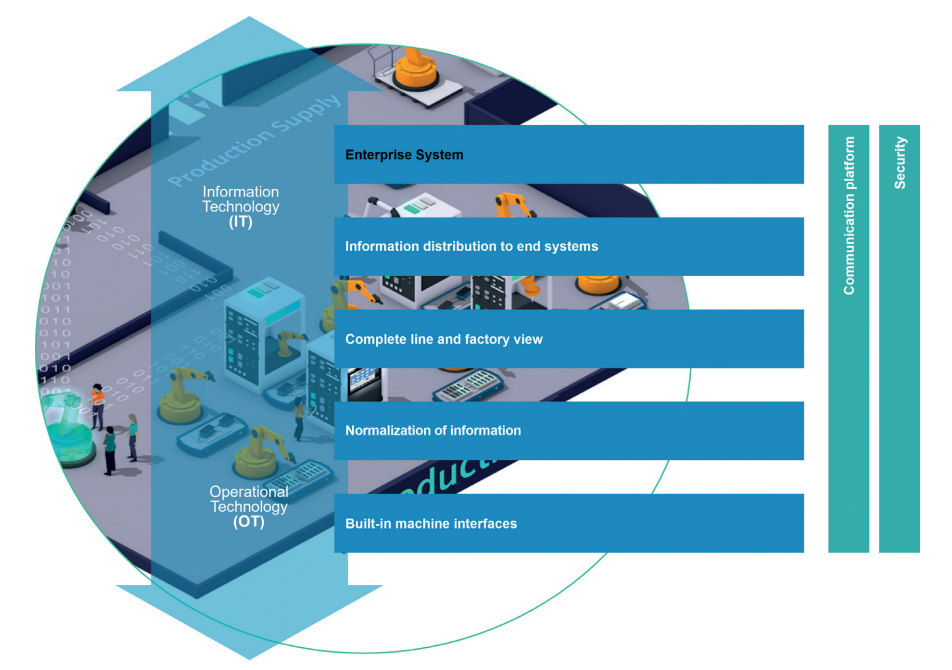
Traditional logistics management creates a dangerous gap. While sophisticated systems track goods between facilities, the critical internal movements within factories operate through disconnected, manual processes. This leads to:
- Costly production delays
- Excess inventory of perishable goods or seasonal packaging
- Increased operational costs
- Diminished customer satisfaction
Consider the real impact:
- Manufacturing productivity increased 4.5% in Q1 2025, yet most of these gains came from companies who integrated their internal logistics with broader supply chain strategies
- Supply chain optimization can reduce costs by up to 25%, but only when internal operations are included in the equation
- Warehouse management systems deliver measurable ROI through increased productivity, reduced errors, and improved customer satisfaction, yet many manufacturers haven’t extended these benefits to their production floors
Beyond the warehouse: The Opcenter IPL Advantage for CPG
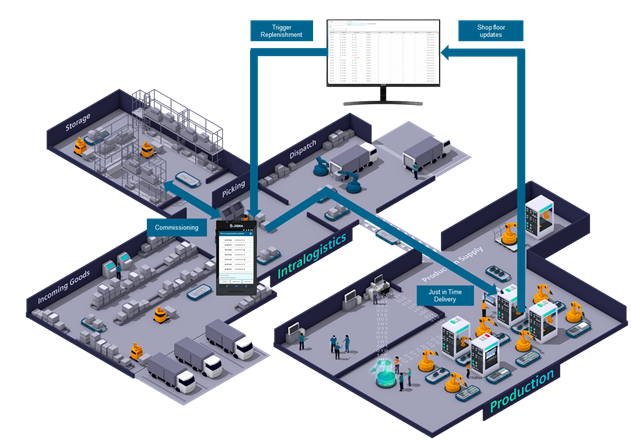
This is precisely why Siemens developed Opcenter™ Intra Plant Logistics (IPL)—to eliminate the artificial boundary between external logistics and internal operations. Our latest e-book, “Beyond Warehouse Management,” reveals how leading manufacturers are transforming their facilities into intelligent, responsive hubs within their broader supply chain networks and how CPG companies can follow suit.
Opcenter IPL addresses the core challenge of connecting internal CPG supply chain operations. By providing real-time data integration, the solution captures detailed information on material consumption and movement through sensors, scanners, and connected equipment. This granular operational data creates unprecedented visibility into material flow patterns, usage rates, and potential bottlenecks—crucial for managing diverse SKUs and rapid production cycles.
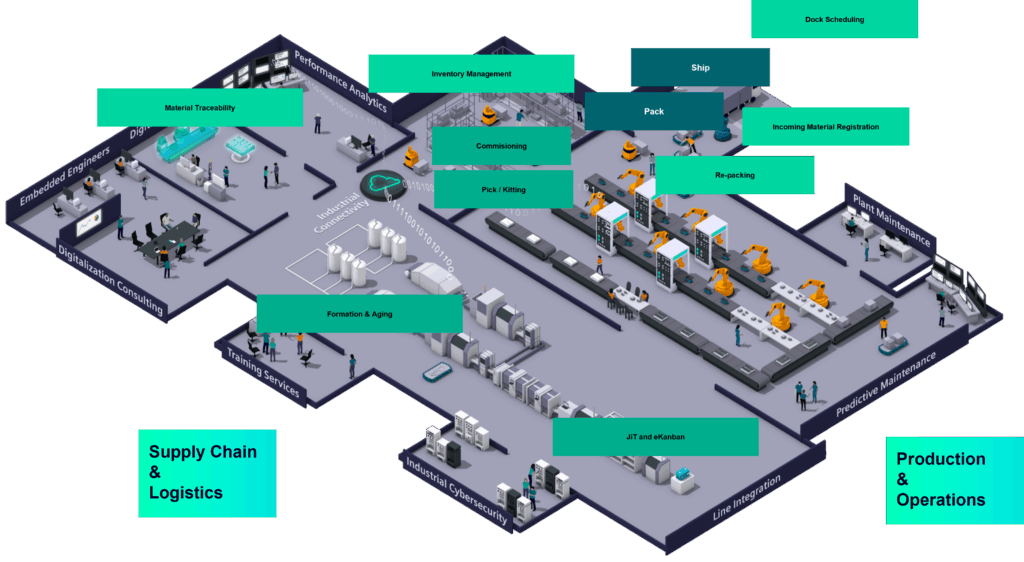
But here’s where it shows its greatest promise—when integrated with the broader Siemens Digital Logistics ecosystem, including AX4™ and Supply Chain Suite (SCS), Opcenter IPL enables CPG manufacturers to orchestrate end-to-end supply chain excellence, from raw material inbound to finished goods outbound:
- Opcenter IPL provides the foundation for accurate, real-time tracking within the plant
- AX4 acts as a logistics execution platform, connecting with partners and enabling dynamic production schedule adjustments
- SCS provides comprehensive supply chain visibility for predictive analytics and risk management
Real-world impact: From cost center to strategic advantage
The transformation delivers measurable benefits across multiple performance dimensions for CPG operations:
Reduced lead times: Streamlined internal material flow eliminates bottlenecks that previously extended production cycles. This means faster line changeovers, quicker response to demand spikes, and accelerated time-to-shelf for new products.
Enhanced responsiveness: Real-time data allows CPG organizations to quickly detect changes in consumer demand, ingredient and materials availability, or supplier performance and adapt production schedules, ensuring optimal stock levels and minimizing waste.
Minimized disruptions: Proactive risk management capabilities identify potential issues within the internal chain before they impact production. Combined with external supply chain visibility, this enables comprehensive risk management.
Cost optimization: Streamlined material handling reduces labor costs and equipment requirements. Optimized inventory levels minimize both carrying costs (especially for perishable or high-volume goods) and stockout risks, while efficient space utilization improves facility ROI.
The integration imperative for CPG
The intralogistics landscape is evolving rapidly, with AI integration, warehouse automation, and robotics driving 9.4% CAGR growth through 2030. Organizations that treat internal logistics as isolated systems miss the strategic value realized through broader integration.
This isn’t just about efficiency—it’s about proactive risk management for raw materials and continuous supply chain optimization. The integration between Opcenter IPL and broader supply chain systems creates a virtuous cycle where internal operations become more visible and controllable, making external planning more accurate and effective.
Consider the competitive advantage: As your competitors struggle with disconnected systems leading to inefficiencies and missed opportunities, your use of integrated solutions like Opcenter IPL transform internal logistics from an operational necessity into a strategic capability.
The path forward: Transform your CPG manufacturing ecosystem
The question isn’t whether to optimize your internal material flow, it’s whether you’ll lead the transformation or watch competitors capture the advantage. The future belongs to the CPG manufacturers who embrace integrated intralogistics solutions.
Download our comprehensive e-book “Beyond Warehouse Management” to discover how Opcenter IPL integrates with broader supply chain solutions, addresses specific manufacturing challenges, and delivers concrete benefits across multiple operational scenarios. Learn from detailed use cases covering logistics planning, manufacturing replenishment, transport management, and pick-pack-ship operations.
The digital supply chain revolution is reshaping CPG manufacturing. With consumer demands intensifying, supply chain complexities growing, and the intralogistics market expanding toward $100+ billion, the time for integrated solutions is now.
Ready to transform your CPG manufacturing facility into an intelligent supply chain hub? Discover how Opcenter IPL can eliminate your operational blind spots and deliver sustainable competitive advantage.
Download “Beyond Warehouse Management” now and join the CPG manufacturers who are moving beyond traditional logistics to orchestrate end-to-end supply chain excellence.