One truth, one system: how leading brands speed up consumer product development

In today’s consumer product development landscape, speed is non-negotiable. But speed without precision breaks trust. Every change to a product spec, project milestone, or label design ripples across the organization – and ultimately reaches the customer.
Great consumer products are more than ingredients and engineering. They’re a promise. A consistent, meaningful experience. And that promise only holds if your teams move in sync.
That’s why forward-looking consumer products and packaged goods companies are rethinking the way they work. They’re embracing integrated lifecycle management – connecting portfolio strategy, program and project execution, and product development within a single digital ecosystem.
When product decisions live in silos, launches stall
Product development doesn’t happen in a vacuum. But when teams use disconnected tools, it can feel that way. Portfolio managers chart a path. Program managers organize timelines. Engineers write specs. Yet when systems don’t talk, people scramble.
The signs are everywhere:
- A formulation update that doesn’t reach the artwork team
- Conflicting versions of a product brief circulating in email threads
- Weeks lost reconciling spreadsheets before a gate review
What starts as a misalignment behind the scenes becomes a delay, a cost overrun, or a damaged brand impression.
Integration connects strategy to execution
Integrated lifecycle management (ILM) breaks down barriers. It links strategic intent to the daily work of product creation. Portfolio, program, project, and product workflows live together – giving everyone shared visibility and control.
Product Lifecycle Management becomes more than a repository. It becomes the hub for connected decisions.
With ILM:
- Portfolio managers see how ingredient restrictions affect launch timing
- Program managers adjust resources based on real-time status
- Engineers work from the latest approved specifications and digital assets
For example, when a packaging spec is updated by engineering, that change automatically updates the timeline in the program manager’s dashboard. Marketing sees the change reflected in approved assets, and regulatory is notified without sending a single email.
The result is a product design process that moves with agility and precision.
Reduce risk, rework, and repetition
ILM changes how teams work:
- Product data – recipes, claims, allergens – is governed centrally
- Updates to specs sync instantly across all systems
- Regulatory checks happen inline, not after the fact
- IP is safeguarded through permission-based access
For program managers, this means fewer last-minute timeline changes. For engineers, fewer surprises in the design phase. For regulatory leads, less chasing documentation across folders.
Visualizing this, a workflow comparison might show that pre-ILM, a spec change required multiple handoffs and days of communication. Post-ILM, that same change flows automatically through connected workflows and triggers approvals within minutes.
Powered by a cloud-native application development platform
ILM is not just integration for integration’s sake. It’s built on a flexible, cloud-native application development platform that supports your business model – not the other way around.
The platform enables:
- Automation of stage gates and compliance workflows
- Dashboards that visualize project and program dependencies
- Scalable architecture that supports both enterprise and regional teams
It also integrates seamlessly with existing enterprise systems – making it easier for IT to support, scale, and extend functionality without disruption.
What integrated lifecycle management looks like in action
When ILM is in place:
- Product engineers access linked specs, formulations, and artwork files in one view
- Program managers track interdependent milestones with real-time status updates
- Regulatory teams review and approve updates within embedded workflows
Each team has the information they need – and confidence that it’s accurate.
This integration also simplifies onboarding of new products and supports expansion into new markets. With standardized, reusable templates and consistent compliance checks, teams can move faster and smarter into growth opportunities.
Integration builds brand integrity
Every product that ships reinforces – or erodes – your brand’s reputation. Consumers don’t see your systems. But they feel the results: accurate labels, consistent quality, and timely launches.
ILM ensures that internal alignment translates to external trust. When strategy and execution operate from one version of the truth, you deliver better experiences, faster.
This isn’t just a digital transformation initiative. It’s how you protect your brand equity and deliver innovation at the speed of the market.
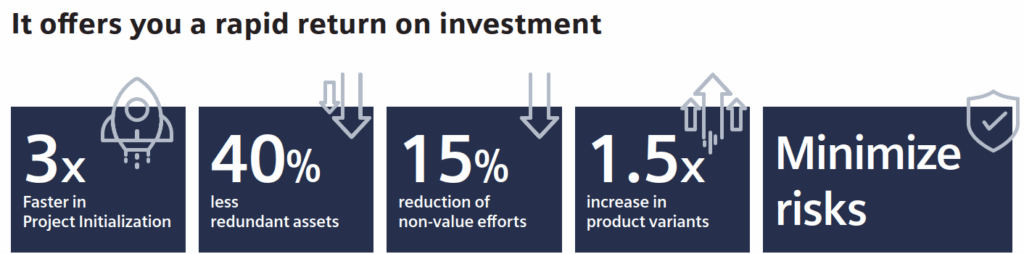
The results speak for themselves:
Start your transformation
See what integrated lifecycle management can do for your product teams. Experience the platform with a free trial and explore how it streamlines decision-making, accelerates time to market, and strengthens collaboration.
Frequently asked questions
What is integrated lifecycle management (ILM) and how does it support digital transformation in organizations? Integrated lifecycle management is a connected framework that unifies portfolio, program, project, and product data across teams to ensure speed, compliance, and consistency in consumer product development.
How does ILM support consumer product development? ILM provides a single source of truth where all product data, processes, and updates are managed centrally, reducing errors, duplication, and time to market.
Is ILM the same as PLM? Product Lifecycle Management (PLM) is one part of ILM. ILM also integrates strategic portfolio planning, program and project execution, and application development workflows into a unified system.
Can ILM integrate with our existing enterprise systems? Yes. Siemens’ ILM platform is cloud-native and supports integration with ERP, MES, and QMS systems to extend your existing IT landscape.
Who benefits most from ILM? Portfolio managers, program leaders, engineers, marketers, and regulatory teams all benefit from real-time visibility and improved collaboration across the product design process.
Why is integrating Portfolio, Program, Project, and Product Lifecycle Management essential?
Integration ensures that all departments from strategic planning to execution work from a single source of truth. In a brand-driven industry where emotional connection, innovation, and personalization are critical, this alignment allows for seamless collaboration across business functions. It protects brand equity by ensuring consistent product experiences and enables faster, more informed decision-making in response to evolving consumer demands.
Why do some companies struggle with achieving digital transformation despite their investments?
The two main factors preventing successful transformation are leadership and integration. Organizations that fail are often not connected to their customers and don’t operate with servant leadership principles. Leaders need to be able to both see the big connected ecosystem and zoom in when needed. Without adaptability in leadership style and proper integration across people, culture, and processes, transformation efforts fall apart. Companies also struggle when they treat digital transformation as merely an IT project rather than a comprehensive change in how they work.
What role does brand hierarchy management play in product innovation and development?
Brand hierarchy management serves as a foundation for connecting commercial business data with innovation data. It acts as a ‘Rosetta Stone’ between these two worlds, mapping the language and master data of commercial business (brands, SKUs, segments) to innovation data (formulas, technical specifications). This connection helps companies understand what innovation assets are being used for which market SKUs, enabling more efficient reuse of existing components. For example, when developing a new flavor, companies can identify existing formula ‘chassis’ to modify rather than starting from scratch, creating more focused project plans and reducing redundant work.
How should organizations approach idea management in the digital age?
In the digital age, idea management requires a shift in mindset and processes. Leaders should be ‘idea ambassadors’ who articulate, create, and inject new ways of thinking into organizations. Digital solutions like ILM help by providing consistency and access to information libraries, allowing teams to focus more on creativity and innovation rather than searching for data. The principles of design thinking are important—sensing differently, responding quickly, and conducting rapid demonstrations in the early idea stage. Organizations need to free up people’s time to work directly with consumers to reshape ideas and develop joint visions that can drive the innovation journey.