Beauty and cosmetic industry trends 2025: Transforming product development and manufacturing with digital innovation

The global beauty industry is valued at over $450 billion and continues to grow rapidly, with beauty and cosmetic industry trends 2025 driving manufacturers to innovate faster, control costs, maintain strict quality standards, and adapt to changing consumer expectations. To remain competitive, companies are adopting advanced beauty manufacturing solutions that connect every stage of product development—from initial concept to production and distribution.
At the center of this shift is formulated product design (FPD) software, a scalable and flexible tool that streamlines research, product formulation, quality control, and compliance management. Siemens’ FPD platform enables cosmetics manufacturers to accelerate innovation, reduce time to market, and stay compliant with evolving regulations. Here, we explore five key trends shaping beauty cosmetics product development and manufacturing today and how digital tools help manufacturers respond effectively.
1. Meeting changing consumer expectations
Today’s beauty buyers are conscious than ever about the health, environmental, and ethical factors behind their beauty purchases. They care deeply about product safety and ingredient transparency, demanding total openness in ingredients, sourcing, and corporate practices. Social media plays a major role in shaping purchasing decisions, where a single influencer’s review can make or break a product’s success.
Recent research highlights that 73% of consumers are willing to pay more for brands that offer total transparency, especially millennials and Gen Z who prioritize sustainability in cosmetics. Additionally, 87 percent of consumers say they’ll pay more for products from brands they trust. For cosmetics manufacturers, delivering clear, accessible product information combined with safer, more sustainable formulations is essential to retain consumer loyalty. Rapid innovation is also needed to keep pace with fast-changing preferences.
2. Stronger local and global regulations
The regulatory landscape for cosmetics is becoming tighter worldwide. The EU Safety Gate system reported over 2,000 alerts and recalls involving cosmetics in 2024 and 2025, often due to banned ingredients, contamination, or labeling errors. In other regions, including North America and Asia, new laws require deeper ingredient disclosure, safety testing, and traceability.
New regulations like the U.S. Modernization of Cosmetics Regulation Act (MoCRA) 2022 and the EU’s tightening of “free from” claims make compliance more complex, approaching the rigor of pharmaceutical standards.
Manufacturers can meet these demands by using integrated digital platforms that support the full product lifecycle—formula development, trial management, compliance monitoring, and accurate labeling. Siemens’ FPD solution helps manufacturers simulate and optimize formulations to comply with evolving rules before production begins, reducing risks and costly recalls.
3. Personalization and small-batch manufacturing are changing the game
Personalized beauty products are no longer a niche market but a consumer expectation. According to McKinsey’s 2025 report, 71 percent of consumers expect personalized experiences and 76 percent express frustration when brands fail to provide them.
Cosmetics manufacturing is moving away from mass production of millions of identical items toward smaller batches or even single customized units that meet individual consumer needs. Managing this shift demands precise control of raw materials, manufacturing recipes, equipment, and quality specifications to maintain consistency across multiple production sites.
Formulated product design software helps manufacturers maintain centralized, consistent data so customization is scalable while ensuring compliance and quality standards.
4. Ensuring consistent quality at scale
Product quality is crucial for brand reputation and customer trust. In June 2025, 170 cosmetic products were reported unsafe through the EU Safety Gate system, highlighting ongoing risks from banned substances, contamination, or labeling errors. Recalls can cause irreversible damage to a company’s customer base and market position.
Manufacturers face challenges from natural variability in raw materials, as well as environmental factors like humidity and temperature, all affecting product stability. With production spread across global sites, formulas typically require regional adjustments to accommodate local materials and equipment differences.
Integrated laboratory information management systems (LIMS) coupled with FPD platforms support a closed-loop quality management approach—tracking raw materials through production to finished goods—enabling early detection of deviations and maintaining consistent safety and quality.
5. Controlling costs while delivering value
Cost pressures are rising for cosmetics manufacturers as prices increase for raw materials, labor, and equipment. At the same time, consumers are more price sensitive: a recent study found 74 percent have become more careful about spending but still expect stable prices.
The 2025 McKinsey “State of Beauty” report projects about 5 percent annual growth through 2030. While 75 percent of cosmetics executives focus on growing sales, much of the growth will come from offering better value rather than higher prices. Uncertain consumer spending and demand for value remain top risks.
Siemens’ formulated product design software helps companies speed product development while controlling costs. Digital twin simulations let R&D teams test and optimize formulations virtually before costly physical trials, lowering innovation expenses and accelerating time to market without compromising compliance or quality.
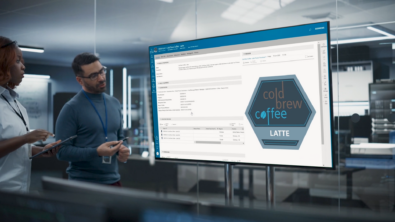
Siemens formulated product design solution
Siemens’ FPD platform is a comprehensive, integrated solution that manages formula and recipe development, trials, quality control, and regulatory compliance. Part of the Siemens Opcenter portfolio, it provides a digital thread connecting all stages of cosmetics manufacturing—from idea to finished product.
The platform supports companies of all sizes, from mid-sized manufacturers to global multinationals, helping them innovate faster, reduce risk, maintain quality, and comply with complex regulations.
Discover how the Siemens Opcenter Formulated Product Design solution can power your digital transformation in cosmetics manufacturing here.
FAQ: Beauty and cosmetics product development and manufacturing solutions
Q1: What digital solutions does Siemens offer for beauty and cosmetics product development and manufacturing?
Siemens provides an integrated portfolio of digital solutions that support every phase of the beauty and cosmetics product lifecycle. From Formulated Product Design software accelerating complex formulation and compliance management, to enterprise recipe management and integrated lifecycle management that align product development with manufacturing execution, Siemens solutions create a seamless collaboration. These tools empower both product development teams and manufacturing teams to innovate faster, ensure product quality, and navigate regulatory requirements efficiently.
Q2: How do beauty and cosmetics manufacturing solutions improve product quality and regulatory compliance?
By connecting design, formulation, lab testing, and production data into a unified digital environment, Siemens’ digital thread solutions such as traceability and lifecycle intelligence provide real-time visibility and quality tracking. This comprehensive approach enables manufacturers and product developers to comply with evolving global regulations, reduce errors, and maintain consistent quality across multiple products and sites.
Q3: How do digital twin simulations benefit beauty product design and manufacturing processes?
Digital twin simulation allows product development and manufacturing teams to create virtual models of formulations, packaging, and production workflows. Siemens’ solutions enable early testing and optimization of products before physical trials, reducing costs, eliminating errors, and speeding time to market. This is especially valuable in managing personalized and small-batch products.
Q4: How do Siemens solutions support personalized beauty product development and flexible manufacturing?
Personalization requires managing multiple formula variants and production parameters efficiently. Enterprise recipe management standardizes and scales recipe management, enabling consistent, compliant manufacturing of custom and small-batch products without sacrificing quality or speed.
Q5: In what ways does integrated lifecycle management reduce development time and minimize production errors?
Integrated lifecycle management centralizes validated product data and lab results, aligning cross-functional teams including R&D, regulatory, quality, and manufacturing. This minimizes miscommunication, reduces rework, and accelerates product launches by ensuring everyone works from the same accurate information.
Q6: What smart manufacturing technologies help optimize cosmetics production lines?
Siemens Smart Manufacturing solutions incorporate IoT, AI, automation, and advanced analytics to monitor production efficiency, handle a diverse SKU portfolio, reduce changeover times, and adapt quickly to demand shifts. This improves flexibility, lowers waste, and supports consistent high-quality output.
Q7: How does laboratory information management (LIMS) enhance quality control for beauty products?
LIMS automates test procedures, captures and analyzes quality data in real time, and provides immediate feedback. Siemens’ LIMS solutions integrate with formulation and production systems, allowing faster identification of quality deviations and ensuring products meet strict industry standards.
Q8: What challenges do global beauty and cosmetics companies face, and how can Siemens solutions help scale production with consistent quality?
Scaling global production involves managing ingredient variations, regulatory complexity, and process standardization across locations. Siemens’ digital threads connects formulation, quality, manufacturing data, and compliance activities across all sites. This unified approach enables standardized quality, faster issue resolution, and confident regulatory adherence worldwide.
Q9: How is digital innovation impacting beauty product development and manufacturing?
Digital innovation in beauty is enabling manufacturers to streamline formulation, improve quality control, accelerate time to market, and ensure compliance throughout the product lifecycle, aligning with 2025 industry trends.
Q10: Why is sustainability in cosmetics important in manufacturing in 2025?
Sustainability is a major trend in 2025’s beauty and cosmetic industry, prompting manufacturers to adopt eco-friendly ingredients, reduce waste, and implement transparent supply chains to meet growing consumer demand for responsible products.
Q11: How do beauty and cosmetic industry trends 2025 affect product development strategies?
These trends encourage companies to integrate advanced technologies like formulated product design software and digital twins, which enhance product development and manufacturing efficiency while addressing consumer personalization needs.


Comments
Leave a Reply
You must be logged in to post a comment.
This article highlights 2025 trends in the beauty industry, focusing on digital innovation, sustainability, and meeting changing consumer expectations.visit here = https://arguslogistics.com/industries/health-and-beauty/
With all the talk about 2025 beauty trends, I keep noticing how much the industry is shifting toward precision, personalization, and consistency in results. Clients are way more informed now, and they expect treatments that feel both advanced and reliable, not just trendy. From my own experience working with aesthetic procedures, product quality really makes the difference in outcomes and client satisfaction. That’s why I ended up using nabota 100 units from https://skin-reboot.com/product/nabota-100-units/ in my practice. It fit naturally into a more modern, results-driven approach without overcomplicating the workflow. The results felt predictable and clean, which matters a lot when expectations are high. Digital innovation is great, but solid products like this are still the foundation everything else is built on.