Meet Our Community MVP of the Month for June 2026!
Hi there, Community!
Get ready to be inspired! We’re absolutely thrilled to continue our Community MVP (Most Valuable Player) spotlight series. This initiative is all about celebrating the incredible individuals who consistently go above and beyond, sharing their wisdom, supporting their peers, and truly making this community a vibrant hub for learning and growth.
For our latest MVP feature, we had the distinct pleasure of sitting down with Sean Cresswell. Sean is a long-time expert in Solid Edge, a mentor, and a dedicated Community Catalyst. His profound knowledge and extensive experience have made him an invaluable resource to members across the globe. We’re so excited to share more of his story and insights with you below!
You have worked with DISW software products for many years, although there weren’t any formal Communities then, how has Community evolved over time?
It’s wild to think I’ve been a Solid Edge user since 1999, and a commercial user since 2000! Back in the day, we only had BBS Notes—that closed forum for customers on active paid maintenance. I met so many incredible people and true community legends there, including both users and Siemens staff. There was definitely some nervousness about taking the forum public, and we’ve survived about four different platform redesigns since then. But through it all, this community has stood strong, and seeing it grow like this is fantastic.
In your work with Siemens Solid Edge you’re known for strong customer support and knowledge sharing. How do you bring that same mindset into helping our community members?
It’s always fun to reminisce about the early days of figuring out a new toolset and realize how far you’ve come from those first steps. But these days, what I enjoy most is giving back. I find true satisfaction in helping other users overcome tricky workflows and guide them through tools they might struggle with.
As a Community Catalyst what motivates you to invest so much time in teaching and supporting fellow engineers and how has Community helped you?
My motivation comes from a desire to pay it forward. When I started with Solid Edge back in 1999, I was fortunate to gain access to a tight-knit group of expert users and Siemens staff who generously shared their knowledge.
Having benefited so much from that support, I find immense joy in being that guide for the next generation of engineers. Unfamiliar workflows can be incredibly frustrating, and helping someone overcome those hurdles is highly fulfilling. The community has helped me by keeping me continuously learning. Even after all these years, engaging with new users and their unique challenges keeps my own skills sharp and connects me to the heartbeat of our industry.
If you had one message for new or aspiring community members, especially those entering this field what would you want them to know?
I want them to know that they are entering a collaborative network, not just a technical forum. When I started back in 1999, the community was small and closed, but the spirit of helping one another was huge.
My advice to new members is to dive in with curiosity. Use the community not just as a place to troubleshoot errors, but as a space to observe how others think and solve problems. Don’t let unfamiliar tools intimidate you. Reach out, connect with the veteran users, and remember that your unique perspective as a newcomer is valuable too. One day, you’ll be the one passing that knowledge down to the next generation.
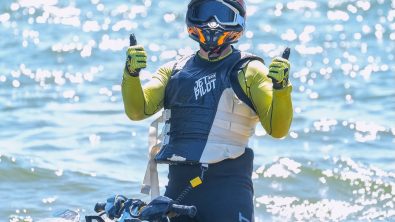
I understand that outside of engineering, you’re an avid jet skier. What’s been your greatest highlight in the sport, and what do you find to be its biggest downside?
The absolute highlight of runabout buoy racing is the raw power and high-G cornering. Wrestling a 300-plus horsepower runabout around a tight apex while pulled down hard into a turn is an incredible rush. It’s a high-speed chess match where you are battling deck-to-deck, hunting for clean water, and trying to hold the perfect line around the course markers. It demands the same analytical focus as engineering, just at 80-plus miles per hour.
The biggest downside is the relentless mechanical strain and physical punishment. Pushing a high-performance runabout to its absolute limits around a race course means components are constantly stressed, requiring a massive amount of time turning wrenches in the garage. On top of that, absorbing the impact of chopped-up race water at maximum speed leaves your muscles and joints completely battered by the end of a race weekend. It takes a serious investment of time, money, and physical endurance, but the thrill makes it completely worth it.