The Spark of Curiosity
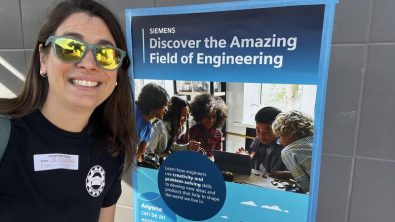
Author: Inga Becker, R&D Strategy Professional at Siemens
A while ago, my family and I, along with some of my sons’ classmates, attended “The Physics Show” at Foothill College. It was a fantastic experience, featuring experiments on pressure, inertia, and even a dive into the world of Galileo Galilei. What truly stood out was how the presenters explained the physics behind each demonstration in an age-appropriate way, making complex concepts accessible and exciting.
After the show, one of the other parents who joined us confessed she had never tried such experiments at home before but was now eager to replicate them with her children. Later that day, my husband and I—both scientists by education—reflected on her reaction. We realized that while these types of experiments felt familiar to us from our university days, they were entirely new and impactful for others.
This was a powerful reminder: sparking curiosity isn’t just for kids; it’s for adults too. And critically, if we want our children to be curious, we must embody that curiosity ourselves. As parents, we are the first, and initially the most influential role models for our kids. This influence is then complemented by teachers in schools, and later by professionals in industry whom they look up to when making decisions about their future education and careers.
I call this interconnected relationship the “Educational Triangle.” I believe that the collaboration between these three elements—parents, teachers, and industry—is crucial, especially in K-12 education, to ignite and sustain a lifelong curiosity for science, technology, and engineering.
The Parent’s Role – The Home as the First Lab
“Mom, do we have vinegar?” My 9-year-old’s question often signals an afternoon of messy, joyful experimentation. I might envision food-stained kids building a baking soda volcano, but I know these moments are invaluable. It will get messy, and experiments might not work as planned. But I let them try. An unexpected outcome is a valuable scientific observation, leading to questions like: “What did you see? What worked and what didn’t? What could you change next time?”
These home experiments are perfect for introducing the core iterative steps of the Engineering Design Process:
- Ask: Define the problem or question.
- Imagine: Brainstorm solutions.
- Plan: Select an idea and outline the steps.
- Create: Build the prototype.
- Improve: Observe the results and analyze them.
- Repeat: Refine the solution based on observations.
Parents often feel daunted by the mess or by not having all the answers. But I encourage every parent: don’t be afraid to try! Experiments might fail, but that’s the essence of science and engineering—exploration, iteration, and learning. If finding easy experiments is a challenge, remember that resources are abundant. We can learn from our kids’ tech fluency and even use AI tools to generate ideas. Imagine asking, “Hey ChatGPT, can you help me design an easy experiment for my 5-year-old to introduce buoyancy with materials on hand?” By embracing this hands-on, curious approach, parents become influential STEM educators, laying a crucial foundation.
The Teacher’s Role – Nurturing Curiosity in the Classroom
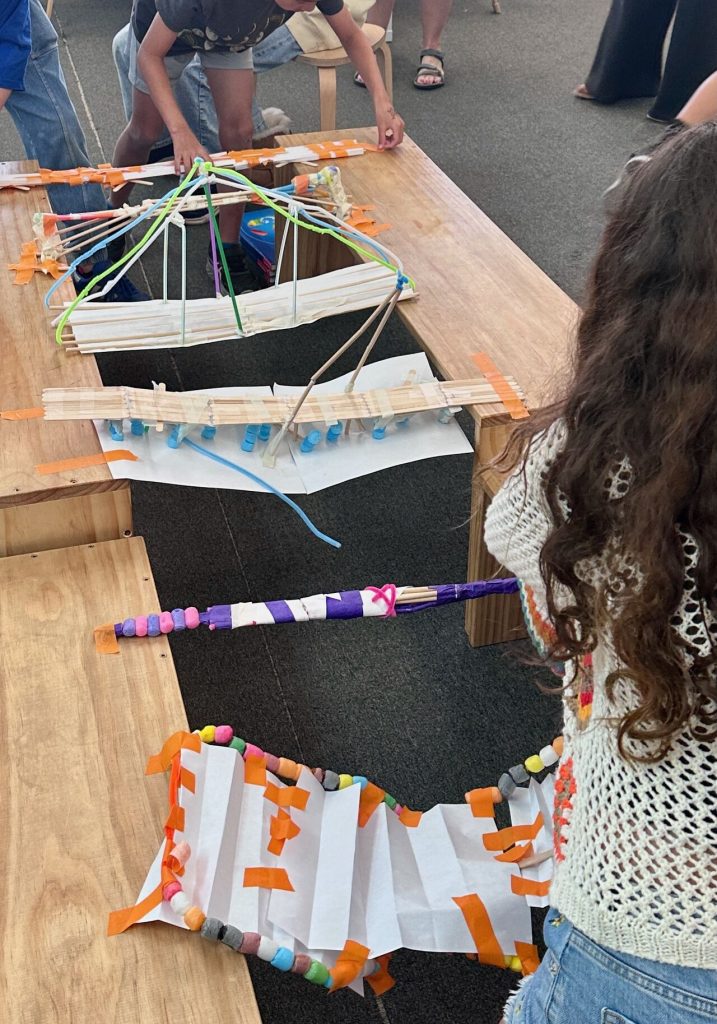
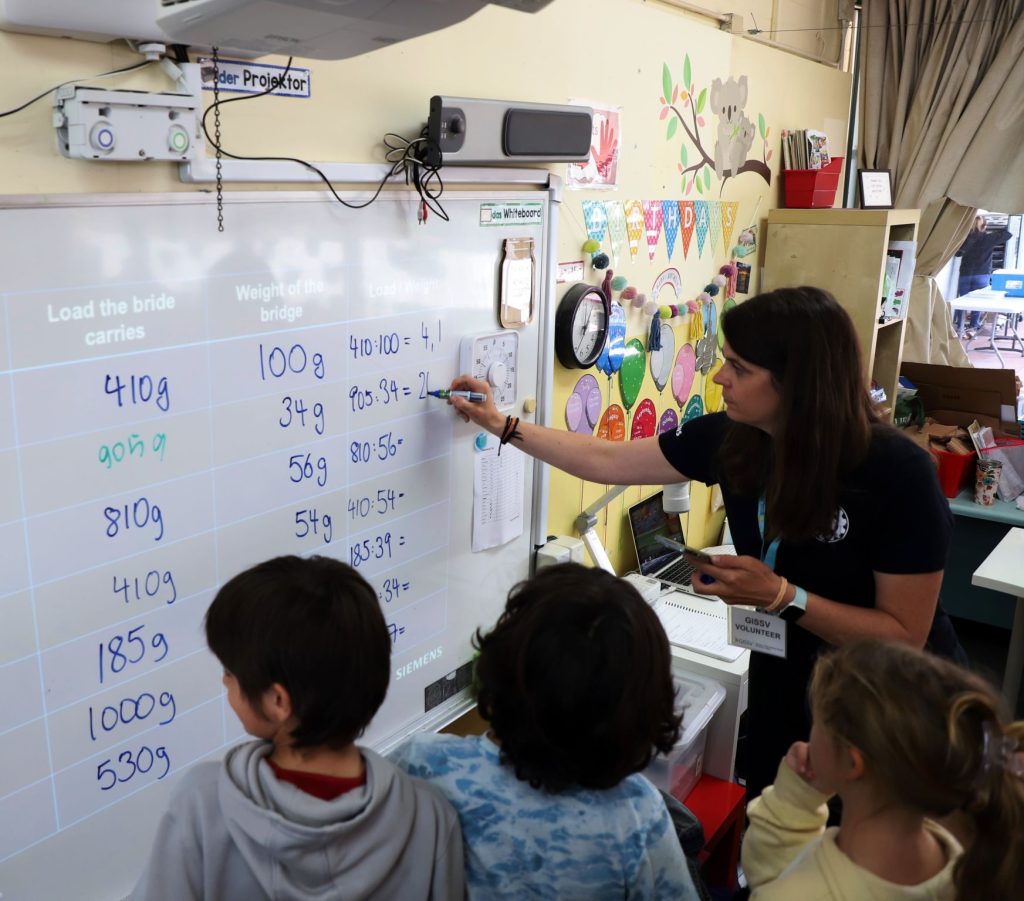
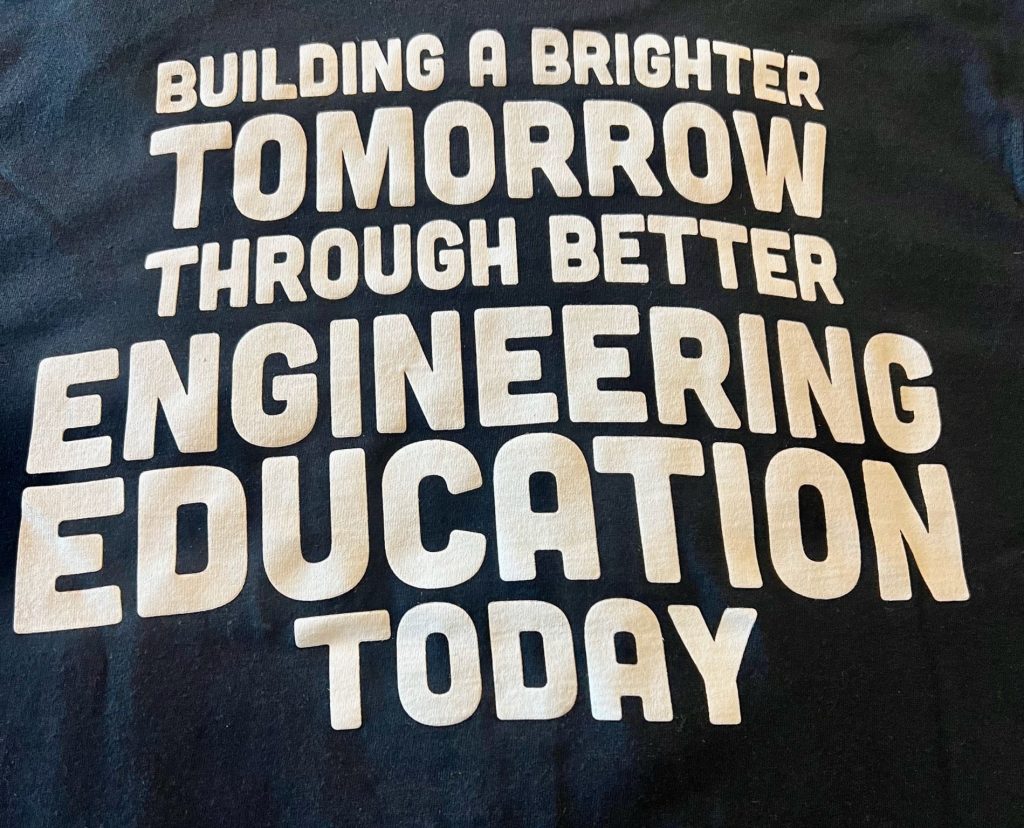
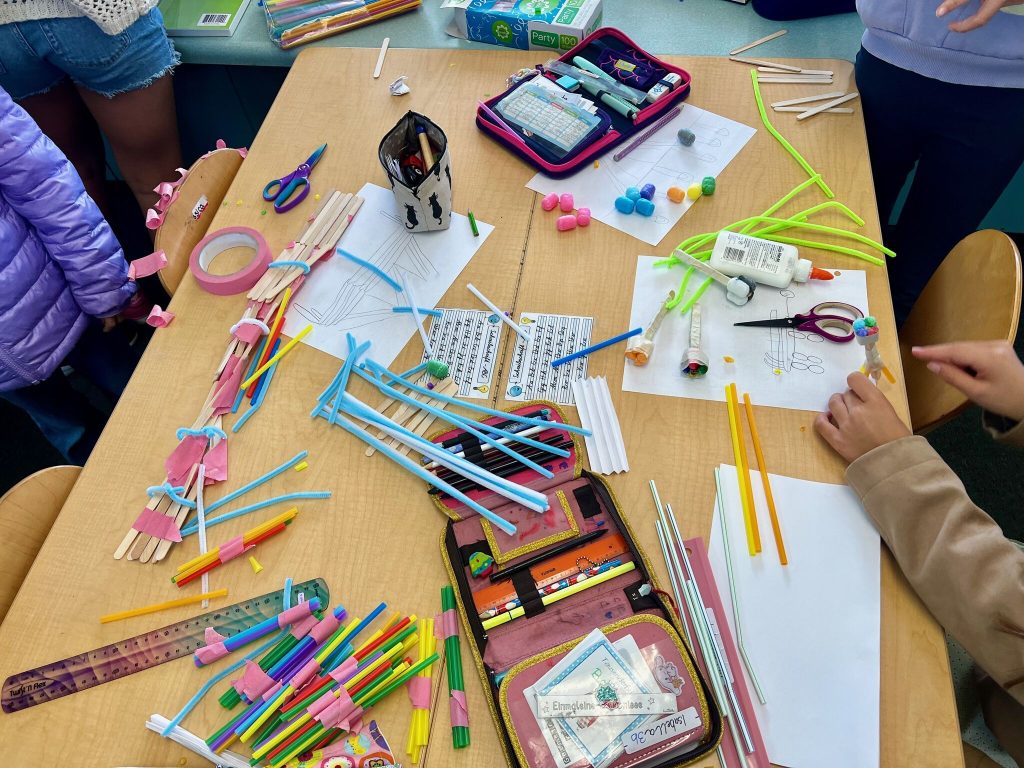
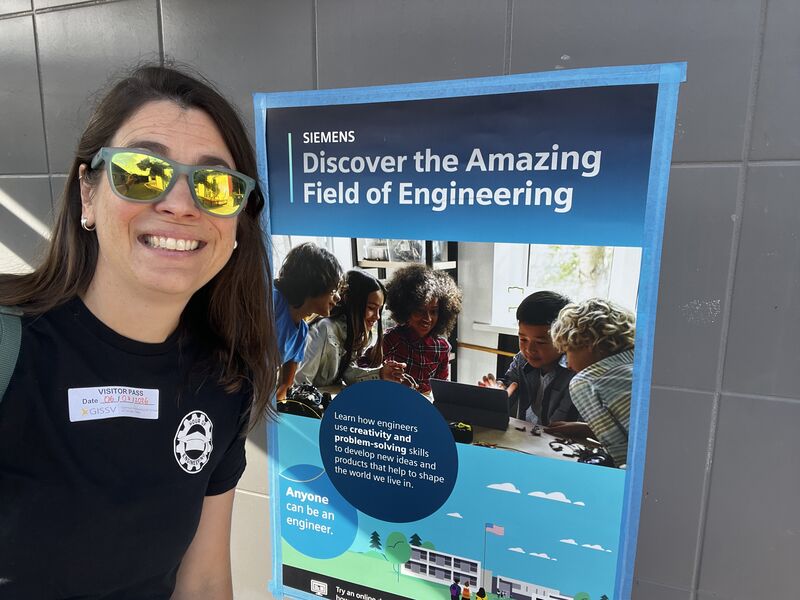
About a year ago, I read a LinkedIn article by my colleagues Susann and Sabine, detailing how they successfully transferred the “Siemens bewegt Schule” concept internationally from Germany to a school in Italy. Having recently moved to the US, I was immediately inspired to run a similar workshop at our local school in Silicon Valley. “Gesagt, getan”—easier said than done; one might think—but I was positively surprised by how readily I found motivated teachers. Not only do they encourage parents to share the “passion and profession” in the classroom. They also helped organize materials, reviewed my presentation to fit into the curriculum, and joined hands on during the workshop.
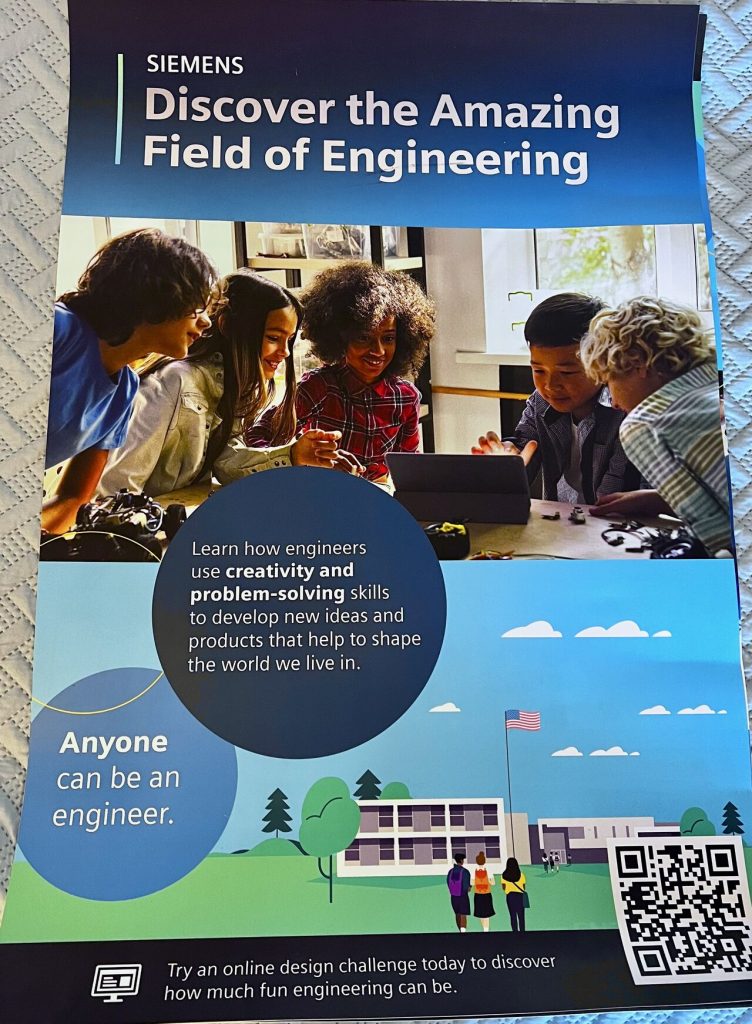
In parallel, I was pleasantly surprised by my own company, Siemens, for whom I’ve worked for over a decade. The sheer volume of free resources we provide for K-12 education clearly demonstrates that we, too, have identified a crucial truth: if we want to close the engineering graduate skills gap, we need to start early.

The Company’s Role (Siemens) – Bridging Education and Industry
Completing our “Educational Triangle” plays a crucial role in industry. At Siemens, we don’t just talk about the importance of STEM education; we actively invest in it with a comprehensive concept that spans from K-12 and beyond. Our commitment is rooted in the understanding that if we are to close the engineering skills gap and foster the innovators of tomorrow, we must engage early and broadly.
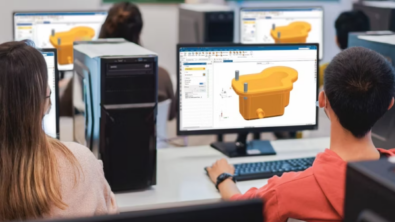
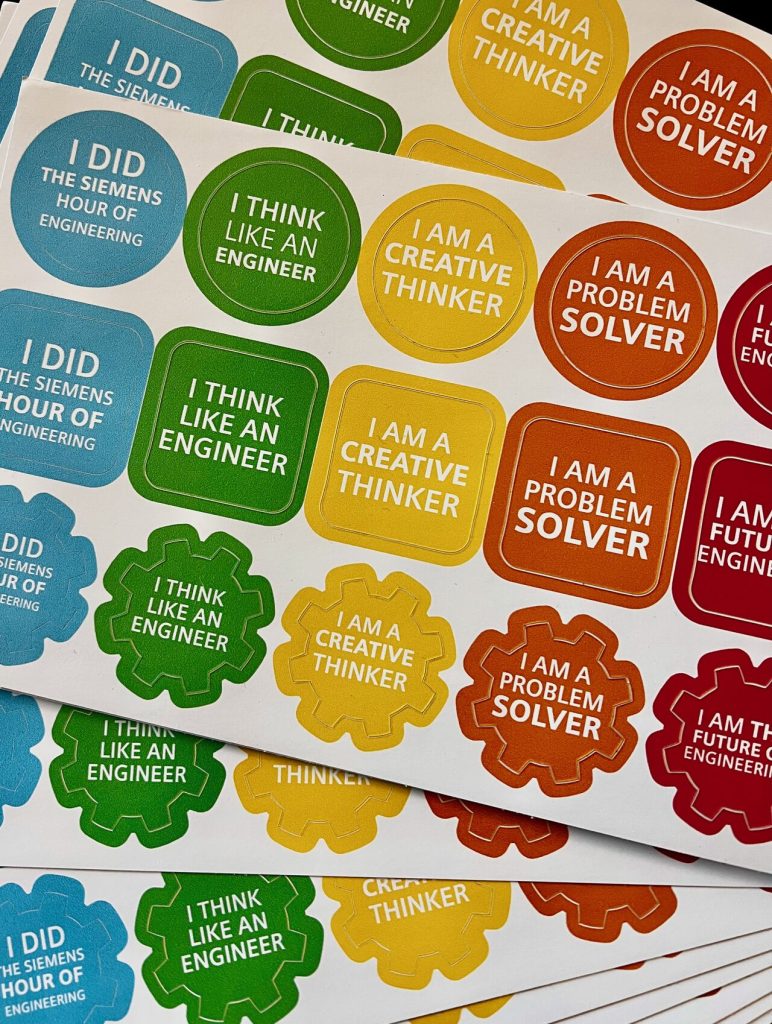
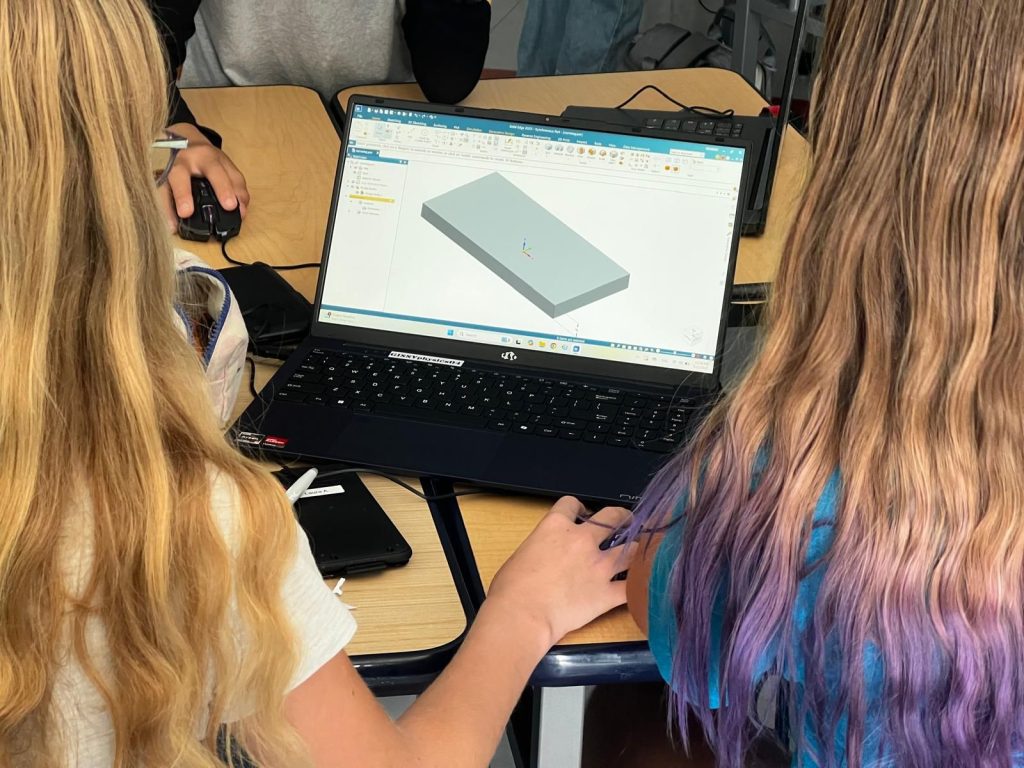
This engagement begins with initiatives designed to spark initial interest, such as the delightful Sammie the Penguin book, which introduces young children to the various facets of engineering through an inquisitive little penguin. For middle school students, Hour of Engineering provides accessible resources for teachers, offering real-world examples and challenges across diverse engineering disciplines. These programs are designed to make complex concepts relatable and exciting, much like the home experiments we discussed earlier. And for older students, free resources like Designcenter Solid Edge academic licenses and self-learning materials including certifications introduce them already at a young age to an industrial ecosystem.
In essence, Siemens strives to cover multiple aspects of the educational funnel. From sparking initial curiosity and interest in the youngest learners to providing comprehensive training and skill development for older students, we are actively preparing them for their future careers. This deep commitment from industry ensures that the enthusiasm nurtured by parents and guided by teachers is met with the resources and real-world relevance needed to cultivate the next generation of engineers, scientists, and digital innovators.
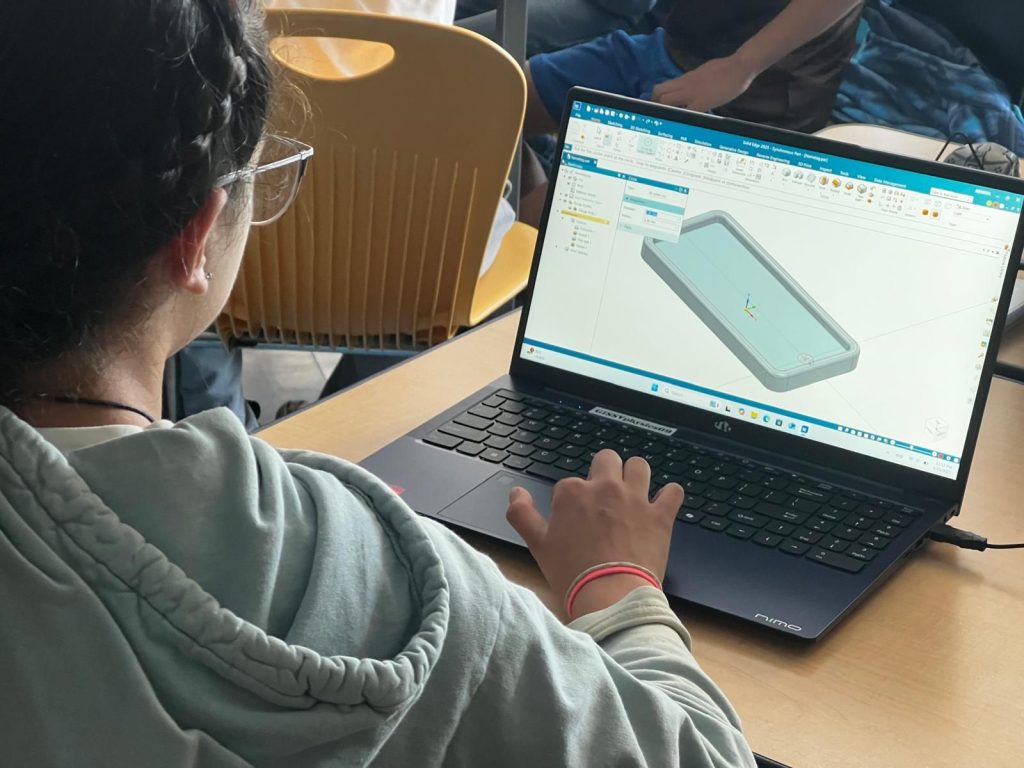
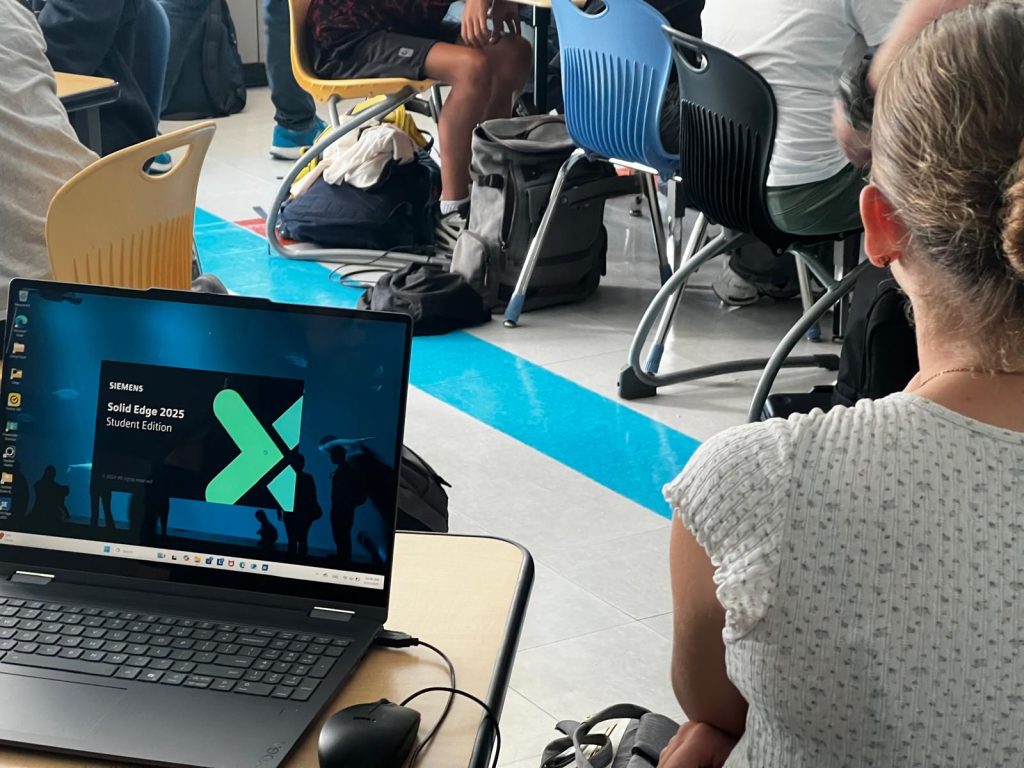
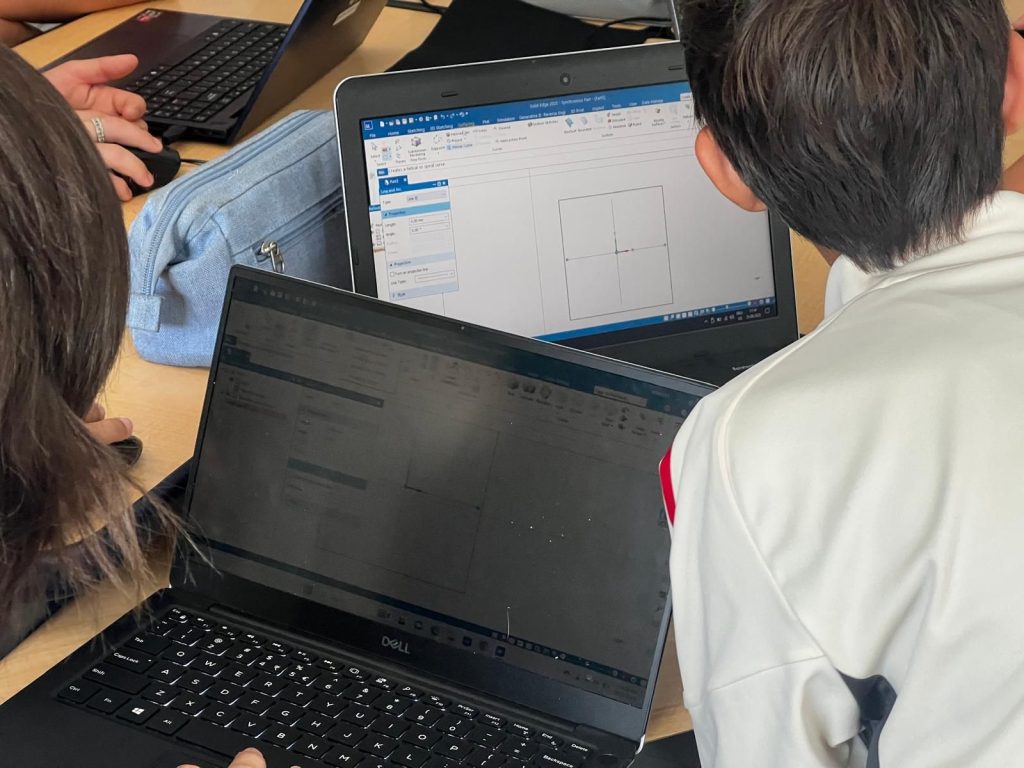
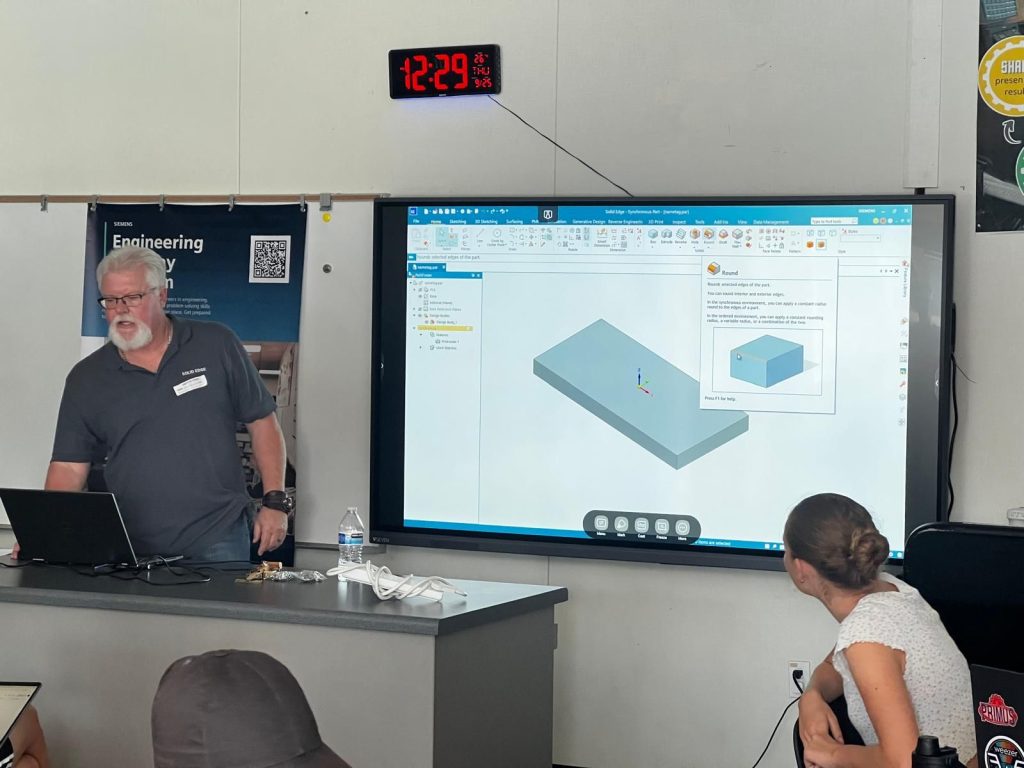
Stainbrook is explaining how to use the software
A Synergistic Approach
The true power of the “Educational Triangle” lies not just in the individual contributions of parents, teachers, and industry, but in their synergistic interaction. When these three elements work in concert, they create a robust and dynamic learning environment that profoundly shapes a child’s development and future readiness.
Consider how these roles reinforce each other. A parent, by fostering a curious, hands-on environment at home and embracing the iterative engineering design process, cultivates an intrinsic love for discovery. This foundational curiosity makes a child more receptive and engaged in the classroom.
Teachers who are open to real-world applications and industry engagement can then build upon this home-grown curiosity. They transform classrooms into spaces where theoretical knowledge meets practical application, often leveraging resources provided by companies.
Finally, industry, through initiatives like the Hour of Engineering, provides the tools, inspiration, and pathways that empower both parents and teachers. These resources not only make STEM education more accessible and engaging but also ensure that the skills being developed are directly relevant to future careers.
This collaborative ecosystem ensures that students are not just passively receiving information but are actively participating in their learning journey—from early childhood experimentation to increasingly complex engineering challenges. It’s a continuous loop of inspiration, education, and preparation, ensuring that the next generation is equipped not just with knowledge, but with critical thinking, problem-solving skills, and adaptability needed to thrive in a rapidly evolving world.
Building a Future-Ready Workforce, Together
In the ever-changing landscape of technology and innovation, the responsibility for cultivating the engineers of the future is a shared one. Parents, teachers, and industry leaders all play pivotal roles in fostering a passion for discovery and equipping our children with the skills they need to navigate and shape tomorrow’s world. By working together—as families encouraging curiosity, educators nurturing potential, and companies providing opportunities and real-world connections—we create an ecosystem where young minds can thrive. The seeds we plant today, with each question asked, each experiment attempted, and each skill taught, grow into the solutions and innovations that will define our future. Because ultimately, the future isn’t something that happens to them—it’s what they will create.
P.S.: Maybe It’s Not Just a Triangle
Maybe we need to recognize a fourth, equally valuable edge: fellow students acting as sparks for their peers. I see this in my own children’s lives. For Halloween, one of their classmates dressed up as a “crazy scientist” and brought dry ice to school for some show effects. And, well, guess who was soon urged to drive to the grocery store? Let’s just say, after a nine-year-old spent his allowance on a pound of dry ice, I had two kids on the porch completely absorbed for an entire afternoon. Frothy experiments with dry ice, water, balloons, and “a spark of curiosity” transformed a simple day into an unforgettable learning experience. It’s a wonderful reminder that sometimes, curiosity is contagious, especially when it’s shared among peers. Perhaps the best education doesn’t just come from parents, teachers, and industry—it also grows in the magical moments sparked between curious minds.