How the Michigan Solar Car Team navigated trials and triumphs across 3,000 kilometers in the Australian Outback

Imagine a race where every watt counts, where the sun is your power source and the wind is your fiercest opponent across 3,000 kilometers in one of the most unforgiving landscapes on Earth.
This is the Bridgestone World Solar Challenge: an intense four-to-seven-day odyssey across the heart of the Australian Outback. For the Michigan Solar Car Team, it’s the ultimate test of innovation, endurance and teamwork, a challenge they embrace with passion and precision.
Students can now register for the FREE Expedite – Skills for Competitions microcredential from Siemens. Earn key skills needed to enter your first competition with confidence, learn how to translate your experiences into compelling resume highlights and demonstrate your readiness to enter the workforce.
34 teams from 18 countries competing in a coast-to-coast race with the world’s fastest solar cars
The World Solar Challenge (WSC), established in 1987, is a biennial, global competition pushing the boundaries of solar-powered vehicle technology. Teams navigate custom-built solar cars through the extreme conditions of the Australian Outback, from Darwin to Adelaide.
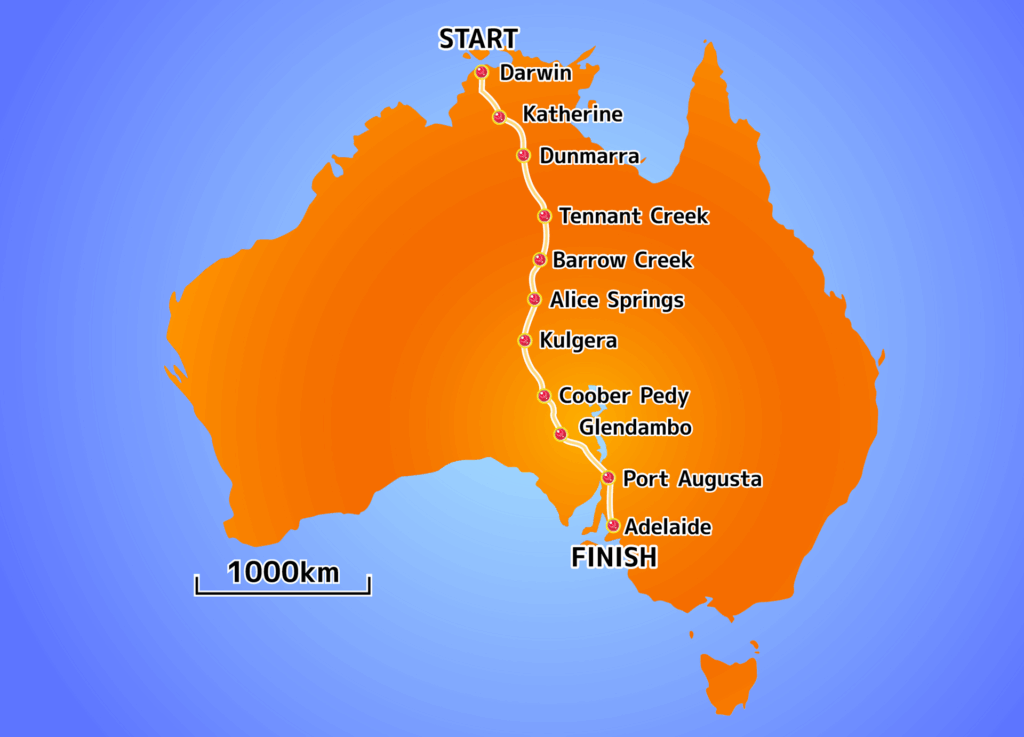
It’s a grueling test of engineering, strategy and human spirit, where teams must travel as far as they can each day until 5:00 p.m., making camp wherever they happen to be.
As team member Luis Anton said, “Famously, the World Solar Challenge is literally a war of efficiencies. You try to make your car as efficient as possible, get the most power out of yourselves and lose as little power possible to aerodynamics.”
Since 1989, the student-led Michigan Solar Car team has built 17 vehicles for the challenge, boasting 10 national championship titles and seven Bridgestone World Solar Challenge podium finishes. Their dedication to sustainable technology recently culminated in a fourth-place finish at the 2023 Bridgestone World Solar Challenge and a triumphant win at the 2024 American Solar Challenge.
Lessons from the Outback
The World Solar Challenge is an unparalleled experience, demanding not just technical prowess but also resilience and adaptability. For the Michigan Solar Car Team, the 3,000-kilometer race was a whirlwind of early mornings, strategic energy management and navigating unpredictable Outback conditions. They completed the race in an impressive 37.87 hours, placing seventh globally and earning the distinction of the best North American team.
Luis shared his powerful impressions from the competition:
“It’s amazing… it’s you, the car and the people in the middle of the desert. And it’s just this huge engineering challenge… It was incredible. And the race is full of adrenaline as well. What makes it particularly unique in my eyes is you start with nothing… it’s almost like your baby out there in front of everybody and taking it across Australia. And it’s the best experience of my life without a doubt.”
The team’s ability to adapt was tested early and often. As Luis noted, “things are usually going to go wrong, but what makes Solar Car teams and the people in this team special is that everybody has different areas of expertise, but we all come together and we solve the issues as one.”
Kelly Park, communications director for the Michigan Solar Car Team, highlighted the role of team culture that they honed at the American Solar Challenge just last year.
“Coming out of COVID, things were a little bit rough at first…. But for the American Solar Challenge, it was a great, diverse group of people with different opinions and people from all different backgrounds, and it resulted in a great, lasting impression of how racing should be. We all took it very seriously, but at the same time, we made sure to have fun while we were doing it…. I think being able to retain a great culture has allowed us to keep doing this.”
The Siemens software advantage
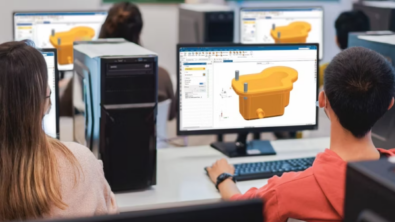
Behind the sleek design and efficient drive of the Michigan Solar Car Team’s vehicle, “Millennium,” lies the power of advanced engineering tools. Siemens software serves as the team’s primary platform for computer-aided design (CAD) and optimization across nearly all engineering divisions.
From initial concept to race day, the team credited Siemens NX as indispensable for 3D CAD, enabling the creation of aerodynamic surfaces, mechanical components and solar array layouts. The team also leverages other Siemens tools like Simcenter STAR-CCM+ for computational fluid dynamics (CFD) and Teamcenter for collaborative data management.
Daniel Aguilera, an engineer from the team, explained how these tools fit into their workflows: “Millennium is born first in like Simcenter STAR-CCM+, then NX and all the suites…. We use all the tools that Siemens gives us to some extent.”
The software’s collaborative features allowed the large, multidisciplinary team to share designs seamlessly, visualizing the complete vehicle and resolving potential issues early. This rapid iteration capability proved critical even during the race.
Daniel recalled a high-stakes moment in Adelaide where a broken part required immediate redesign and manufacturing. With Siemens tools, the team was able to redesign and 3D-print the new part on-site, all within a matter of days.
Remarkably, even freshmen are empowered to contribute significantly, designing critical components. Daniel highlighted this, noting how young engineers can “pick up the software and just within a year make actual parts that go on a car.”
“The first time any of us saw Millennium was in Siemens NX.”
Shaping careers in sustainable engineering
For the students on the Michigan World Solar Car Team, it’s clear that they’ve not only developed crucial skills for industry but developed a lifelong passion for solving some of the toughest challenges in engineering.
“I think this is the most exciting project I’ve ever been a part of,” said Daniel Aguilera. “It’s the best thing you’ll ever do in college and maybe in your life.”
Luis Anton shared a similar sentiment: “The most special thing about Solar Car probably is the Solar Car community. It’s a group of people who are not afraid to innovate, who never put down an idea, who are there for the challenge…it makes it the best educational experience in the world for engineers and non-engineers.”
Their success not only showcases the incredible potential of solar-powered transportation but also offers an exciting look at the next-generation of engineers tackling some of the world’s most pressing challenges. With partners like Siemens providing the tools to innovate, the future of sustainable engineering shines brighter than ever.
Watch students share experiences from the 2023 competition: