Design for the Circular Economy
A sustainability credential with assured quality at a higher standard.
The Design for the Circular Economy microcredential, developed by Siemens Digital Industries Software and the University of Colorado Boulder’s Engineering Management Program, is an industry-standard, high-quality learning experience. And recently, we had even more to celebrate!
Every pathway within this nine-course program has officially received recognition from ABET — a leading global quality assurance organization.
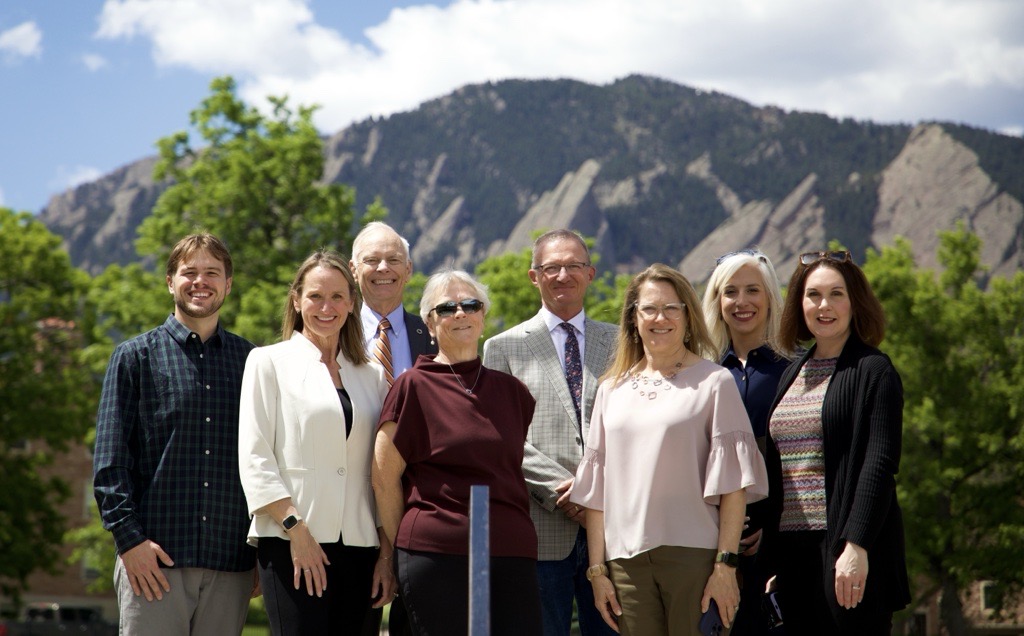
To mark this incredible achievement, we hosted a vibrant celebration on Thursday, May 14th at our office in Boulder. We gathered with our valued partners from CU Boulder to commemorate this significant milestone. Leaders from Siemens, including the Head of Sustainability for Siemens Digital Industries, Eryn Devola, CU Boulder, and ABET made insightful remarks, and several learners shared their inspiring experiences. The CU Boulder team also invited local media, making it a truly memorable occasion!
Why ABET recognition matters
ABET recognition has historically been the domain of accredited degree programs. When the Sustainable Operations pathway became the first industry credential to receive recognition in May 2025, it changed what was possible for workforce education. Now, with all three pathways recognized, every route through this microcredential has been independently reviewed and validated — a truly groundbreaking achievement.
For learners, that means confidence that the time invested delivers a high-quality, highly relevant learning experience. For employers, it means candidates who hold this credential have completed a program that meets established, expert-reviewed standards.
Dora Smith, Siemens Digital Industries Software’s senior director of Future Workforce Strategy, explains: “Sustainability is one of the defining challenges of our time, and today’s workforce needs the knowledge and skills to meet it head on. The Design for the Circular Economy microcredential was built to give working professionals a rigorous, accessible path to build that expertise. Having every pathway recognized by ABET tells learners — and employers — that this credential delivers on that promise.”
Built on a genuine partnership
Siemens brings an industry perspective on the knowledge and skills needed for applied sustainability decisions in business; CU Boulder brings deep academic expertise in sustainability, operations and leadership. The result is a program that sits at the intersection of both — application focused, academically rigorous, and now independently validated across every pathway a learner can take.
What learners take away
Completing the microcredential earns verifiable digital badges — shareable on LinkedIn and other professional platforms — that make applied skills visible to employers. Credential recipients are invited to join the global Siemens Talent Directory, used by employers worldwide to identify candidates with in-demand sustainability skills.
The program is designed to build more than knowledge. It equips learners to think about sustainability as a framework for decision-making — across operations, supply chains, and organizational leadership — and to apply that thinking in their work.
Wendy Martin, Lockheed Martin Endowed Professor and Interim Faculty Director of the Lockheed Martin Engineering Management Program at the University of Colorado Boulder, describes the value: “Our partnership with Siemens reflects a shared belief that high-quality sustainability knowledge and skills should be widely available. The Design for the Circular Economy microcredential gives learners a focused, credible way to develop expertise in sustainable operations, supply chain, and leadership. Full ABET recognition of all three pathways is a meaningful validation of that work. Additionally, for those learners interested in continuing their education, credits from this microcredential can apply toward an aligned CU Boulder graduate certificate or master’s degree.”
What the credential offers
Design for the Circular Economy is a self-paced, asynchronous microcredential available on Coursera. It is designed for graduate students and working professionals who want to build applied skills in sustainability, no formal prerequisites are required.
Learners choose from three ABET-recognized pathways:
- Sustainable Operations — sustainability in product design and supply chains
- Transformative Sustainability — embedding sustainability across business processes and decision-making
- Sustainable Leadership — leading sustainability initiatives within an organization
Each pathway leads to the full microcredential. Learners can also choose to enroll with CU Boulder and complete additional assessments to earn credit toward the aligned CU Boulder graduate certificate and toward the online Master of Engineering in Engineering Management (ME-EM) degree. Notably, this nine-credit certificate represents significant progress toward the 30-credit ME-EM degree.
If you are a professional looking to build credible, applied skills in sustainability, or a student wanting to increase your knowledge, the Design for the Circular Economy microcredential is available now on Coursera.
Learn more: Coursera | Siemens