ASEE 2025: Siemens led key conversations on bringing industry to academia

At the American Society for Engineering Education (ASEE) 2025 annual conference, Siemens Global Academic and Future Workforce Team drove engaging discussions about academic and industry partnerships, accelerating workforce readiness and addressing the skills gap.
As part of this event, Siemens invited attendees to enroll in our new microcredential Expedite – Skills for Industry, which is now available to the public. This microcredential helps engineering learners gain and verify key marketable skills required to add value at leading industrial organizations today. Enroll now via Coursera.
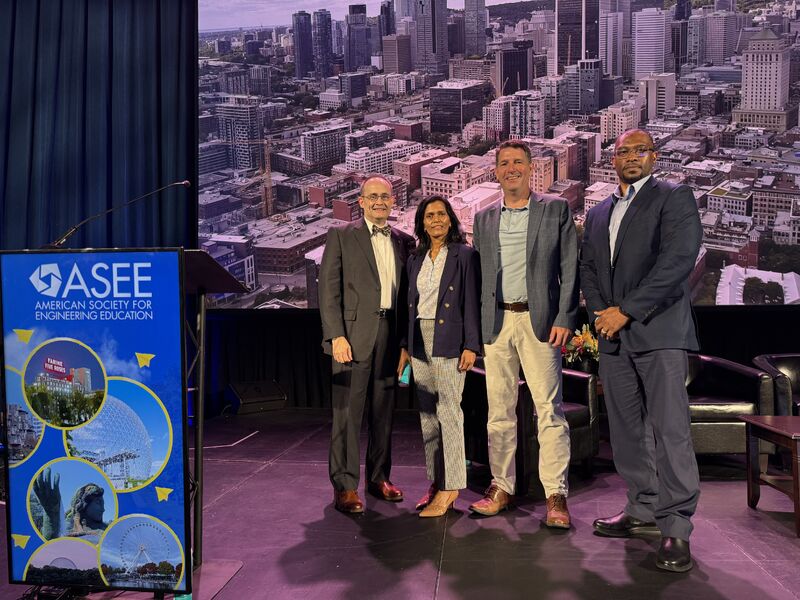
Siemens VP Guy Dulude joined a keynote panel on academic-industry alignment
Among other esteemed speakers, the keynote panel for the conference included Guy Dulude, vice president of portfolio development and sales acceleration for Canada with Siemens. Guy shared how Siemens is working with academic institutions and industrial organizations worldwide to drive stronger alignment and prepare students for the rigors of today’s engineering environments.
Guy also spoke to the transition from Industry 4.0 to 5.0 and how AI is driving a paradigm shift in these concepts:
“The concepts and philosophy behind Industry 4.0 are automation and linking to physical systems…the five key components of that are digital twins, big data, IoT [Internet of Things], robotics and AI. When it was first introduced, AI was already a part of that…now fast track to 2020, the big change was with the venue of generative AI. These kinds of platforms democratize the usage of AI.”
“It doesn’t really matter whether you’re for or against AI, it’s there. You need to take advantage of it responsibly. The next stage is finding out how AI can help benefit the common engineering language and take it to that next level.”
Regarding how to prepare engineering students to use AI effectively, Guy emphasized the importance of adding microcredentials alongside traditional engineering programs:
“The world is changing faster…we have to keep an open mind and be flexible and adapt. It’s about using digital tools and making sure the future workforce is capable to do that in a practical way…it’s multiple disciplines coming together…the full process.”
“The other secret for being flexible and reacting fast is microcredentials, which can used by universities to react to the fast-changing pace of emerging technologies.”
Learning journeys for a lifetime
Additionally, as part of ASEE’s Corporate Member Council Industry Day, Siemens led a panel exploring how academic institutions can deliver accessible, high-quality and industry-aligned lifelong learning experiences.
Moderated by Dora Smith, senior director of the Global Academic and Future Workforce Program with panelists from Georgia Tech, Arizona State University and Bombardier, the discussion highlighted both challenges and opportunities related to upskilling and reskilling the workforce.
Nelson Baker, interim dean of the College of Lifetime Learning at Georgia Tech challenged educators to consider “learning journeys for a lifetime.” Baker discussed his own experiences with Georgia Tech’s innovative approach to accessibility, highlighting their launch of master’s degree programs that cost less than $10,000.
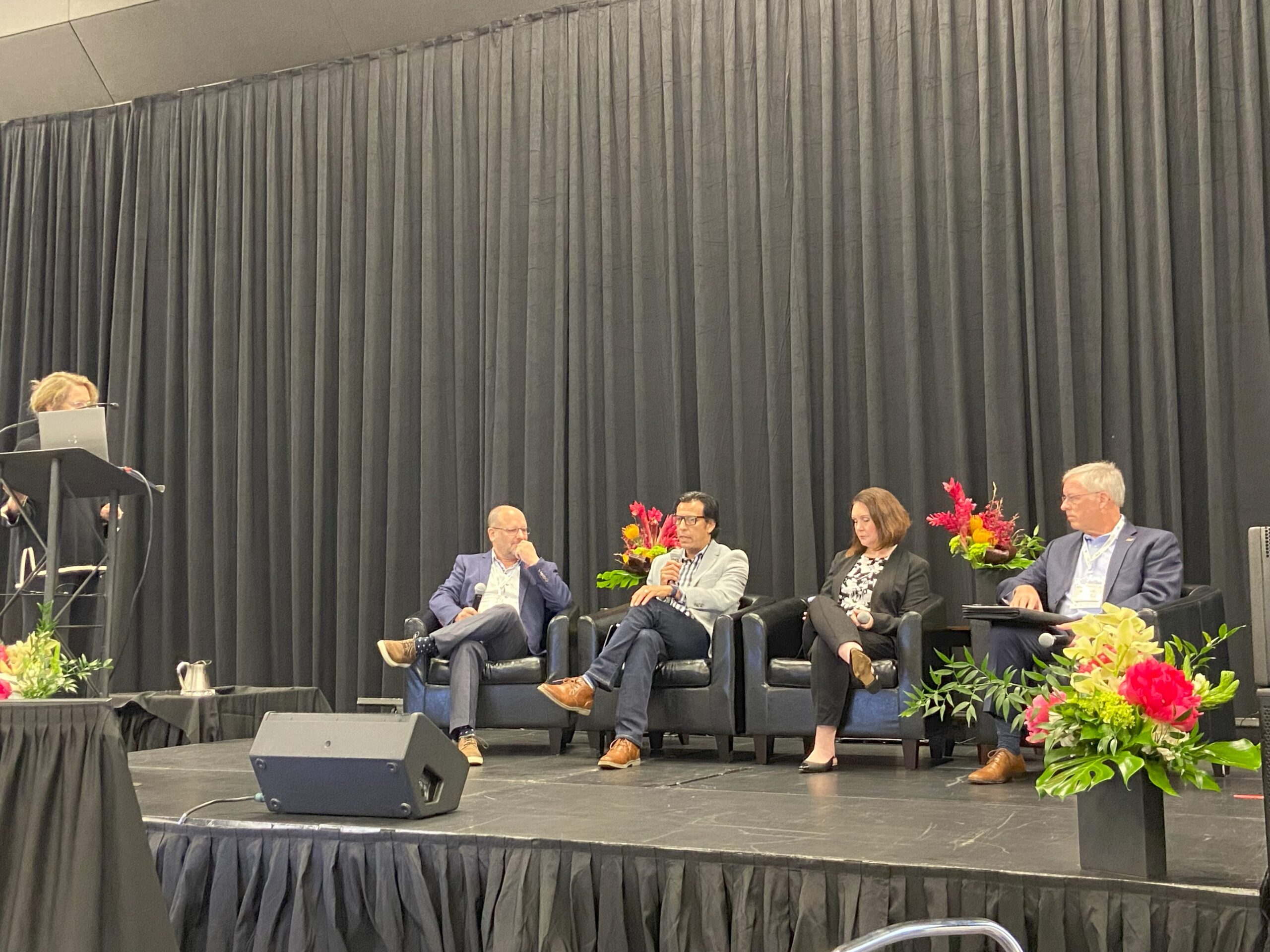
Richard Dubé, an engineering PLM manager with Bombardier, shared an industry perspective on breaking down barriers between academia and industry. He said, “what’s exciting regarding digital transformation is for the first time, we have the ability to actually link different things and get information. What’s scary is how do we ensure that the talent that we have stays ahead of the curve?”
He also shared his vision for a future where learning is more agile, adaptable with integrated academia-industry partnerships.
From stackable microcredentials and quality assurance to personalized learning experiences, the panel offered an actionable path forward for impactful and industry-aligned programs.
Attendees experienced immersive design firsthand
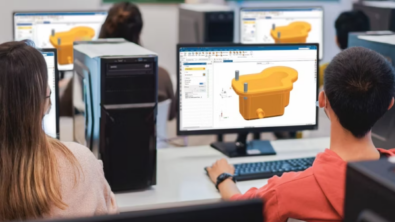
At the Siemens booth, attendees had the opportunity to experience Siemens Designcenter, a new, multidisciplinary CAD/CAM/CAE software suite combining the physical world with an AI-enhanced digital twin.
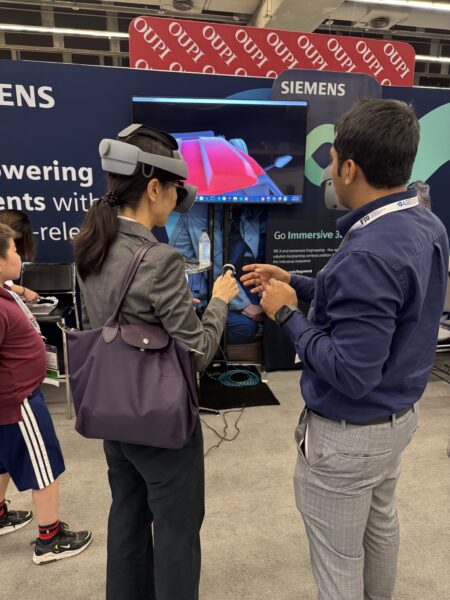
ASEE members were able to view and design components with the Sony XR head-mounted display, offering a sense of the exciting new tools students will be utilizing in industry.
To learn more about how today’s students are using immersive design to create a more sustainable future, listen to our podcast episode on the topic.
How Siemens is bringing industry to education
As the global leader in industrial software, Siemens is uniquely positioned to support educators in building tomorrow’s engineers’ digital skillsets and digital mindsets.
Siemens continues to bridge the gap between industry and academia by offering:
- Access to industry-grade software through academic grants, empowering institutions to incorporate state-of-the-art tools into their curricula
- Free software training to all students and educators through the Siemens Xcelerator Academy platform
- Industry-relevant courses available on Coursera that allow students to earn digital badges on Credly
- Student-powered community through our student ambassador program and global competitions
Altogether, these resources are designed to equip the future workforce with the skills and knowledge necessary to thrive in today’s complex industrial environment.