Get hands-on with expert-level simulation: Simcenter 3D Student Edition

In today’s engineering world, mastering early-stage simulation is essential for mechanical engineers. Yet, for many students, the concept might seem a bit elusive. So, what exactly does simulation-based engineering entail, and why is it so crucial?
Consider these questions when designing a product:
- Will this bracket withstand the load?
- How long until we face fatigue failure?
- Is my design too noisy?
- Is my motor correctly sized for this torque?
These inquiries are fundamental to refining and validating your designs within a virtual environment. By integrating simulations early in the design process, you can significantly shorten design cycles, cut down on production costs and minimize waste. For engineering students, embracing this approach not only enhances your technical skills but also propels you toward a successful career.
Simulation-based engineering is a mindset. It equips you with the ability to make informed decisions, optimize outputs and effectively communicate complex ideas. As you prepare to enter the engineering field, developing these skills will distinctly position you as an innovative and forward-thinking professional ready to tackle the challenges of tomorrow.
In this blog, we’ll offer a look at why simulation-based engineering is a valuable skill for students to learn and explore how you can start learning this skill via Simcenter 3D Student Edition.
Students can download Simcenter 3D Student Edition for free today.
Why more and more engineering teams are shifting toward simulation-based engineering
Today, the traditional build, test and fix cycle often can’t keep pace. Product development cycles have grown more complex due to the involvement of multiple engineering disciplines, stricter regulations, sustainability goals and tight time-to-market requirements.
Historically, simulation was treated as a late-stage validation step used to confirm that a design met performance and safety criteria. While this method helped reduce the risk of expensive redesigns, it’s even more effective to catch design flaws earlier in the product development cycle, before multiple teams have invested hundreds or thousands of hours optimizing the design.
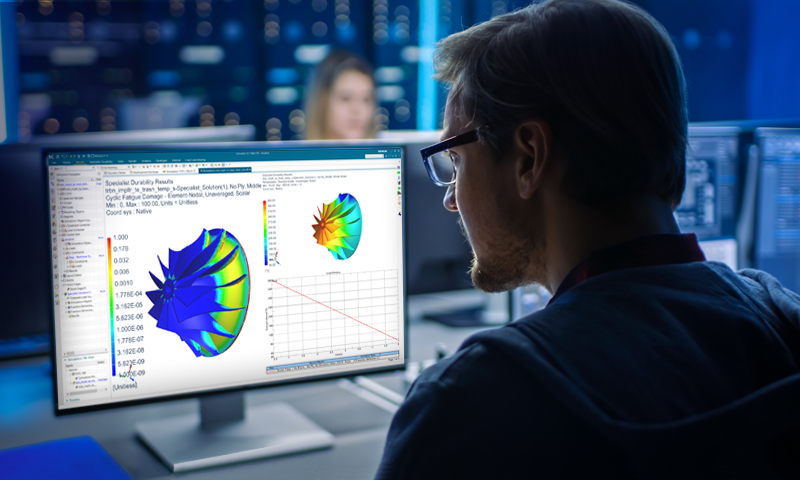
With simulation-based engineering, simulation is woven into the design process from the initial stages.
Engineering employers increasingly expect students to possess hands-on experience with powerful tools that allow them to explore design possibilities, optimize solutions and share insights with other team members throughout various project stages.
Here’s a glance at how capabilities within Simcenter 3D Student Edition help students prepare for the professional world:
- Geometry preparation: Students learn how to quickly simplify and abstract geometry, making it ready for meshing. This crucial step lays the groundwork for accurate simulations and analyses.
- Meshing and assembly: With tools that offer both automatic and manual meshing, students can work with 0D, 1D, shell and solid elements. They efficiently assemble finite element (FE) components, which is essential for modeling complex systems.
- Loads and constraints: The addition of loads and constraints, whether applied to geometry or individual elements, teaches students the art of setting up precise simulation conditions.
- Solver selection for analysis: Students get hands-on experience with a variety of solvers, including Simcenter Nastran, Simcenter Motion, Simcenter Thermal and Simcenter 3D Acoustics, to name a few. This exposure allows them to perform simulations across different domains, such as structural analysis, multibody dynamics, thermal management and acoustics.
- Post-processing and visualization: Evaluating results through deformation, stress analysis and other criteria is made accessible with contour plots, animations, annotations and XY graphing. This valuable skill empowers students to interpret results and make data-driven decisions.
These experiences are crucial in preparing engineering students for practical challenges. Understanding these tools and techniques not only enhance early career engineers’ technical skills but also cultivate a problem-solving mindset essential for driving digital transformation.
Siemens’ microcredential, Expedite – Skills for Industry, allows you to verify other key skills to launch your engineering career, including product lifecycle management, electronic design automation and more.
How Simcenter 3D enables simulation-based engineering
Siemens Simcenter 3D is a comprehensive computer-aided engineering platform that brings multiple simulation disciplines under one roof. Key features include:
- Computer-aided design (CAD) data from NX that automatically keep your simulation models in sync with geometry changes
- Centralized engineering environment supporting multidiscipline simulation solvers
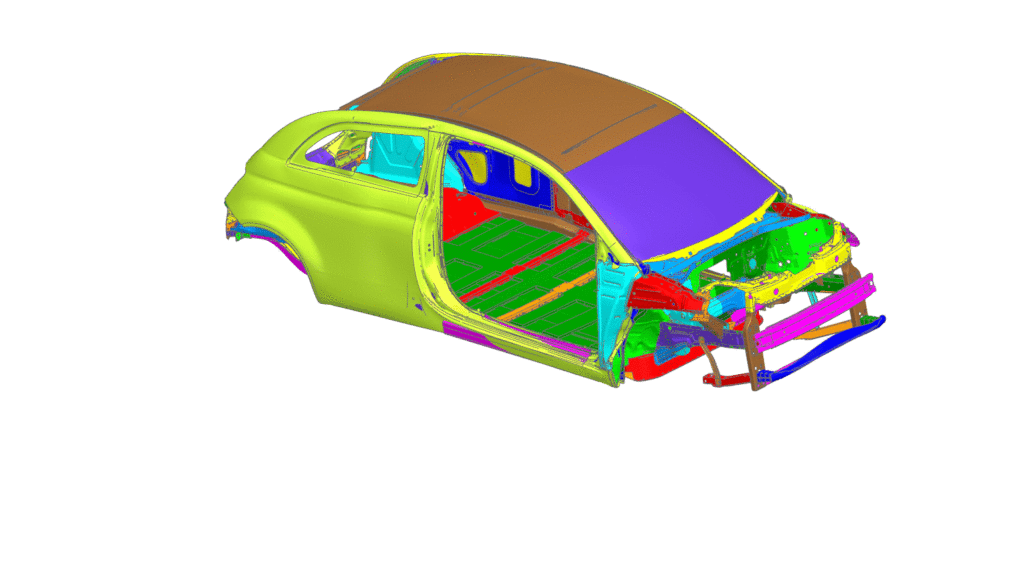
- Interactive results that help you visualize stress distributions, temperature maps, vibration modes and electromagnetic fields
- Multidiscipline solvers that analyze structural strength, durability, thermal behavior, acoustics, electromagnetics, motion dynamics and multiphysics phenomena using integrated tools like Simcenter Nastran
Running these analyses early allows you to save time and quickly refine designs for student projects or competitions.
Start learning simulation-based engineering today with Simcenter 3D Student Edition
Simcenter 3D Student Edition offers a free license to the same multidiscipline platform used by leading companies worldwide, with model size limitations appropriate for academic projects.
With Simcenter 3D Student Edition, you get:
- Industry-relevant experience: Build simulation expertise that stands out on your resume and prepares you for engineering roles.
- Virtual prototyping: Validate design ideas without needing multiple physical models.
- Free access: Use the modeling environment plus all integrated solvers at no charge.
By incorporating Simcenter 3D Student Edition into your coursework, senior projects or personal explorations, you can develop a deeper understanding of design trade-offs and performance criteria. These skills make you a stronger candidate for engineering internships and jobs.
Ready to explore simulation-based engineering? Download Simcenter 3D Student Edition today and start building skills that will drive your future career.