Building the Digital Foundation for the Next Generation of Manufacturing at Zimmer Biomet

Driving Innovation in Orthopedic Manufacturing
In the medical technology industry, delivering consistent quality, precision, and traceability is essential. As a global leader in orthopedic innovation, Zimmer Biomet continuously invests in technologies that help its teams operate more efficiently, make informed decisions faster, and support the production of life-changing solutions for patients around the world.
To further advance its manufacturing strategy, Zimmer Biomet embarked on a digital transformation initiative centered on Manufacturing Execution Systems (MES). Through a thoughtful, phased implementation approach and strong collaboration between operations, IT, and shop floor teams, the company established a connected digital foundation that is enhancing visibility, improving operational performance, and enabling future innovation.
A People-First Approach to Digital Transformation
Rather than pursuing a large-scale deployment all at once, Zimmer Biomet implemented MES one department at a time, prioritizing areas based on business impact and opportunities for value creation. This approach allowed teams to learn from each deployment, gather feedback directly from shop floor personnel, and continuously refine the experience before expanding across the organization.
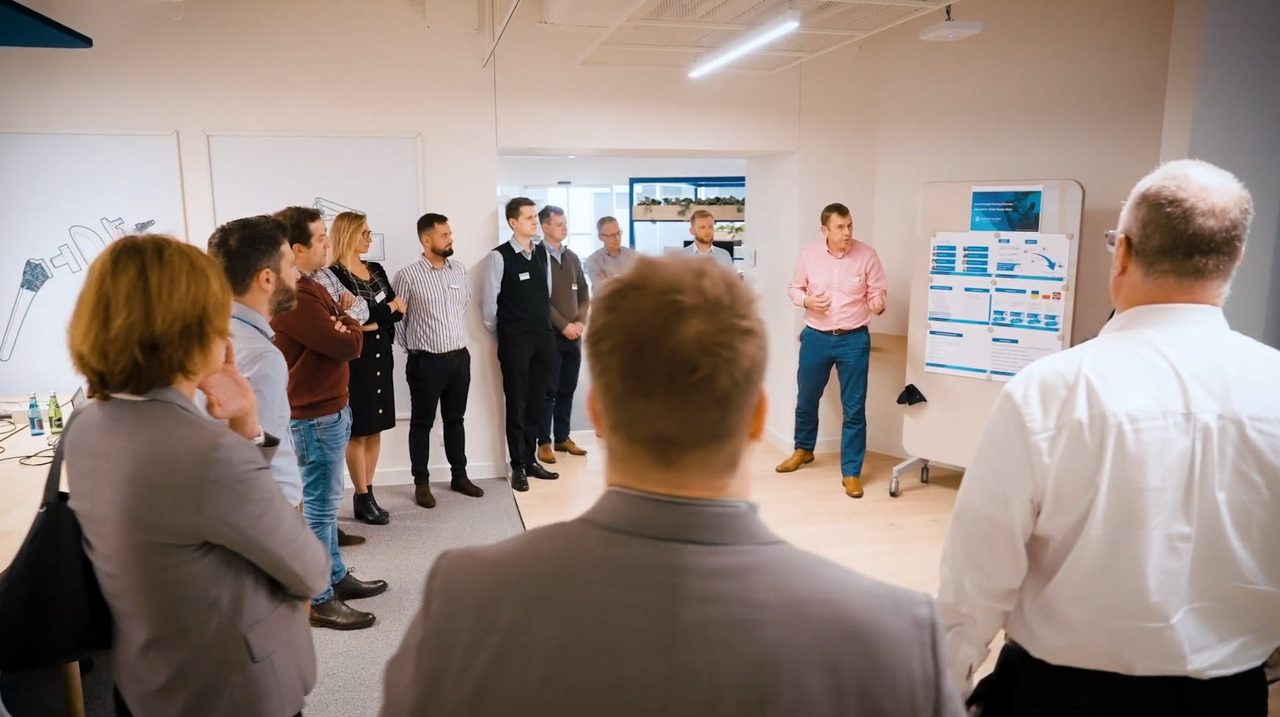
By placing employees at the center of the transformation, the company ensured that technology adoption aligned closely with day-to-day operational needs while creating momentum for long-term success.
We deployed MES in one department at a time based on the priority and impact of the business. Taking that phased approach was really helpful to understand feedback from our shop floor team members to improve our MES system for the next deployment.”
– Palak Shah, AMS Manager, Zimmer Biomet
Connecting Teams, Data, and Operations
A key factor in the success of the initiative was the strong partnership between IT and operations. Before launching MES, Zimmer Biomet established clear ownership between information technology (IT) and operational technology (OT) teams. IT focused on application management while OT teams owned MES operations and manufacturing support.
This collaborative model streamlined communication, accelerated issue resolution, and provided a strong framework for scaling digital manufacturing initiatives across the business. By aligning people, processes, and technology, Zimmer Biomet created an environment where digital innovation could be adopted efficiently and sustainably.
Unlocking Real-Time Visibility Across the Shop Floor
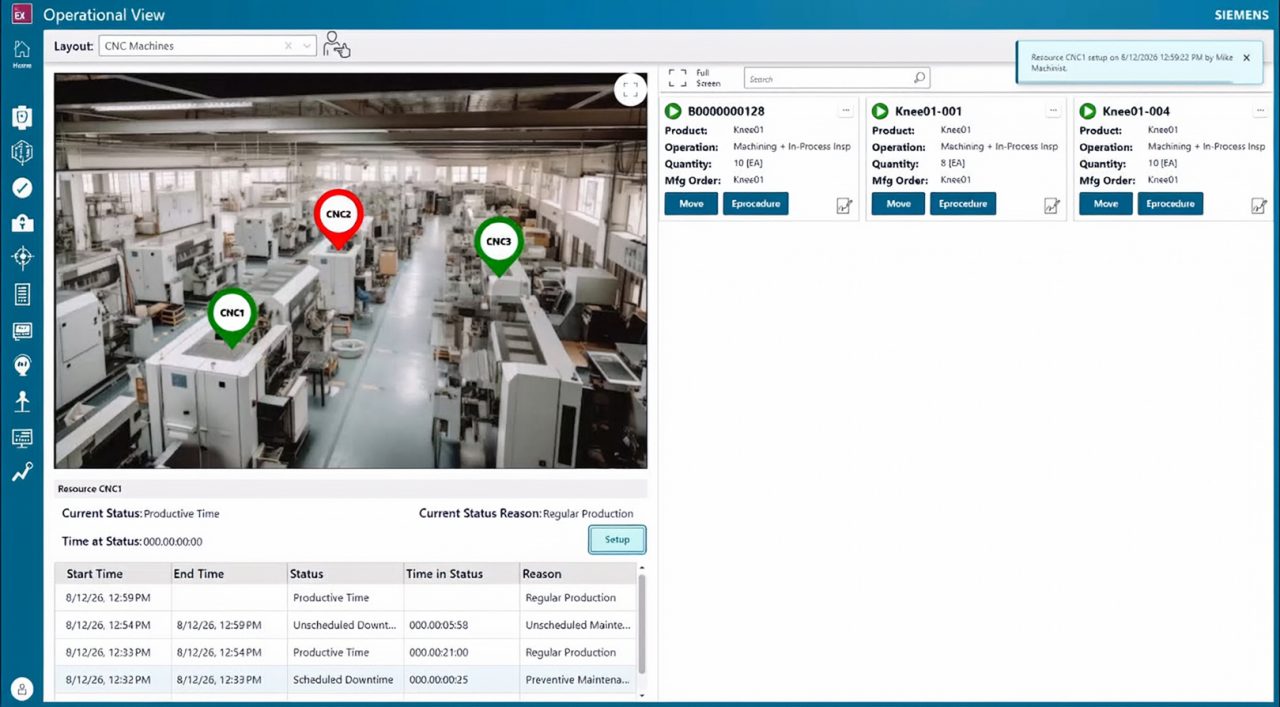
As Zimmer Biomet expanded its digital manufacturing capabilities, real-time operational visibility became a significant advantage. Today, MES provides teams with immediate access to critical information across production operations, including work-in-progress status, order priorities, quality insights, production performance metrics, and operational trends.
With a unified view of manufacturing activities, employees can make informed decisions faster, maintain production flow, and proactively identify opportunities to improve both efficiency and quality. The result is a more connected manufacturing environment where data is accessible when and where it is needed.
Transforming Traceability and Quality Management
In an industry where quality and compliance are paramount, rapid access to accurate production information is essential. By digitizing manufacturing data within Opcenter MES, Zimmer Biomet has enhanced its ability to investigate operational and quality-related events with greater speed and confidence.
Information that once required significant manual effort to compile can now be accessed almost instantly, enabling teams to quickly assess situations and take action while maintaining the highest standards of quality and patient safety.
Traceability is the key feature in terms of scoping for quality or operational issues. It used to take a lot of effort, but because of all the digital data in Opcenter MES, now we are able to scope all the issues within a few seconds.”
– Palak Shah, AMS Manager, Zimmer Biomet
This enhanced traceability not only supports regulatory requirements but also provides valuable insights that help drive continuous improvement across manufacturing operations.
Delivering Measurable Business Results
The impact of Zimmer Biomet’s MES transformation extends well beyond technology implementation. The initiative has delivered measurable business outcomes, including:
- More than 90% reduction in non-conformance events
- Improved direct labor efficiency
- Enhanced operational visibility
- Faster issue identification and resolution
- Greater consistency across manufacturing processes
These results demonstrate the value of combining digital technologies with a disciplined implementation strategy focused on operational excellence and continuous improvement.
Creating the Foundation for Advanced Manufacturing
Perhaps the most significant outcome of the MES initiative has been the creation of a robust digital backbone for future innovation. Today, MES serves as a central platform connecting automation technologies, ERP systems, Quality Management Systems (QMS), and other shop floor applications into a cohesive manufacturing ecosystem.
Operators can manage their work through a unified environment, from understanding production priorities and executing work orders to collecting quality data and completing production activities. This seamless flow of information enables teams to focus more on value-added work while leveraging trusted manufacturing data throughout the production lifecycle.
Looking Ahead: The Next Phase of Digital Manufacturing
Zimmer Biomet continues to build on this momentum. As part of its advanced manufacturing roadmap, the company is upgrading to the latest MES version and plans to leverage capabilities such as Statistical Process Control (SPC), Advanced Planning and Scheduling (APS), and Mendix integration to create new digital tools for shop floor teams.
These initiatives are designed to further digitalize manufacturing operations, expand access to actionable insights, and empower employees with the information needed to optimize performance and support continuous innovation.
A Blueprint for Manufacturing Excellence
Zimmer Biomet’s MES journey illustrates how manufacturing leaders can unlock new levels of performance by thoughtfully connecting people, processes, and technology. The results achieved to date demonstrate more than a successful technology deployment. They reflect a long-term commitment to innovation, operational excellence, and continuous improvement.
As the company continues to invest in advanced manufacturing capabilities, it is helping define what the future of digital manufacturing looks like in the medical technology industry, proving that digital transformation is most powerful when it empowers people, strengthens processes, and creates a platform for sustained innovation.